Fiber enclosures and patch panels provide different approaches to fiber protection, termination, patching, splicing, cable management, density, and network expansion in data center cabling systems.
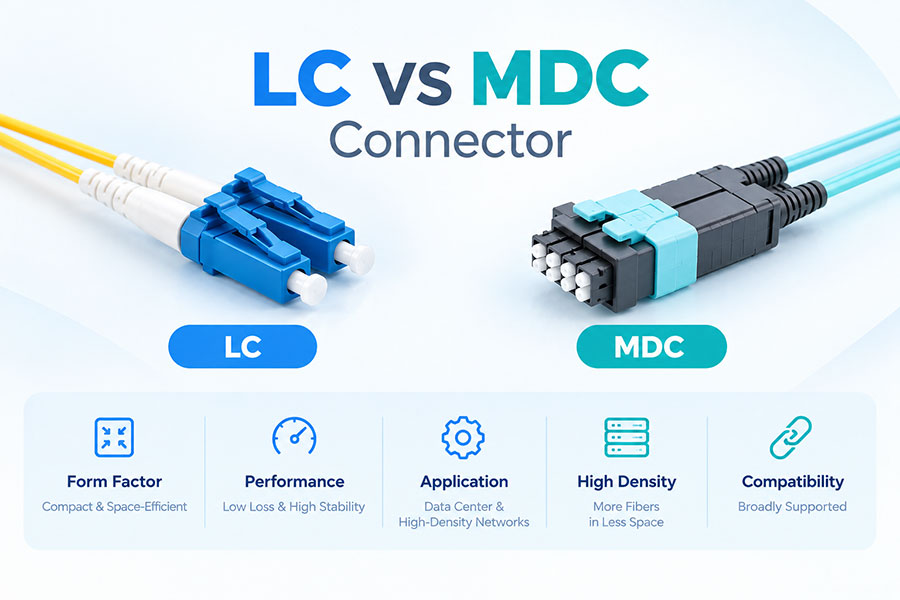
LC and MDC fiber connectors differ in connector size, port density, polarity, patching, installation, and support for high-speed data center networks, with MDC designed for higher-density duplex connectivity.
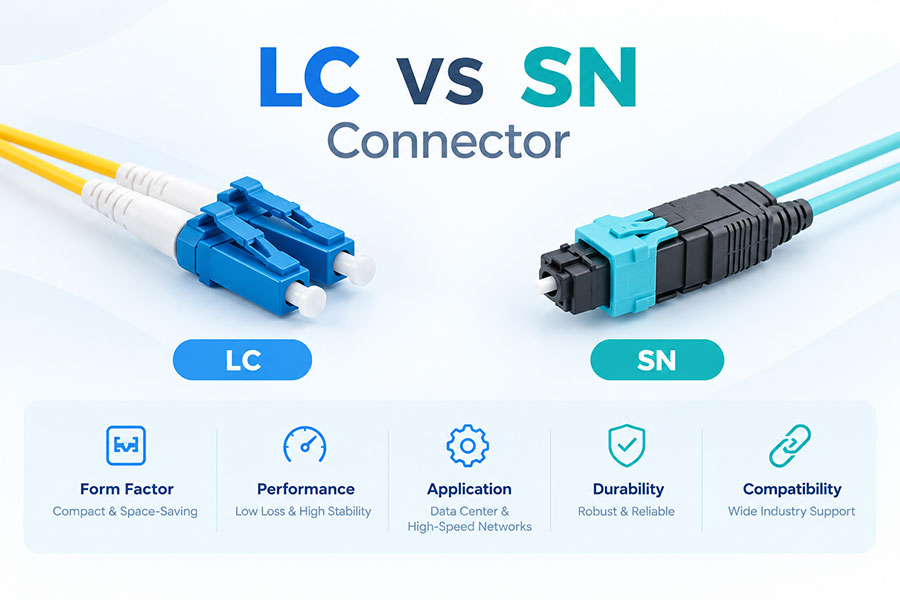
LC and SN fiber connectors differ in connector design, density, polarity, cable management, and data center applications, with SN providing a more compact duplex interface for high-density optical networks.
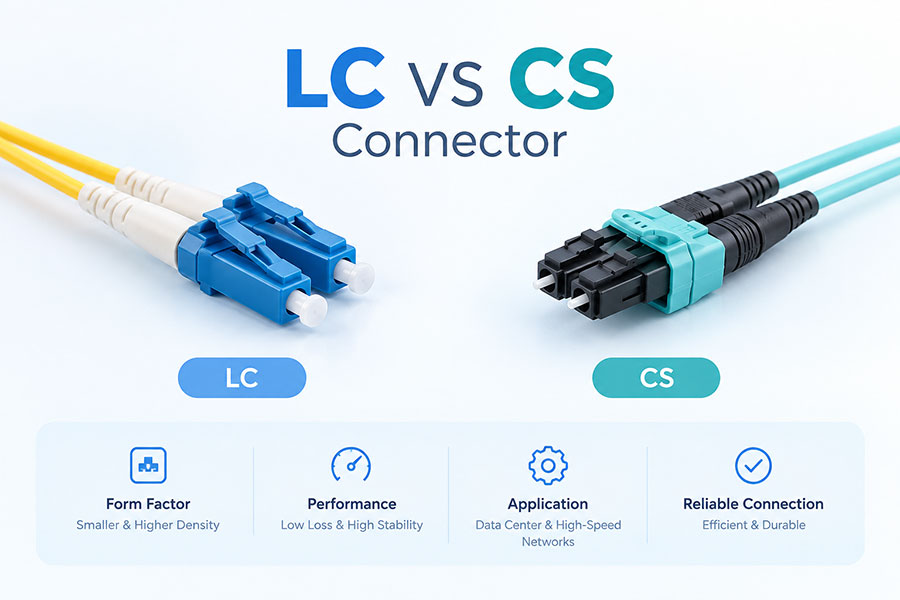
LC and CS fiber connectors differ in size, connector density, polarity, cable management, and data center applications, with CS providing a compact duplex interface for high-density optical networks.
MDC and SN are compact duplex fiber connectors for high-density optical networks, with differences in connector design, density, polarity, breakout architecture, Base-2/Base-8 connectivity, and data center applications.
Coherent and direct-detection optical systems differ in signal detection, modulation, DSP, reach, sensitivity, spectral efficiency, power consumption, cost, and applications across data center and telecom networks.
EML and DFB optical transmitters differ in modulation method, chirp, bandwidth, optical signal quality, power, cost, transmission distance, and applications across data center and telecom networks.
DML and DFB are closely related but describe different aspects of laser technology. Compare direct modulation, laser structure, chirp, bandwidth, power, reach, and optical transceiver applications.