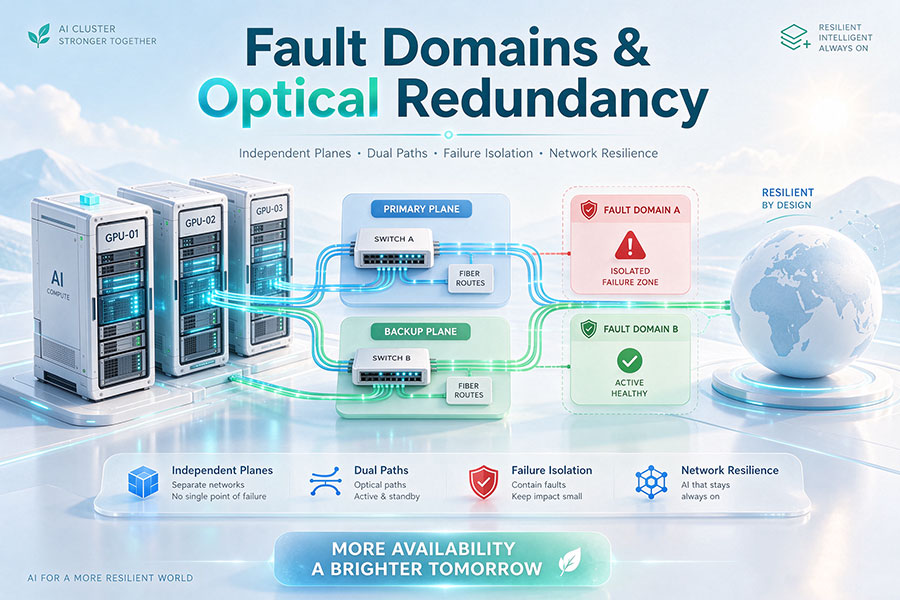
Network fault domains and optical connectivity redundancy help AI clusters contain link failures, preserve communication paths and maintain service availability during network disruptions.
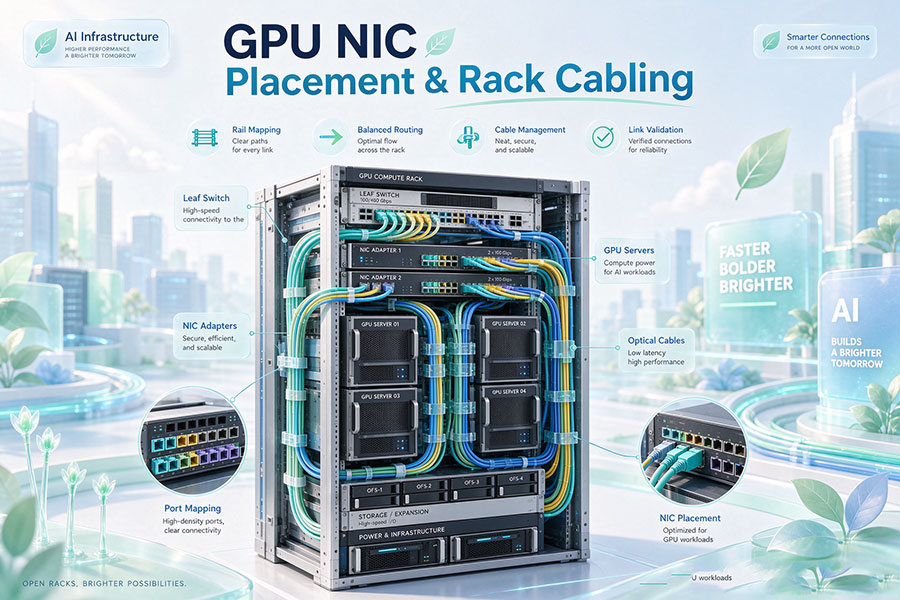
GPU network interface placement and rack-level cable routing affect link utilization, signal integrity, airflow, serviceability and high-speed AI cluster connectivity.
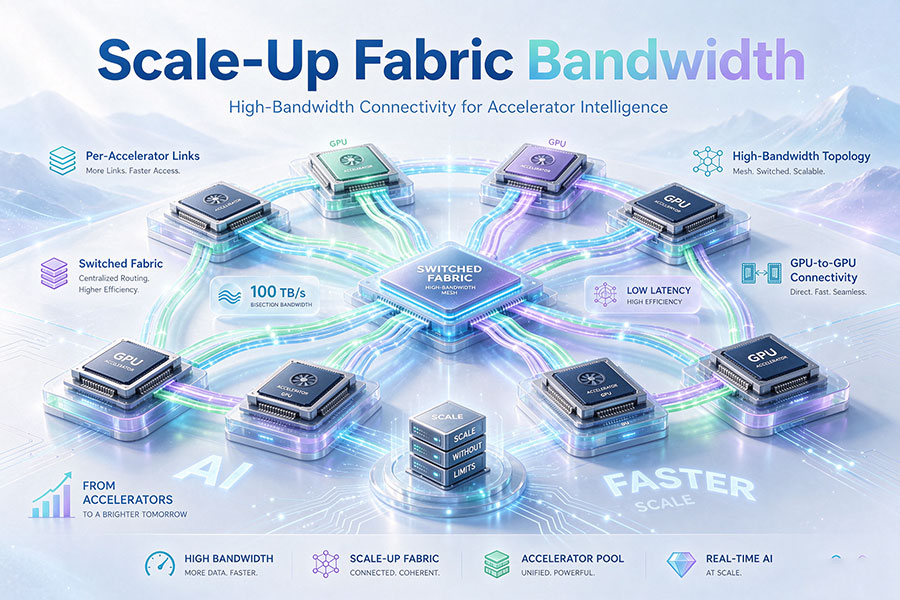
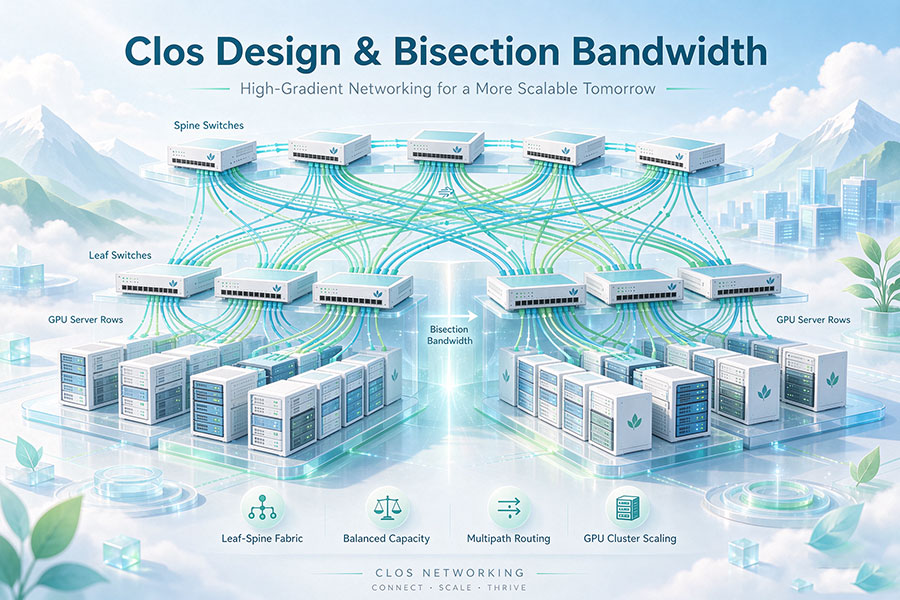
Scale-up fabric bandwidth per accelerator determines GPU communication capacity, while topology planning shapes latency, bisection bandwidth and system scalability.
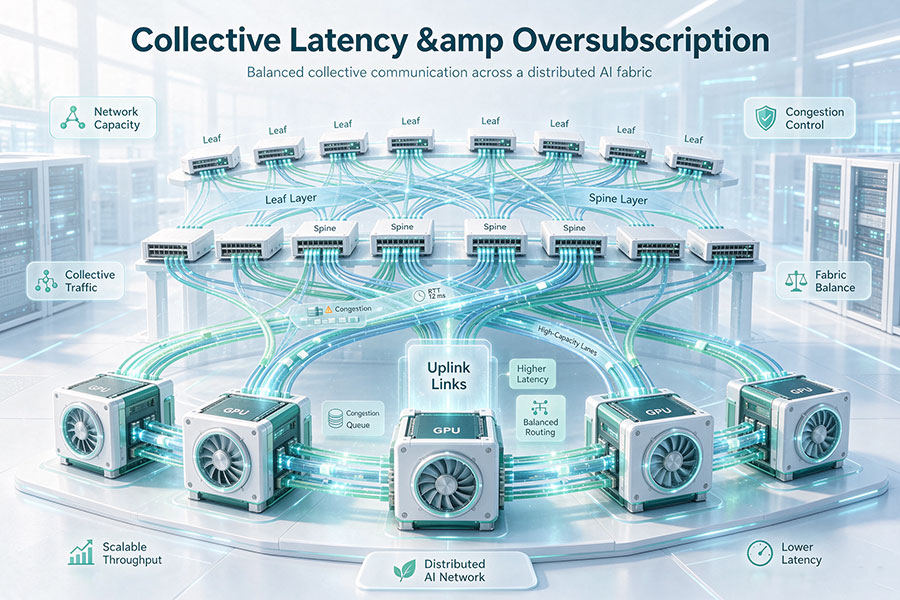
Network oversubscription affects collective communication latency in GPU clusters by limiting available bandwidth, increasing contention and slowing distributed AI workloads.
All-to-All communication moves data between distributed inference workers, influencing token routing, expert parallelism, network congestion and large-scale AI serving performance.
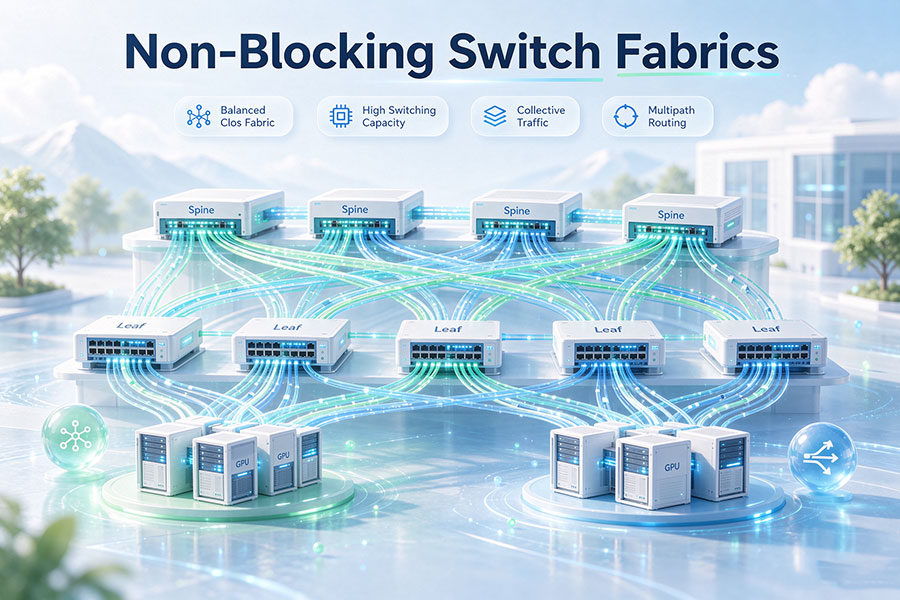
Non-blocking switch fabrics help GPU clusters sustain collective communication by providing sufficient switching capacity, balanced paths and predictable network bandwidth.
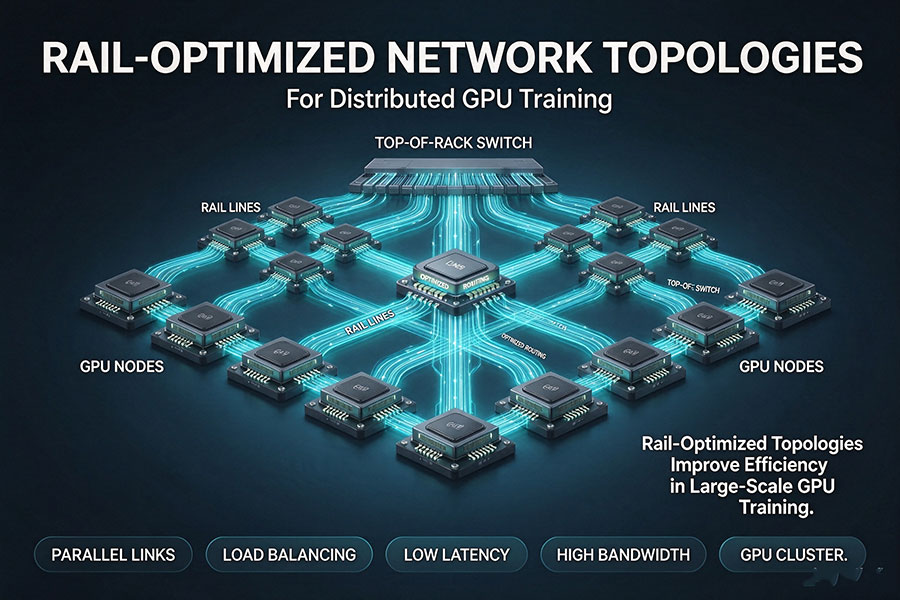
Rail-optimized network topologies improve distributed GPU training by aligning network paths with GPU communication patterns, reducing contention and supporting scalable bandwidth.