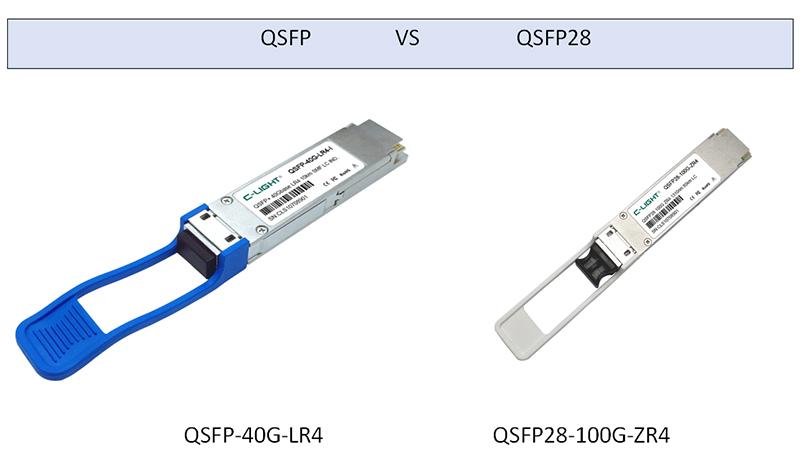
An optical module (e.g., QSFP-DD, OSFP) is a detachable, standardized component that plugs into the optical port of a switch or server and connects via patch cords to fiber.
High-speed optical receiver design relies on low-noise amplification, bandwidth, PAM4 linearity, and electrical signal integrity for reliable 400G, 800G, and 1.6T links.
DAC cable insertion loss and return loss set link margin from 10G SFP+ to 800G OSFP/QSFP-DD: SDD21, SDD11, length/gauge tradeoffs, passive vs active DAC, MSA/IEEE compliance
DAC cable thermal performance in AI data centers: passive vs active DAC heat generation, connector and cage temperature limits, airflow, derating, and high-density 400G/800G deployment practices
400G optical interconnect for AI data centers: QSFP-DD and OSFP transceivers, DR4/FR4/LR4 reach options, MPO and duplex cabling, breakout architectures, FEC and link budget, and high-density GPU cluster deployment
Telecom and optical access networks use PON modules, OLTs, ONUs, PLC splitters, and fiber interfaces to build scalable FTTH and enterprise connectivity.