TEL:+86 132 6656 7067





The growth of large GPU clusters is increasing bandwidth requirements between servers, leaf switches, and spine switches. As 800G connections become established in high-performance data center networks, 1.6T optical transceivers are emerging as the next bandwidth generation. Their adoption will accelerate when switch platforms support 200G-per-lane electrical interfaces, network port density becomes a constraint, and AI workloads require more capacity between network tiers. The transition is already moving into early deployment and qualification, but 800G will remain important alongside 1.6T.
1. Why AI Data Centers Are Moving Beyond 800G
Large AI training clusters distribute computing tasks across many GPU servers. These systems exchange substantial amounts of data through Ethernet or InfiniBand scale-out networks. As the number of accelerators increases, the network must provide sufficient bandwidth between racks and switching layers to prevent communication from becoming a bottleneck.
800G has become an important generation for high-bandwidth AI networking. However, larger clusters and higher-capacity switches create several pressures:
More traffic between network tiers: GPU servers generate increasingly demanding east-west traffic during distributed training and inference.
Higher switch capacity: New switch ASIC generations provide greater aggregate bandwidth and need matching high-speed interfaces.
Port-density constraints: Using more 800G links to achieve the same aggregate capacity as fewer 1.6T links can increase port and cabling requirements.
Rack and fiber complexity: More physical connections require additional switch ports, transceivers, fiber assemblies, and cable-management space.
Power and thermal pressure: Higher port speeds increase the importance of transceiver power, faceplate cooling, and overall system efficiency.
1.6T addresses the bandwidth-per-port requirement. It does not automatically reduce total network power or cost, because the result depends on the transceiver design, switch architecture, optical reach, and deployment scale.
2. What Changes from 800G to 1.6T?
A typical 800G optical interface uses eight 100G-class electrical and optical lanes. A common 1.6T architecture doubles the lane rate to eight 200G lanes, delivering twice the aggregate bandwidth through a single port.
| Characteristic | 800G generation | 1.6T generation |
|---|---|---|
| Aggregate bandwidth | 800 Gb/s | 1.6 Tb/s |
| Common lane architecture | 8 × 100G | 8 × 200G |
| Modulation | PAM4 in common high-speed implementations | PAM4 in common 200G-per-lane implementations |
| Electrical interface | Designed around supported 100G-class lanes | Requires host support for 200G-class lanes or another specified architecture |
| System requirements | 800G-capable switch and module interface | 1.6T-capable switch, module, electrical channel, and thermal design |
| Deployment impact | Established high-speed network generation | Higher bandwidth per port and increased integration demands |
The move to 200G per lane is a major engineering step. Higher signaling rates place tighter requirements on electrical channel loss, connector performance, signal processing, optical transmitters and receivers, and forward error correction (FEC).
3. When Will 1.6T Deployment Accelerate?
There is no single date when all AI data centers will move to 1.6T. Adoption depends on switch platform availability, qualification, network expansion schedules, and the bandwidth requirements of individual clusters.
1.6T modules and 200G-per-lane platforms are entering the commercial deployment and qualification stage. Early use is expected in high-density AI fabrics and next-generation switching systems.
Adoption can expand as more switch platforms, optical modules, and manufacturing capacity mature. 800G and 1.6T are likely to coexist across different network tiers and deployment generations.
Further growth in switch capacity and AI cluster scale may increase demand for 1.6T and create opportunities for 3.2T technologies. Timing will depend on 400G-per-lane development and system readiness.
These periods are planning indications, not guaranteed industry-wide replacement dates. A module roadmap, customer sampling announcement, production shipment, and large-scale network deployment are different commercial milestones.
4. Which Parts of an AI Data Center Need 1.6T First?
Not every link in an AI data center needs the same bandwidth. The strongest early use cases are generally high-capacity connections between network switches and other infrastructure where port bandwidth and density are major constraints.
Spine-to-leaf connections
Spine switches aggregate traffic from multiple leaf switches. In large GPU fabrics, these links carry substantial traffic between racks and network domains. A 1.6T interface can increase capacity per port when both switch endpoints support the same standard.
High-capacity switch interconnections
As switch ASIC bandwidth increases, 1.6T ports can help connect high-capacity switching systems without requiring the same number of physical links as an 800G-only design.
Large AI cluster expansion
When a data center adds GPU racks, network operators may need to increase fabric capacity without proportionally increasing the number of switches and fiber connections. 1.6T can help address this requirement where supported by the network architecture.
Data center interconnect
1.6T also has a role in high-capacity links between data center sites. This is a different application from short-reach AI fabric optics: coherent 1.6T technologies are designed for amplified DWDM transmission over longer distances.
5. 1.6T DR8 and FR4: Different Optical Reach Requirements
1.6T is an aggregate bandwidth class, not one universal optical design. DR and FR implementations use different optical channel arrangements and fiber interfaces.
1.6T DR8
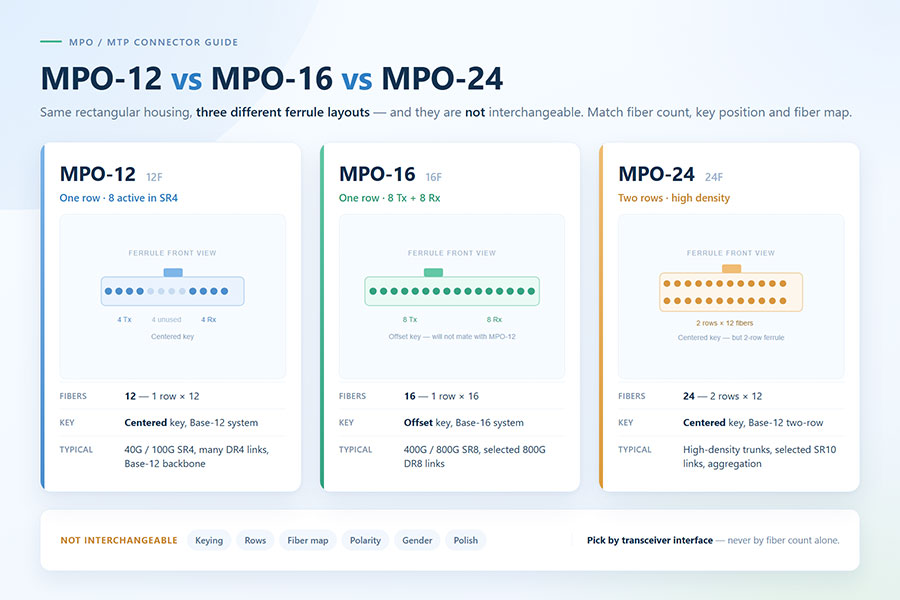
DR8 uses eight parallel optical channels over single-mode fiber. A typical 1.6T DR8 implementation is designed for a reach of up to 500 meters under its specified fiber and link conditions. It is relevant to high-bandwidth connections within large data center environments.
1.6T FR4
FR4 uses wavelength multiplexing to carry multiple optical channels over a fiber pair. A typical 1.6T FR4 implementation targets distances up to 2 kilometers, depending on the standard and product specification. It can support longer fiber routes without requiring eight separate parallel fiber pairs.
| Optical type | Fiber | Channel approach | Typical reach class | Potential application |
|---|---|---|---|---|
| DR8 | Single-mode | Eight parallel optical channels | Up to 500m | High-density data center links |
| FR4 | Single-mode | Four wavelength channels over a fiber pair | Up to 2km | Longer data center fiber routes |
Actual reach depends on the specific optical standard, module specification, fiber quality, connector configuration, and total channel loss. DR8 and FR4 are not interchangeable simply because both provide 1.6T aggregate bandwidth.
6. Why Switch Capacity Determines the Timing
Transceiver adoption is closely connected to switch ASIC development. A 1.6T optical module can only be deployed when the host platform provides the required electrical signaling, port interface, and system-level support.
For example, a 102.4T switch has twice the nominal aggregate switching capacity of a 51.2T switch. At a purely theoretical port-capacity level, 102.4T can be represented by 64 × 1.6T ports, while 51.2T can be represented by 64 × 800G ports. Actual switch configurations depend on the ASIC, port architecture, breakout options, and system design.
This illustrates why the next switch generation matters: higher-capacity ASICs create a stronger reason to use higher-bandwidth optical ports. The availability of 1.6T modules alone is not enough to drive widespread adoption.
7. Power, Cooling, and Signal Integrity at 1.6T
Higher bandwidth creates additional design challenges inside the transceiver and the switch. At 1.6T, the module must handle faster electrical signals, more demanding signal processing, and greater thermal constraints.
DSP performance: High-speed signal processing and FEC must maintain link performance within the specified operating conditions.
Electrical channel quality: The host SerDes, PCB traces, connectors, and module interface must support the required lane rate.
Optical engine performance: Lasers, photodetectors, drivers, and receivers must meet the optical specifications at the required data rate.
Thermal management: Module power and faceplate density affect heatsink design, airflow, and cooling strategy.
Power efficiency: Operators need to assess watts per bit and total system power rather than evaluating module bandwidth alone.
Reliability: Temperature, optical power, FEC behavior, and error statistics should be monitored during operation.
Some 1.6T modules use specialized thermal designs, including reduced-height heatsink configurations. These designs must be matched to the switch's mechanical and cooling requirements. A module designed for a particular cold-plate arrangement should not be assumed compatible with every liquid-cooled platform.
8. Will 1.6T Replace 800G?
No. The two generations are expected to coexist. 800G remains suitable for many current AI networks, particularly where deployed switches, network adapters, and fiber infrastructure are already qualified for that speed.
1.6T becomes more attractive when a network needs more bandwidth per port, supports 200G-per-lane electrical signaling, and can accommodate the power and thermal requirements of the new modules.
| Deployment situation | Practical direction |
|---|---|
| Existing 800G network with sufficient capacity | Continue using qualified 800G equipment |
| New switch platform with 200G-per-lane support | Evaluate 1.6T ports and compatible optics |
| Mixed-generation data center | Use 800G and 1.6T in separate compatible network tiers or links |
| Long-distance site-to-site transport | Evaluate suitable coherent optical solutions, including 1.6T coherent interfaces where supported |
| Existing fiber infrastructure | Test fiber type, connector, polarity, and link budget before reuse |
The migration should be driven by actual network requirements and platform readiness, not simply by the arrival of a new module generation.
9. What Network Operators Should Prepare Before Deploying 1.6T
Organizations planning next-generation AI networks should begin qualification before the new port speed becomes a critical capacity requirement.
Switch platform roadmap: Confirm whether the selected switch ASIC and system support 1.6T interfaces and 200G-per-lane signaling.
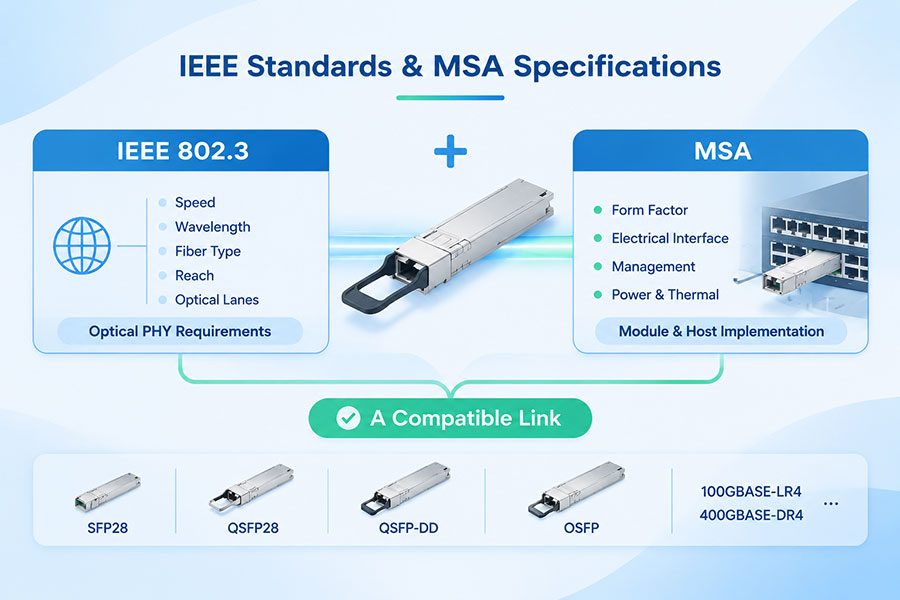
Form factor: Verify OSFP1600, OSFP-RHS, OSFP-XD, QSFP-DD1600, or the exact interface required by the platform. These mechanical formats are not automatically interchangeable.
Optical standard: Select DR8, FR4, or another supported implementation according to link distance and fiber infrastructure.
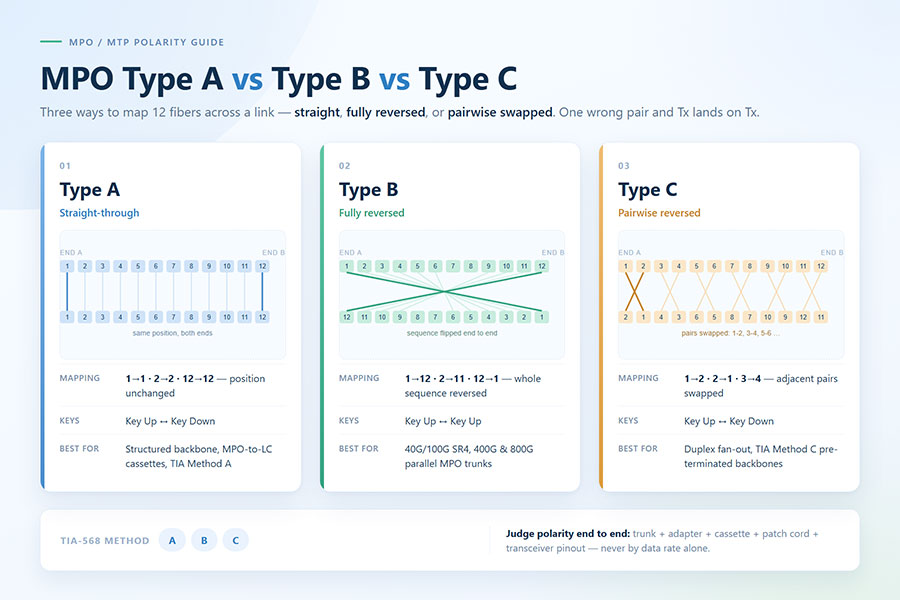
Fiber readiness: Validate connector type, polarity, insertion loss, fiber routing, and patch-panel capacity.
Thermal design: Confirm module power, airflow, heatsink clearance, and any cold-plate requirements.
Interoperability: Test both ends of the link, including module coding, firmware, FEC, switch software, and network protocol.
Supply planning: Qualify suppliers and alternative configurations early enough to support the deployment schedule.
10. C-LIGHT 1.6T Optical Connectivity for AI Data Centers
C-LIGHT provides high-speed optical connectivity products for data center, AI cluster, and high-performance computing applications. Its 1.6T OSFP-RHS product family is designed for next-generation high-bandwidth Ethernet networks.
1.6T OSFP-RHS Optical Transceiver
C-LIGHT 1.6T OSFP-RHS Optical Transceiver
The product family includes 1.6T DR8 and FR4 configurations for different single-mode fiber reach requirements.
Form factor: OSFP-RHS
Aggregate bandwidth: 1.6Tb/s
Lane architecture: 8 × 200G PAM4
DR8 configuration: Up to 500m, depending on the specified model
FR4 configuration: Up to 2km, depending on the specified model
Applications: AI data centers, high-density Ethernet fabrics, and hyperscale networks
800G connectivity for existing network generations
800G DAC – short-reach copper connectivity for compatible platforms.
800G AOC – integrated optical cable assemblies for supported 800G links.
C-LIGHT Optical Transceiver Portfolio – optical modules across multiple data rates and reach requirements.
When planning a 1.6T deployment, confirm the exact switch model, port interface, optical standard, fiber type, and thermal requirements before selecting a module. C-LIGHT can support product selection and compatibility evaluation for specific network platforms.
11. Conclusion
1.6T optical transceivers will become increasingly important as AI data centers deploy higher-capacity switch platforms and larger GPU clusters. Their strongest early applications are high-bandwidth links in scale-out fabrics, especially where 800G port density and aggregate network capacity are becoming constraints.
In 2026, 1.6T is moving into early deployment and qualification. Wider adoption will depend on 200G-per-lane switch platforms, optical module maturity, power and cooling performance, interoperability, and supply-chain readiness. 800G will continue to serve many networks during this transition.
For data center operators, the best strategy is to evaluate 1.6T alongside existing 800G infrastructure, validate complete links, and plan migration around real bandwidth demand rather than a fixed replacement date.
 >

 >
 >
 >
 >
 >
 >
 >