TEL:+86 132 6656 7067





Training a large AI model requires more than powerful GPUs. Thousands of accelerators may need to exchange data across servers and racks, synchronize model updates, and coordinate distributed computing operations. Optical modules provide the high-speed fiber connectivity that makes these large-scale networks possible. By converting electrical signals into optical signals and back again, they allow AI training traffic to travel between network devices over distances and bandwidth levels that are difficult to support with conventional copper connections alone.
Optical modules are particularly important in AI scale-out networks, where GPU servers connect through high-capacity Ethernet or InfiniBand fabrics. Their role is also expanding as optical technologies move closer to compute devices and as data center operators build larger, more distributed AI infrastructure.
1. Why Do AI Training Networks Need Optical Modules?
Distributed AI training divides computational work across multiple GPUs. These GPUs may be installed in the same server, different servers within a rack, or separate racks across a data center. They must exchange data to coordinate calculations and keep the training process synchronized.
As the number of accelerators increases, the network must provide sufficient bandwidth, manageable latency, and reliable connectivity. Copper connections remain useful for many short-reach applications, but their reach, signal-integrity requirements, and cabling density become more challenging as data rates and deployment distances increase.
High Bandwidth
Optical modules support high-speed links such as 400G and 800G, with 1.6T interfaces emerging for next-generation network platforms. These connections provide substantial capacity between servers and switches.
Longer Transmission Reach
Fiber supports connections between racks, rows, and network rooms over distances that are impractical for many passive copper links at comparable data rates.
High-Density Cabling
Fiber infrastructure can support large numbers of high-speed connections while helping manage cable routing and physical density in AI data centers.
Network Scalability
Optical links allow network operators to connect additional switches and compute groups as a training cluster expands across more racks and data halls.
2. How Do Optical Modules Work in an AI Network?
An optical module performs electrical-to-optical conversion at the transmitting end and optical-to-electrical conversion at the receiving end. The electrical signals originate from a host device, such as a network switch or server network interface. The optical signal then travels through fiber to the receiving module.
Basic Optical Module Transmission Process
Simplified point-to-point optical link. Actual implementations may use multiple lanes, breakout connections, or integrated optical interfaces.
Key components inside an optical module
| Component | Function | Importance in AI Networking |
|---|---|---|
| Laser | Generates the optical signal | Provides the light source for data transmission |
| Modulator | Encodes electrical data onto the optical carrier in applicable designs | Supports high-speed optical signal transmission |
| Photodetector | Converts received light into an electrical signal | Enables the receiving device to recover transmitted data |
| Driver and TIA | Drive the optical transmitter and amplify the receiver's electrical signal | Support signal integrity at high data rates |
| DSP, where used | Processes signals to compensate for transmission impairments | Supports demanding modulation and link conditions |
| Monitoring and Control Circuitry | Reports module operating information and diagnostic parameters | Helps operators monitor temperature, voltage, optical power, and other supported metrics |
The exact internal design depends on the optical module type. Different products may use VCSEL, DML, EML, silicon photonics, or other optical technologies. Not every module contains the same components or uses the same signal-processing architecture.
3. Where Are Optical Modules Used in AI Training Networks?
AI data center networks are commonly divided into different connectivity domains. Optical modules are not equally important in every domain. Their deployment depends on transmission distance, bandwidth requirements, network architecture, and the electrical or optical interfaces supported by the equipment.
Scale-up: Connectivity within an accelerator system
Scale-up networking connects accelerators within a tightly integrated compute domain, such as a server or rack-scale system. Technologies such as NVIDIA NVLink and AMD Infinity Fabric provide high-bandwidth communication between accelerators.
Many current scale-up links rely heavily on electrical connections because of their short distances and low-latency requirements. However, optical I/O, co-packaged optics, and other photonic approaches are being developed to extend connectivity and address the limits of electrical reach and density in future systems.
Scale-out: Connectivity across servers and racks
Scale-out networking connects multiple servers and accelerator groups through Ethernet or InfiniBand switching fabrics. This is one of the most important deployment areas for pluggable optical modules in large AI training environments.
Optical modules connect server-facing or switch-facing ports across racks, rows, and network pods. They provide the physical links required to build leaf-spine and other multi-tier network architectures.
Scale-across: Connectivity between data centers
Scale-across extends AI infrastructure across separate data centers or campuses. It relies on high-capacity optical transport and data center interconnect technologies, often including coherent optical systems, to connect geographically separated compute resources.
| Network Domain | Typical Connection | Optical Technology Role |
|---|---|---|
| Scale-up | Accelerator to accelerator within a tightly integrated system | Electrical links remain common; optical I/O and photonic integration are emerging options |
| Scale-out | Server to switch, switch to switch, and rack to rack | Pluggable optical modules and AOCs provide high-speed fiber connectivity |
| Scale-across | Data center to data center or campus to campus | Coherent optics and optical transport systems support longer-distance links |
4. How Do Optical Modules Support GPU-to-GPU Communication?
When GPUs are distributed across different servers, their communication often passes through network interface cards, switches, and optical links. Optical modules provide the physical transmission path for traffic moving between network devices.
For example, during distributed data-parallel training, GPUs process different portions of a training batch. They periodically exchange and synchronize gradients. When the GPUs are located on separate servers, the communication may travel through the data center network.
GPU Communication Across Two Servers
Server A
Server B
Simplified illustration. In a switched network, traffic normally passes through one or more network switches between the servers.
The optical modules do not determine how gradients are calculated or synchronized. Those tasks are handled by the GPU software stack and communication libraries. Instead, the modules carry the data across the physical network so that distributed computing operations can proceed.
In collective communication operations such as All-Reduce, many GPUs exchange information through the network. Network bandwidth, congestion, latency, and link reliability can therefore influence how efficiently the overall training job runs.
5. Why Are 400G, 800G, and 1.6T Optical Modules Important?
As AI clusters expand, the bandwidth required between servers and switches continues to increase. Higher-speed optical modules allow network operators to increase the capacity of individual links and build larger fabrics with fewer physical connections for a given aggregate bandwidth.
| Optical Module Rate | Common Network Context | Deployment Considerations |
|---|---|---|
| 400G | Established high-speed data center and AI network links | Form factor, lane architecture, fiber type, reach, and switch support |
| 800G | High-capacity AI scale-out fabrics and next-generation data center switches | Power consumption, thermal design, optical reach, and port density |
| 1.6T | Emerging next-generation high-bandwidth switching platforms | Host electrical interface, modulation, optical architecture, cooling, and platform qualification |
These rates represent nominal aggregate interface capacity, not guaranteed application throughput. Actual performance depends on protocol overhead, lane configuration, switch capacity, congestion, and the complete network architecture.
Why higher data rates matter
More bandwidth per port: Higher-speed links can increase the capacity between servers and network switches.
Higher switch density: Faster interfaces can help deliver greater aggregate bandwidth within a given switch platform.
Fewer physical ports for a target capacity: Higher per-port rates can reduce the number of links required for a given aggregate bandwidth, depending on the design.
New network architectures: Higher-speed optical interfaces support the development of larger GPU clusters and higher-capacity network fabrics.
Moving from 400G to 800G or 1.6T is not simply a matter of replacing one module with another. The switch ASIC, host electrical interface, firmware, form factor, thermal environment, fiber infrastructure, and link specifications must all support the new generation.
6. Optical Modules, AOCs, DACs, and AECs in AI Clusters
Optical modules are an important part of AI connectivity, but they are not the only available interconnect technology. DAC, AEC, and AOC cables are also used in data center environments. The right choice depends on the connection distance, signal requirements, equipment interfaces, power budget, and cost.
| Technology | Transmission Medium | Typical Application | Key Consideration |
|---|---|---|---|
| Optical Transceiver | Optical fiber with separate pluggable modules | Switch-to-switch and server-to-switch fiber links | Flexible reach and replaceable optical interfaces |
| DAC | Direct electrical copper connection | Short connections within or between nearby racks | Distance and electrical signal-integrity limitations |
| AEC | Active electrical copper connection | Supported short- and medium-reach high-speed links | Active signal conditioning and host compatibility |
| AOC | Integrated optical cable assembly | Short- and medium-reach optical connections | Fixed cable assembly with integrated optical interfaces |
For short distances, DAC and AEC can be practical alternatives to separate optical transceivers and fiber patch cords. AOCs provide optical transmission in an integrated cable assembly. Pluggable optical modules are particularly useful where fiber reach, replaceability, and flexible patching are important.
7. How Do Optical Modules Affect AI Training Performance?
Optical modules influence the physical network characteristics that support distributed training. They do not directly accelerate GPU calculations, but limitations in the network can prevent accelerators from being used efficiently.
Network bandwidth
Insufficient link capacity can create bottlenecks when many GPUs exchange data simultaneously. Higher-speed optical interfaces increase the available bandwidth between supported network endpoints.
Communication latency
Optical transmission provides a way to carry data over fiber between network devices. However, total communication latency also depends on propagation distance, transceiver processing, switch forwarding, queueing, and protocol behavior. A higher-rate optical module does not automatically guarantee lower end-to-end latency.
Congestion and synchronization
During collective operations, many GPUs may transmit data at the same time. If network capacity or traffic engineering is inadequate, congestion can delay communication and extend synchronization time. Optical modules provide link capacity, while switches and network protocols manage packet forwarding and congestion.
Reliability and link monitoring
AI training jobs can run for long periods. Unstable optical links may cause errors, retransmissions, or link interruptions. Digital diagnostics monitoring (DDM), where supported, provides information such as temperature, supply voltage, transmit power, and receive power. Network operators can use this information alongside switch counters and error statistics to monitor link health.
8. Key Parameters When Selecting Optical Modules for AI Networks
Selecting an optical module for an AI training network requires checking the complete link design rather than relying only on the nominal data rate.
| Parameter | What to Verify | Why It Matters |
|---|---|---|
| Data Rate | 400G, 800G, 1.6T, or the required interface speed | Must match the host port and network design |
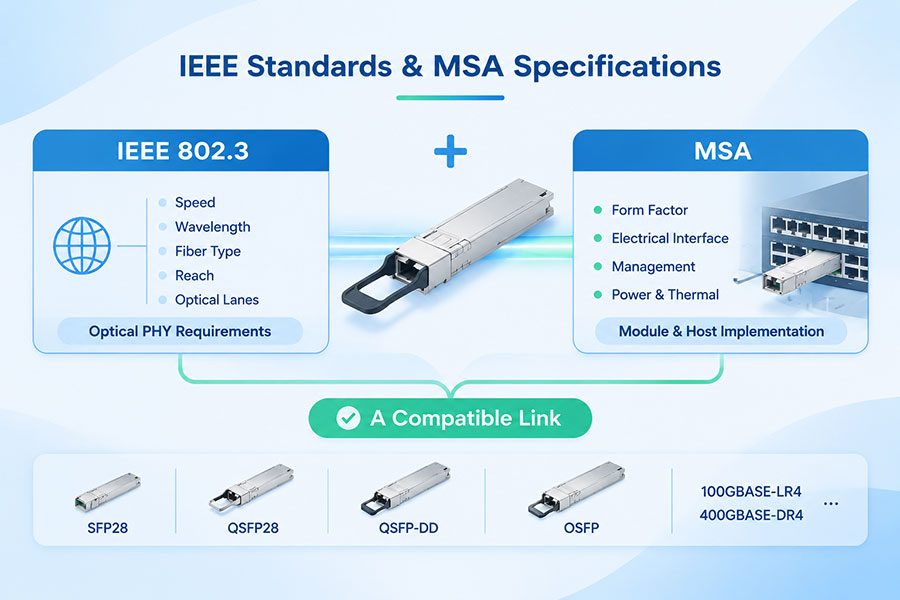
| Form Factor | QSFP-DD, OSFP, or another supported form factor | Determines physical and electrical compatibility |
| Transmission Distance | Actual fiber route and required reach | Ensures the optical interface supports the complete link |
| Wavelength | Specified operating wavelength or wavelength range | Must match the optical system and fiber configuration |
| Fiber Type | Single-mode or multimode fiber | Determines supported reach and optical interface requirements |
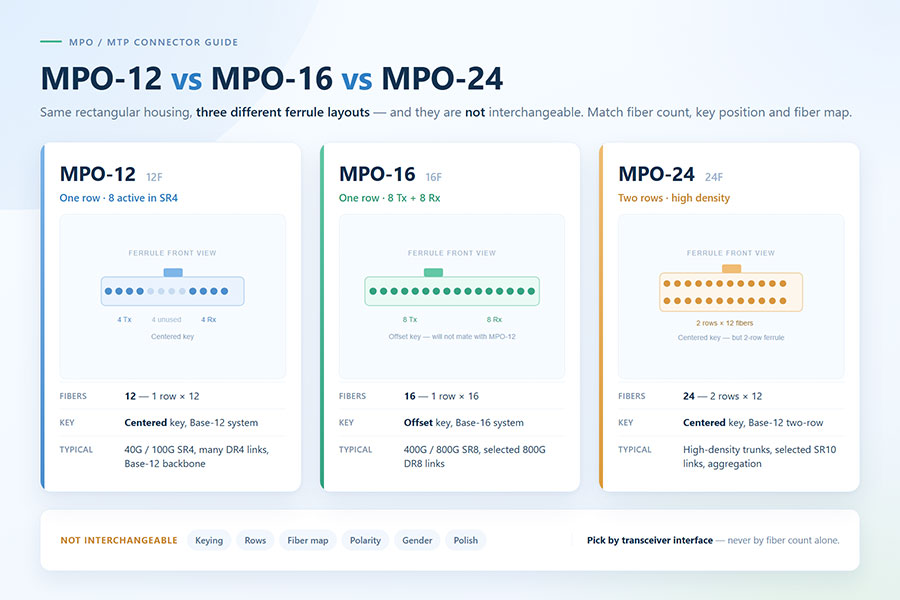
| Connector | LC, MPO, or another specified connector | Must match the transceiver and cabling infrastructure |
| Power Consumption | Module power and host cooling capability | Important for high-density switch deployments |
| Optical Budget | Transmit power, receiver sensitivity, and total path loss | Determines whether the link has sufficient optical margin |
| Host Compatibility | Switch model, port type, firmware, and supported coding | Prevents interface and interoperability problems |
Optical power budget
The optical power budget is particularly important when fiber routes include patch panels, connectors, and other passive components.
Total link loss includes fiber attenuation, connector loss, splice loss, and other components in the optical path. The design should retain suitable engineering margin and comply with the transceiver's specified operating conditions.
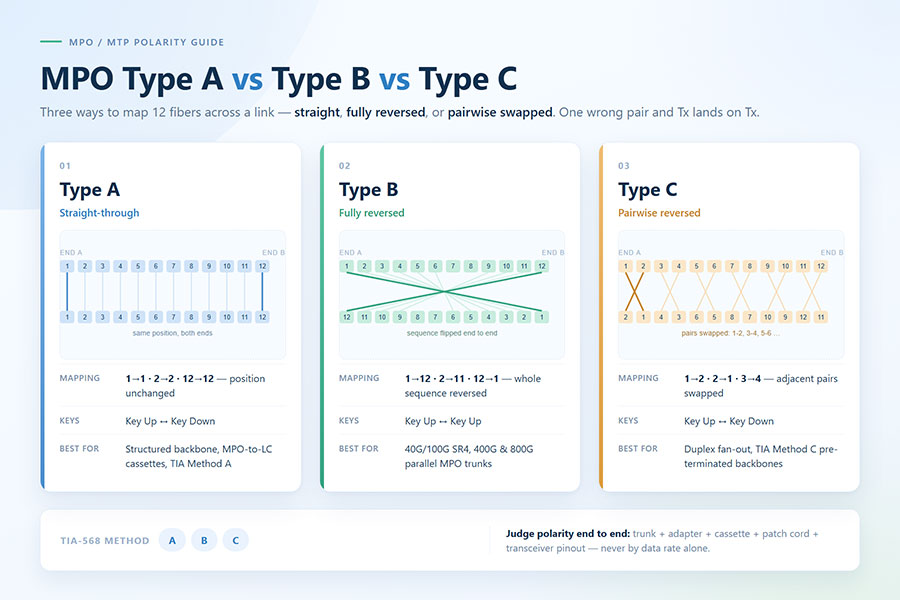
For high-density AI networks, engineers should also consider fiber polarity, connector cleanliness, cable routing, airflow, module temperature, and the operational requirements of the switch platform.
9. C-LIGHT Optical Connectivity for AI Data Centers
AI training networks require a combination of optical transceivers, high-speed cables, and fiber assemblies. The appropriate product depends on whether the connection is between a server and switch, between network switches, or across different network areas.
High-Speed Optical Transceivers
C-LIGHT Optical Transceiver Portfolio provides optical interface options for high-speed data center networking. Module selection should account for the host platform, data rate, reach, wavelength, fiber type, connector, and optical power budget.
For next-generation AI infrastructure, 800G and 1.6T optical interfaces are relevant to higher-capacity network designs, subject to platform qualification and deployment requirements.
800G High-Speed Interconnects
800G AOC – integrated optical cable connectivity for supported high-speed interfaces.
800G DAC – passive direct-attach copper connectivity for supported short-reach links.
800G AEC – active electrical cable connectivity for compatible platforms.
These products address different physical link requirements. They should be selected according to the equipment interface and actual connection distance.
1.6T Optical Connectivity
1.6T OSFP-RHS Optical Transceiver options are relevant to emerging high-bandwidth switch platforms. The exact optical configuration, reach, connector, host compatibility, and thermal requirements should be confirmed against the product specification.
High-Density Fiber Assemblies
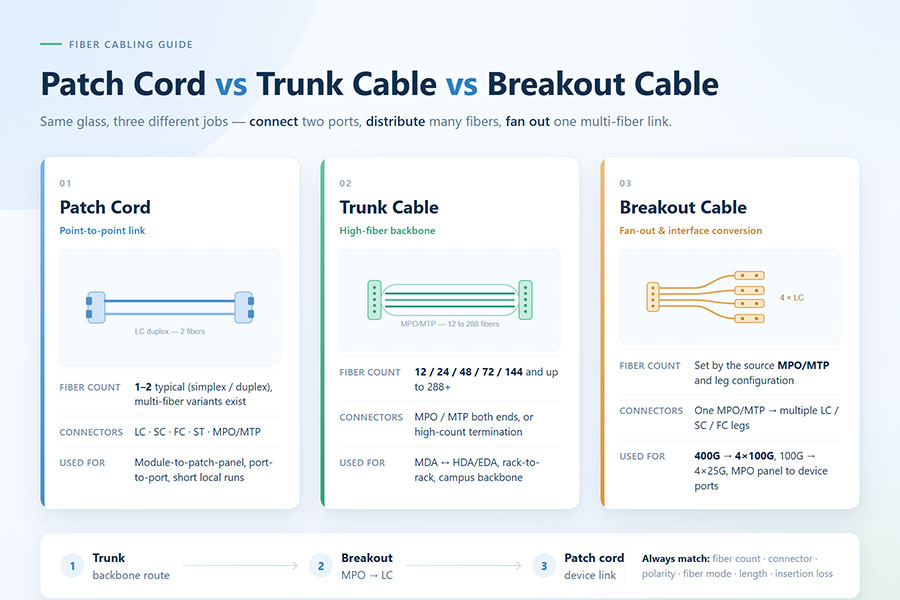
Multi-fiber assemblies help organize high-density optical connections in data center environments. Fiber count, polarity, connector configuration, and fiber grade must match the equipment and cabling design.
For AI data center projects, C-LIGHT can support optical connectivity requirements involving transceivers, DAC/AOC/AEC cables, and fiber assemblies. Visit C-LIGHT or Contact C-LIGHT for product and project inquiries.
10. How Will Optical Modules Evolve in Future AI Training Networks?
AI networking is moving toward higher port speeds, greater optical integration, and more flexible network architectures. Optical modules will remain important, but their physical implementation is expected to evolve as electrical bandwidth and power constraints become more challenging.
800G and 1.6T Interfaces
Higher-speed interfaces increase bandwidth per port and support the expansion of large GPU clusters. Thermal management, power efficiency, and host compatibility remain important design factors.
Linear Pluggable Optics
LPO architectures reduce or remove some signal-processing functions inside the module and rely more heavily on host-side signal processing. They require carefully designed host electrical interfaces.
Co-Packaged Optics
CPO places optical engines close to switch or compute ASICs, shortening electrical connections and supporting high-density optical I/O. It introduces different serviceability and system-integration considerations compared with conventional pluggable modules.
Optical I/O and Photonic Integration
Optical I/O aims to move optical interfaces closer to processors and accelerators, potentially extending high-bandwidth connectivity beyond traditional electrical reach limitations.
These technologies will not replace every conventional optical module at once. Pluggable transceivers, AOCs, electrical cables, and integrated photonic solutions are likely to coexist, serving different distances, bandwidth levels, and system architectures.
11. Conclusion
Optical modules play a central role in modern AI training networks by connecting servers, switches, and compute groups through high-speed fiber links. They enable the scale-out connectivity required for distributed GPU communication and help data centers expand network capacity across racks and larger infrastructure domains.
Their importance extends beyond raw bandwidth. Optical reach, link reliability, power consumption, thermal behavior, and compatibility all influence the performance and scalability of an AI network. At the same time, copper interconnects remain useful for many short-reach connections, while optical I/O and co-packaged optics are developing new approaches for future scale-up architectures.
As AI clusters move toward 800G and 1.6T connectivity, selecting the right optical module and fiber infrastructure will remain an essential part of building reliable, high-capacity training networks.
For optical transceivers, high-speed interconnects, and fiber connectivity solutions, visit C-LIGHT or Contact C-LIGHT.
 >

 >
 >
 >
 >
 >
 >
 >