TEL:+86 132 6656 7067




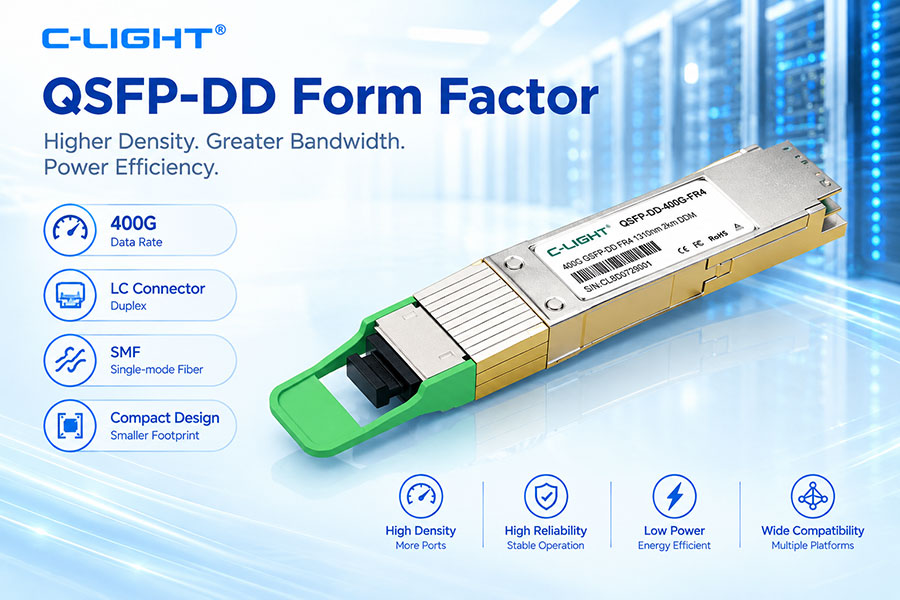
QSFP-DD, or Quad Small Form-factor Pluggable Double Density, is a high-density pluggable form factor designed for the increasing bandwidth requirements of modern data center and high-performance networking systems. Its defining feature is an electrical interface supporting up to eight high-speed lanes, allowing substantially higher aggregate bandwidth than conventional four-lane QSFP architectures while retaining a compact pluggable design.
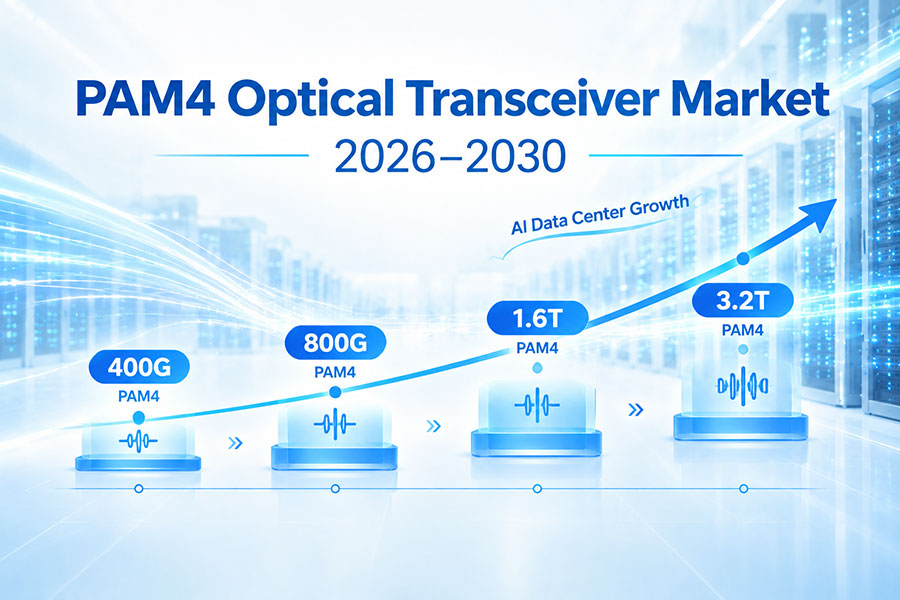
The QSFP-DD ecosystem has developed from 400G solutions to 800G and 1.6T generations. This evolution combines higher electrical lane rates, PAM4 signaling, improved signal integrity, enhanced thermal design, and increasingly sophisticated host-module interfaces. The result is a scalable platform for optical transceivers, DACs, AOCs, and other high-speed connectivity solutions.
1. What Is the QSFP-DD Form Factor?
QSFP-DD is a high-speed pluggable module and connector system defined by the QSFP-DD Multi Source Agreement. The "Double Density" designation refers primarily to the expansion of the electrical interface from the four-lane architecture used by traditional QSFP-family modules to an interface capable of supporting eight high-speed electrical lanes.
Unlike a specific optical transmission standard, QSFP-DD defines the physical and electrical platform on which different networking solutions can be implemented. A QSFP-DD module may therefore contain different optical engines, laser technologies, DSPs, driver components, or passive electrical connections depending on the target application.
This distinction is important because QSFP-DD describes the form factor, while the actual transmission capability is determined by the electrical design, optical standard, encoding method, wavelength, fiber type, and link architecture of the specific module.
2. QSFP-DD Electrical Architecture
The eight-lane electrical architecture is the foundation of QSFP-DD bandwidth scaling. In a typical implementation, the host system provides multiple high-speed transmit and receive lanes to the module, enabling the aggregate interface to scale as electrical signaling rates increase.
According to the QSFP-DD MSA specification, the original QSFP-DD architecture supports up to 400 Gb/s using eight 50 Gb/s-class electrical lanes or four 100 Gb/s-class lanes. QSFP-DD800 extends the architecture to up to 800 Gb/s using eight 100 Gb/s-class electrical lanes, while QSFP-DD1600 increases the target aggregate capability to 1.6 Tb/s using eight 200 Gb/s-class electrical lanes.
| Generation | Electrical Lane Architecture | Aggregate Capability | Signaling |
|---|---|---|---|
| QSFP-DD | 8 × 50G-class or 4 × 100G-class | Up to 400G | NRZ / PAM4 depending on implementation |
| QSFP-DD800 | 8 × 100G-class | Up to 800G | PAM4 |
| QSFP-DD1600 | 8 × 200G-class | Up to 1.6T | Higher-rate PAM4 |
The QSFP-DD800 specification supports electrical operation up to 112 Gb/s per lane at 56 GBd using PAM4, while QSFP-DD1600 targets up to 224 Gb/s per lane at 112 GBd. These higher lane rates significantly increase the design requirements for the host PCB, connector, module electronics, and overall channel.
3. From 400G to 800G and 1.6T
The development of QSFP-DD can be understood as a progression in electrical bandwidth density. Rather than introducing an entirely different physical package for every network speed, the architecture allows bandwidth to increase through higher lane rates and improved electrical and optical technologies.
At 400G, QSFP-DD provides a practical eight-lane platform for high-speed Ethernet and data center connectivity. The transition to 800G increases the electrical requirement to approximately 100G-class per lane, making PAM4 signaling and advanced equalization increasingly important.
The 1.6T generation raises the electrical target again to approximately 200G-class per lane. At these speeds, module construction, connector design, PCB losses, thermal dissipation, and signal integrity become closely interconnected design factors rather than independent considerations.
4. Why PAM4 Is Important to QSFP-DD
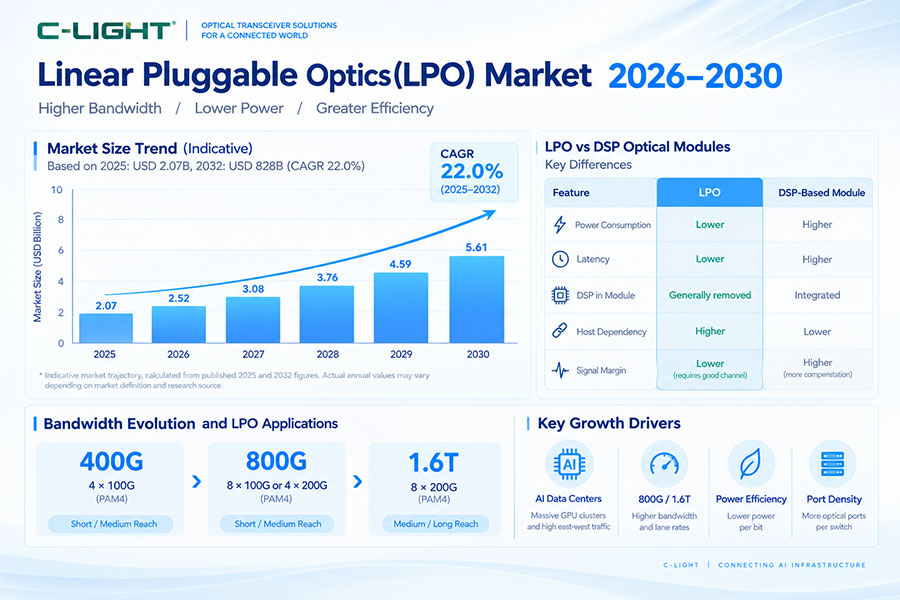
PAM4, or four-level pulse amplitude modulation, is a key technology used for increasing electrical data rates in modern high-speed transceivers. Unlike NRZ, which uses two signal levels to represent one bit per symbol, PAM4 uses four amplitude levels and can transmit two bits per symbol.
The higher symbol efficiency makes it possible to achieve greater bit rates without proportionally increasing the symbol rate. This is particularly useful for QSFP-DD800 and QSFP-DD1600, where electrical lane speeds become too high for traditional NRZ implementations to scale efficiently.
However, PAM4 also introduces tighter signal margins. The voltage separation between the four signal levels is smaller than the separation in a two-level signaling system, making the link more sensitive to noise, crosstalk, insertion loss, reflections, and other channel impairments.
For this reason, higher-speed QSFP-DD implementations typically require carefully optimized electrical channels and advanced equalization techniques.
5. Host-Side Signal Integrity
As the lane rate increases, the performance of the module alone is no longer sufficient to guarantee link quality. The complete high-speed channel includes the switch ASIC, PCB traces, vias, connectors, cage, module contacts, package structures, and internal module circuitry.
Insertion loss is one of the major concerns. High-frequency signal energy is attenuated as it travels through PCB materials, connectors, and other interconnect structures. Return loss, impedance discontinuities, crosstalk, via transitions, and connector behavior can further degrade the signal.
For 800G and 1.6T systems, host PCB stack-up, material selection, trace geometry, routing length, reference-plane continuity, and connector construction therefore require much tighter control.
This is also why two modules with the same nominal bandwidth can behave differently when deployed on different networking platforms. The host channel and system implementation are important parts of overall performance.
6. Thermal Design and Power Consumption
Increasing bandwidth generally increases the thermal challenge of the module. Depending on the implementation, a high-speed QSFP-DD module may include DSPs, retimers, laser drivers, optical engines, monitoring circuits, and other active components.
QSFP-DD thermal management therefore involves more than attaching a heat sink to the top of the module. The module, cage, heat sink, host PCB, and system airflow must operate as a coordinated thermal system.
The QSFP-DD MSA specification includes dedicated environmental and thermal considerations, while the QSFP-DD1600 generation introduces mechanical enhancements intended to support higher-power modules.
For high-density switches, thermal design can also affect the number of modules that can operate simultaneously. The available airflow, inlet temperature, heat sink capability, and system power budget should be considered when selecting high-speed QSFP-DD modules.
7. QSFP-DD Mechanical Design
The mechanical design of QSFP-DD is intended to provide high port density while preserving the practical advantages of a pluggable networking interface. The system includes the module housing, cage, connector, host PCB interface, heat sink structure, and mechanical retention features.
The QSFP-DD, QSFP-DD800, and QSFP-DD1600 generations retain a common mechanical foundation while introducing enhancements where higher electrical performance and thermal requirements demand them. The QSFP-DD1600 design, for example, adds mechanical changes associated with higher-power operation and improved signal integrity.
This evolutionary approach helps equipment manufacturers develop higher-bandwidth platforms without abandoning the general QSFP-DD ecosystem.
8. QSFP-DD Compatibility and Backward Support
Backward compatibility is one of the important characteristics of the QSFP-DD platform. The QSFP-DD and QSFP-DD800 cage and connector systems are designed to support compatible four-lane QSFP-family modules, allowing network equipment to accommodate different generations of transceivers where the host platform supports them.
The QSFP-DD1600 mechanical system is also designed as an incremental enhancement while maintaining backward compatibility with QSFP-DD and compatible QSFP solutions.
It is important to distinguish mechanical compatibility from complete system interoperability. A module may physically fit into a port but still require appropriate firmware support, electrical configuration, module management, optical standard support, power capability, and vendor coding.
9. QSFP-DD and CMIS Management
High-speed pluggable modules require more than electrical and optical connectivity. The host system also needs a management interface for module identification, monitoring, diagnostics, configuration, and status information.
QSFP-DD works together with the Common Management Interface Specification, commonly known as CMIS. The QSFP-DD MSA documentation identifies a mutual dependency between the hardware specification and CMIS for timing parameters, management interfaces, and register definitions.
This management architecture allows network equipment to obtain information such as module type, temperature, voltage, power-related data, alarms, and diagnostic information, depending on the specific module implementation and supported CMIS features.
10. Optical Architecture Options
QSFP-DD is not limited to one optical architecture. Different modules can use different transmitter and receiver configurations according to the required transmission distance, fiber infrastructure, and network topology.
Short-reach solutions may use parallel multimode optics, while longer-reach single-mode solutions can employ parallel or duplex optical architectures. Other implementations may use different wavelength configurations, optical multiplexing technologies, or coherent technologies depending on the application.
This flexibility makes the QSFP-DD form factor suitable for a broad range of optical networking requirements. The form factor remains relatively consistent while the internal optical architecture can be adapted to specific link requirements.
11. QSFP-DD for DAC and AOC Applications
The QSFP-DD platform is also used for active and passive electrical connectivity. QSFP-DD DACs can provide short-distance direct-attach connections with low latency and a relatively simple signal path, making them suitable for short switch-to-switch or server-to-switch connections.
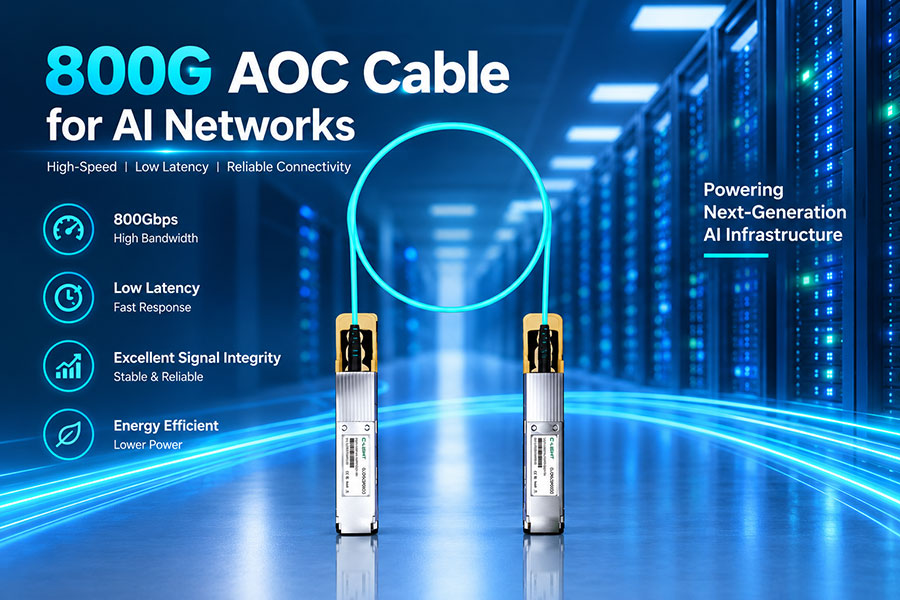
QSFP-DD AOCs integrate optical transmission within a cable assembly and can provide longer reach than passive copper solutions while maintaining a fixed cable configuration.
For network designers, the choice between an optical transceiver, DAC, and AOC depends on distance, power consumption, cabling requirements, installation flexibility, latency considerations, and overall network architecture.
12. QSFP-DD Applications in Data Centers
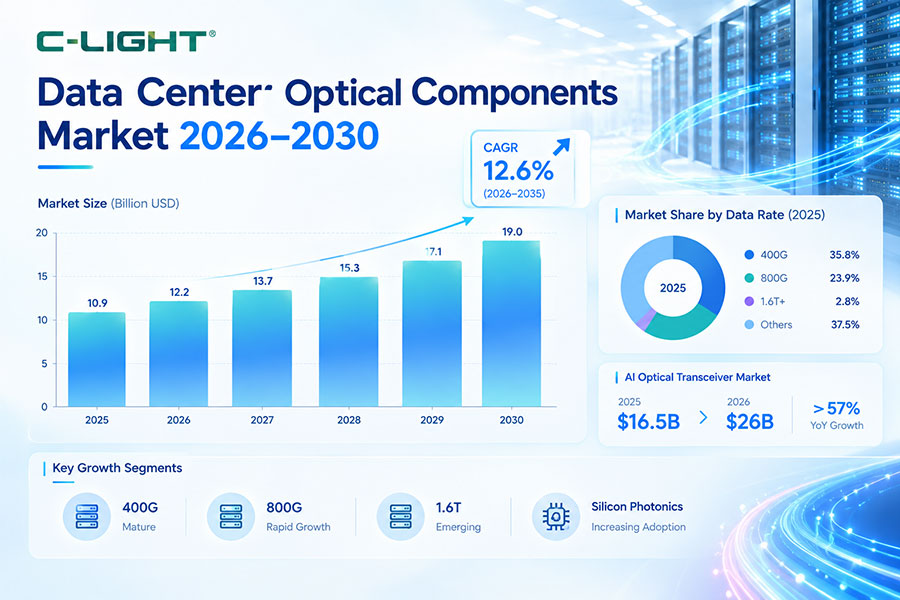
QSFP-DD is widely suited to high-density data center networking. Typical applications include switch-to-switch links, server-to-switch connections, leaf-spine networks, storage networks, data center interconnects, and high-performance computing systems.
The compact form factor is especially valuable in high-density switch platforms where front-panel space is limited. Increasing the bandwidth of each pluggable port can raise the aggregate switching capacity available within the same physical rack space.
QSFP-DD is therefore closely aligned with the migration from 100G and 200G networks toward 400G and 800G architectures.
13. QSFP-DD in AI and High-Performance Networks
AI and accelerated computing systems create substantial east-west traffic between compute nodes, GPUs, storage systems, and network switches. This places greater demands on network bandwidth, port density, latency, and power efficiency.
High-speed QSFP-DD modules can provide 400G and 800G connectivity for these environments, while higher-generation architectures provide a path toward future 1.6T networking. The form factor is particularly relevant where high bandwidth must be delivered within a dense switch front panel.
However, AI networking does not make a module suitable simply because it has a high nominal data rate. Switch compatibility, optical reach, fiber type, link budget, power consumption, thermal conditions, and interoperability must still be evaluated as part of the complete network design.
14. QSFP-DD vs. QSFP56 and QSFP112
QSFP56, QSFP112, and QSFP-DD are related high-speed pluggable concepts, but they are not interchangeable terms. QSFP56 generally refers to a four-lane architecture operating at approximately 56G PAM4-class electrical rates and is commonly used in 200G applications.
QSFP112 increases the electrical lane rate to approximately 112G-class and is commonly associated with 400G or 800G architectures depending on the optical implementation and host design.
QSFP-DD, by contrast, describes an eight-lane high-density form factor family. QSFP-DD800 can support up to eight 112 Gb/s-class electrical lanes, while QSFP-DD1600 scales toward eight 224 Gb/s-class lanes.
| Feature | QSFP56 | QSFP112 | QSFP-DD |
|---|---|---|---|
| Typical Lane Architecture | 4 lanes | 4 lanes | Up to 8 lanes |
| Electrical Rate | 56G-class | 112G-class | 50G to 224G-class depending on generation |
| Signaling | PAM4 | PAM4 | NRZ / PAM4 depending on generation |
| Typical Bandwidth Range | 200G-class | 400G / 800G implementations | 400G / 800G / 1.6T generations |
| Main Advantage | Compact 200G connectivity | Higher lane-rate density | Eight-lane bandwidth scalability |
The important distinction is that QSFP112 primarily describes a 112G-class electrical lane technology and related module format, while QSFP-DD defines a broader high-density eight-lane form-factor family.
15. Key Advantages of QSFP-DD
QSFP-DD combines several characteristics that are important for modern networking platforms. Its eight-lane electrical architecture provides a scalable bandwidth path, while its compact size supports high front-panel port density.
The ecosystem also accommodates multiple module types and transmission architectures, including optical transceivers, DACs, and AOCs. Backward compatibility with supported QSFP-family modules can further simplify migration between network generations.
At the same time, the growing bandwidth of QSFP-DD modules has increased the importance of electrical channel design, thermal management, module interoperability, and host platform validation.
16. What to Consider When Choosing a QSFP-DD Module
Bandwidth is only one factor when selecting a QSFP-DD solution. The required optical reach, fiber type, connector configuration, wavelength, transmission standard, power consumption, host switch compatibility, module coding, and thermal environment should all be evaluated.
For short links, DACs or AOCs may provide a practical solution. For longer optical links, the appropriate single-mode or multimode transceiver should be selected according to the required distance and network architecture.
For 800G and higher-speed deployments, host compatibility becomes particularly important because electrical lane rates, power limits, thermal conditions, firmware support, and CMIS implementation can vary between networking platforms.
17. Future Development of the QSFP-DD Ecosystem
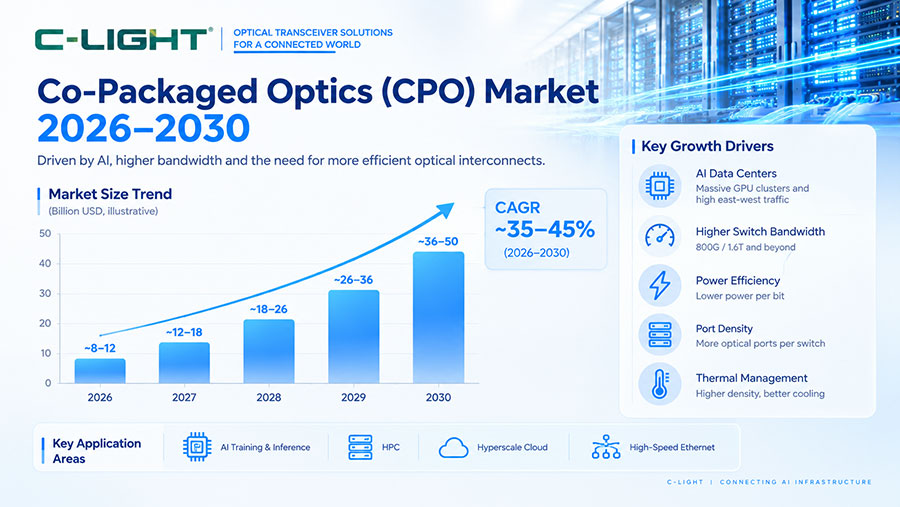
The evolution of QSFP-DD reflects the broader development of high-speed Ethernet and data center networking. Moving from 400G to 800G and 1.6T requires coordinated advances in switch ASICs, electrical interfaces, optical components, packaging, thermal systems, and module management.
The continued use of a related pluggable ecosystem provides network equipment designers with a scalable approach to bandwidth growth. At the same time, higher electrical speeds will continue to place greater demands on PCB materials, connectors, signal processing, thermal systems, and manufacturing tolerances.
18. Conclusion
QSFP-DD is more than a high-speed optical module package. It is a scalable pluggable architecture built around an eight-lane electrical interface and designed to support successive generations of network bandwidth.
From 400G QSFP-DD to QSFP-DD800 and QSFP-DD1600, the platform demonstrates how higher lane rates, PAM4 signaling, improved signal integrity, and enhanced thermal design can increase bandwidth while maintaining high port density.
For data centers, AI networks, high-performance computing, and other bandwidth-intensive environments, QSFP-DD provides a flexible platform for optical transceivers, DACs, and AOCs. As 800G and 1.6T networks continue to develop, successful deployment will increasingly depend on system-level compatibility, signal integrity, thermal management, and interoperability rather than bandwidth alone.
 >
>

 >
>
 >
>
 >
>
 >
>
 >
>
 >
>
 >
>