TEL:+86 132 6656 7067




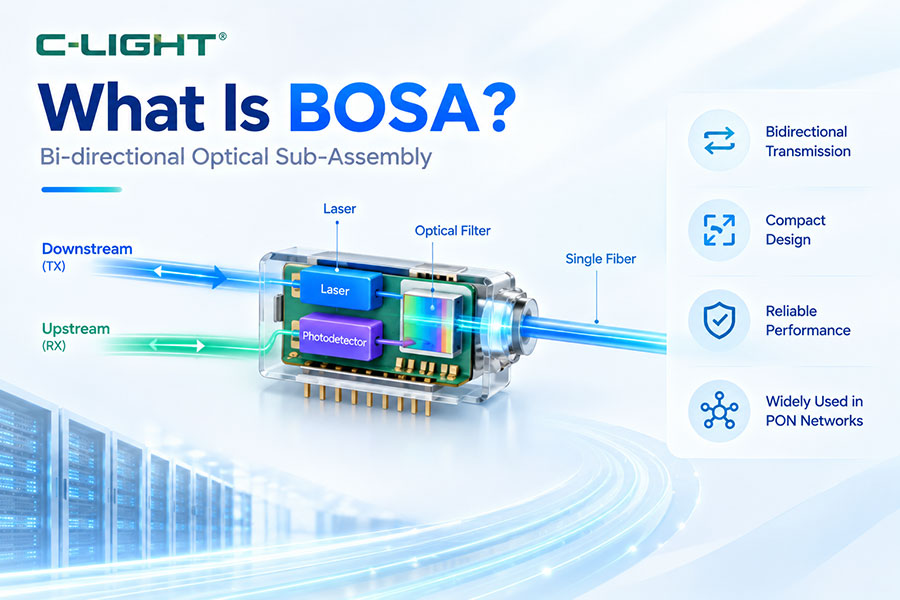
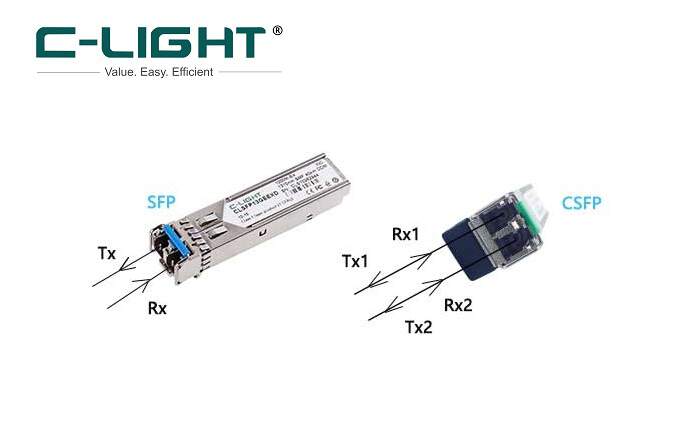
CSFP (compact SFP), as its name suggests, is a more integrated SFP optical module. Comparing to normal SFP, our CSFP is housing in a MSA standard package, but engaging the hardware and software system of two sets of common SFP optical modules designed by using double BOSA. The hardware and software of the two optical modules can work simultaneously in a device optical port that supports the CSFP protocol standard. Therefore, a CSFP module has the working capability of two SFP modules, but only occupies the optical port resources of one SFP optical module.
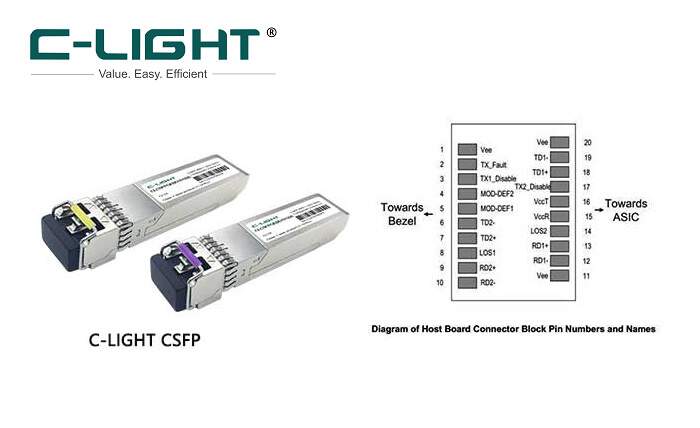
Why is there a market demand for CSFP products? The reason is mainly that compared with the ordinary SFP optical module, the CSFP can double the density of the network wiring optical port under the same rack panel area, and alleviate the demand for the size of the rack panel in the Ethernet and IDC equipment room.
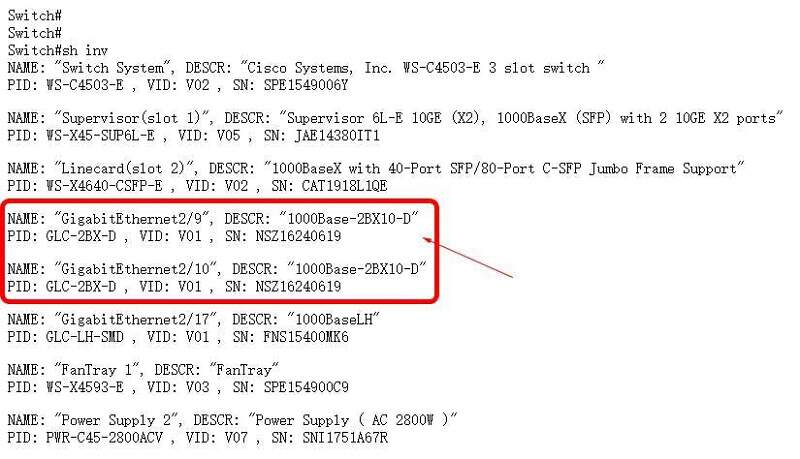
Which brands of devices can C-LIGHT’s CSFP be compatible with? For the market demand, Cisco, Huawei, Nokia (Alcatel-Lucent) and other first-line companies have introduced the Cisco WS-C4503-E, Huawei S5700-52X-LI-48CS-AC, Nokia 3HE10642AA 7750SR and other CSFP switches and routers.It has been verified that C-LIGHT’s CSFP optical module can be used normally in the above series of devices.
1.CSFP running verification videos
2. Click here to view the CSFP running verification document.
What are the features of C-LIGHT’S CSFP module?
1) complete varieties.
At present, the company has launched a full range of CSFP optical modules for Gigabit GE 10km to 80km 1310nm/1490nm/1510nm/1550nm/1570nm CWDM for industrial/commercial applications. And in 2018, the new 10G CSFP series optical module will be launched. For details, please contact us alisa@c-light.com.
2) Low Power Consumption.
The measured power consumption of the CSFP optical module in the industrial full temperature range is -40°C to 50°C<1w, 50="">
3) Interoperability.
The optical CSFP optical module realizes the perfect compatibility of application on a variety of Cisco, Huawei, Nokia and other branded devices. No need to change modules and upgrade.
4) Cost-effective.
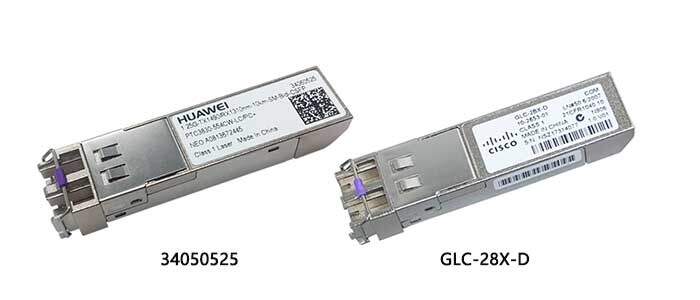
Compared with various brands of CSFP optical modules (34050525/GLC-28X-D), Chosing our CSFP optical module will help reduce 30~50% cost.
CSFP vs Ordinary SFP Optical Transceiver FAQ
Q1: What is the difference between CSFP and ordinary SFP optical transceivers?
Answer: The main difference between CSFP and ordinary SFP optical transceivers is the number of optical channels supported within the same physical size. A standard SFP module typically provides one optical channel, while CSFP integrates two independent bidirectional optical channels into a compact SFP-size package, effectively doubling port density without increasing equipment space.
Q2: What is a CSFP optical transceiver used for?
Answer: A CSFP optical transceiver is designed for high-density optical networks where equipment space and fiber resources are limited. It is commonly used in FTTx deployments, ISP access networks, carrier aggregation networks, enterprise networks, and scenarios requiring more connections without expanding rack space.
Q3: How does CSFP increase network port density compared with SFP?
Answer: CSFP increases network port density by integrating two optical transceiver functions into a single module. Through a dual BOSA architecture, one CSFP module can provide the working capability of two SFP modules while occupying only one optical port position, allowing operators to support more users with the same hardware footprint.
Q4: What are the advantages of CSFP compared with traditional SFP modules?
Answer: Compared with traditional SFP modules, CSFP provides higher port density, better space utilization, reduced equipment requirements, and improved deployment efficiency. It helps operators reduce rack space consumption, lower power requirements, and simplify network expansion in high-density access environments.
Q5: Can CSFP replace ordinary SFP modules?
Answer: CSFP cannot directly replace all ordinary SFP modules because it requires equipment support for the CSFP protocol and hardware architecture. However, in compatible network equipment, CSFP can provide a more efficient alternative by delivering multiple optical connections through a single module slot.
Q6: What is the difference between CSFP and BiDi SFP?
Answer: CSFP and BiDi SFP both improve fiber utilization, but they solve different problems. BiDi SFP uses a single fiber for bidirectional transmission through different wavelengths, while CSFP integrates multiple optical channels into one compact module to increase equipment port density. CSFP is mainly designed for high-density aggregation and access networks.
Q7: What are the typical applications of CSFP optical modules?
Answer: CSFP optical modules are widely used in fiber access networks, FTTx deployments, ISP networks, telecom aggregation systems, and high-density optical platforms. They are especially suitable for operators that need to increase subscriber capacity while reducing equipment footprint.
Q8: Why are CSFP optical transceivers becoming important for future access networks?
Answer: As fiber networks continue expanding and subscriber density increases, operators need solutions that provide higher capacity within limited equipment space. CSFP helps address these challenges by increasing optical port density, improving infrastructure efficiency, and supporting scalable network expansion.
 >
>

 >
>
 >
>
 >
>
 >
>
 >
>
 >
>
 >
>