TEL:+86 132 6656 7067





5G edge computing places processing and applications closer to users, radio access networks, and enterprise devices. By moving selected workloads away from distant centralized cloud facilities, operators can reduce network backhaul traffic and improve response times for applications that depend on local processing.
6G-oriented edge computing is expected to extend this model through closer coordination between communications, distributed AI, sensing, and computing resources. Rather than introducing an entirely separate computing category, it may evolve toward a more adaptive edge-to-cloud environment in which workloads are placed according to latency, computing capacity, energy availability, and service requirements. As of October 2026, 6G edge computing remains an evolving architecture direction, not a finalized universal deployment specification.
1. 5G Edge Computing vs 6G Edge Computing: Key Differences
The main distinction is the expected evolution of workload placement and network-compute coordination. Existing 5G edge platforms already support real-time applications, local data processing, and distributed cloud services. Future 6G-oriented systems may extend these capabilities to more AI-intensive and sensing-aware services across a wider range of computing locations.
| Technical Dimension | 5G Edge Computing | 6G-Oriented Edge Computing |
|---|---|---|
| Deployment status | Commercially deployed through multi-access edge computing, private networks, regional edge facilities, and enterprise platforms. | Architecture and capabilities are evolving alongside IMT-2030 and related standardization work. |
| Primary objective | Move selected applications and network functions closer to users to improve responsiveness and reduce unnecessary backhaul. | Coordinate distributed computing, AI services, sensing-related workloads, and communication resources more dynamically. |
| Computing workload | Local application processing, content delivery, industrial applications, analytics, and selected mobile-network functions. | May combine these workloads with more distributed AI inference, model management, digital twins, and sensing-data processing. |
| Workload placement | Uses predetermined or orchestrated placement across on-premises, edge, regional, and central cloud locations. | Greater emphasis is expected on selecting resources according to service needs, computing availability, and network conditions. |
| AI integration | AI can run at the edge where supported by available compute resources and application requirements. | AI and communication are explicit IMT-2030 usage directions, potentially increasing the role of distributed AI services. |
| Latency strategy | Reduces the distance to processing resources for applications with latency-sensitive requirements. | May coordinate radio, transport, and computing decisions to meet diverse end-to-end service objectives. |
| Transport requirements | Uses Ethernet, fiber, WDM, and other suitable connections according to the link architecture. | May require more flexible bandwidth, dependable low-latency links, and stronger coordination between optical and compute resources. |
| Resource management | Cloud orchestration and network management allocate available resources according to current platform capabilities. | AI-assisted and service-aware orchestration are development directions for coordinating distributed resources. |
| Energy efficiency | Balances local processing benefits against edge-site power, cooling, and maintenance costs. | Expected to place greater emphasis on energy-aware workload placement and overall communication-computing efficiency. |
These are architectural trends, not a mandatory separation between 5G and 6G infrastructure. A well-designed 5G deployment can already support edge AI, automated orchestration, and advanced optical transport. A future 6G network may continue using existing edge facilities where their computing resources, connectivity, power capacity, and service performance are sufficient.
2. How Edge Computing Works in 5G Networks
5G edge computing is closely associated with Multi-access Edge Computing (MEC), a framework developed through ETSI that brings cloud-computing capabilities and an IT service environment closer to the network edge. MEC can make application services available near the radio access network while allowing authorized applications to use relevant network information where supported.
In a typical deployment, user traffic can be handled locally when the required application or user-plane resources are available at an edge site. Traffic that requires centralized services can continue toward a regional or central data center.
| 5G Edge Component | Function | Infrastructure Requirement |
|---|---|---|
| Radio access network | Connects wireless devices to the mobile network. | Suitable fronthaul or backhaul transport, timing, and radio-interface support. |
| Edge computing platform | Runs applications and services closer to users and devices. | Local servers, virtualization or container platforms, storage, and reliable network connectivity. |
| Local user-plane function | Can provide a local traffic breakout path where the 5G core architecture and policies support it. | Compatible mobile-core configuration and routing to the local application environment. |
| Regional cloud | Hosts applications that need broader capacity or serve users across a region. | Higher-capacity aggregation and regional optical transport. |
| Central cloud or core facility | Provides centralized services, management, and workloads that do not need local execution. | Scalable transport, resilient connectivity, and appropriate data center interconnect. |
Edge computing does not eliminate centralized cloud infrastructure. Instead, it places suitable workloads at different points in the network. Applications that require broad computing capacity may remain in centralized facilities, while latency-sensitive or data-intensive processing can run closer to the source.
Typical 5G Edge Computing Applications
Industrial automation: Local processing supports machine monitoring, quality inspection, and control applications with defined performance requirements.
Video analytics: Edge processing can filter or analyze video streams before selected data is sent to a central facility.
Enterprise private networks: Local applications can keep operational data within an enterprise environment where required.
Content delivery: Cached content and application services can be placed closer to users to reduce repeated long-distance data transfers.
Connected mobility: Edge platforms can support selected local processing and coordination functions when the end-to-end system is designed for them.
Actual latency and application performance depend on radio conditions, transport distance, server processing, software architecture, and workload placement. Using 5G and an edge server does not automatically guarantee a particular end-to-end response time.
3. How 6G-Oriented Edge Computing May Evolve
The IMT-2030 framework expands the mobile-network vision beyond traditional high-speed connectivity. Its usage scenarios include AI and communication, integrated sensing and communication, immersive communication, and hyper-reliable low-latency communication. These directions may increase the importance of computing resources distributed across devices, access sites, regional facilities, and centralized clouds.
A future edge-to-cloud environment may coordinate more than application placement. It could consider the type of data being processed, the required response time, available compute capacity, the state of the optical transport network, and the energy cost of executing a workload at a particular location.
Distributed AI inference: Run suitable AI models near data sources or users to reduce the amount of information that must travel to remote computing resources.
Adaptive workload placement: Assign tasks to device, far-edge, near-edge, regional, or central cloud resources according to service requirements and available capacity.
Sensing-data processing: Analyze selected sensing outputs near their source when processing delay, data volume, or privacy requirements favor local execution.
Network-aware computing: Consider transport capacity and latency when deciding where to run applications or exchange data.
Digital twins and predictive operations: Use computing models and network telemetry to simulate conditions, forecast resource demand, or support operations where validated data is available.
Energy-aware orchestration: Balance local processing against centralized compute efficiency, network energy, and facility capacity.
These capabilities remain development directions rather than requirements for every 6G deployment. Some applications may need near-real-time local processing, while others can tolerate a longer round trip to a regional cloud. Large-scale AI model training may remain concentrated in major data centers because of compute, memory, and accelerator requirements.
4. Edge-to-Cloud Architecture: 5G vs 6G
Both 5G and future 6G environments can use a hierarchical computing architecture. The expected evolution is toward more coordinated placement and management of workloads across the hierarchy, rather than replacing all existing layers with a new edge platform.
| Computing Layer | Role in 5G Deployments | Potential Role in 6G-Oriented Deployments |
|---|---|---|
| Device or on-premises edge | Runs local applications, device-side processing, and selected enterprise workloads. | May handle time-sensitive inference, local data filtering, and selected sensing-related tasks. |
| Far edge | Places compute near access sites or local traffic aggregation points where needed. | May support services requiring tight response budgets and rapid action close to the data source. |
| Near edge or regional edge | Hosts shared services for multiple access sites, including local applications and selected network functions. | May coordinate AI inference, regional resource pooling, and applications serving multiple edge locations. |
| Regional or central cloud | Provides scalable compute, data services, centralized applications, and mobile-core functions. | Remains important for large-scale training, shared data services, and workloads that do not require local execution. |
| Distributed AI infrastructure | Can be deployed where current applications justify local AI processing. | May be more deeply integrated with communication and computing orchestration as the ecosystem develops. |
Workload placement should follow application requirements rather than the mobile generation. A video-analysis task that must respond immediately may run at the far edge, while long-term analytics can run centrally. The same principles apply in 5G and 6G, although future services may increase the number and complexity of placement decisions.
5. Latency, Bandwidth and Reliability Requirements
Edge computing can reduce the transport component of latency by keeping workloads close to users or devices. However, end-to-end response time is influenced by the complete service path, including radio scheduling, transport, switching, queuing, application processing, and any return traffic.
| Performance Factor | 5G Edge Computing | 6G-Oriented Edge Computing |
|---|---|---|
| Response time | Reduces avoidable trips to distant cloud resources when an application can run locally. | May coordinate processing and transport decisions to better support a diverse range of latency-sensitive services. |
| Transport bandwidth | Uses local processing and traffic breakout to limit some backhaul requirements. | May need to move larger AI, sensing, and application data flows between distributed compute locations. |
| Jitter | Depends on radio scheduling, queuing, server load, and transport behavior. | Requires application-specific control of delay variation where timing-sensitive services demand it. |
| Reliability | Uses appropriate redundancy, failover, and local service continuity mechanisms. | May require coordinated recovery across edge compute, radio, optical transport, and application layers. |
| Synchronization | Supports timing requirements of the selected radio and application architecture. | May support more demanding coordination scenarios where the actual service and interface specify them. |
| Compute availability | Limited by edge-server capacity, power, cooling, and operational conditions. | May require more dynamic resource selection across diverse edge and cloud facilities. |
A short route with an overloaded edge server can perform worse than a longer route to a lightly loaded regional facility. Effective placement must consider both network latency and processing availability. Similarly, local breakout is beneficial only when the application data and policy allow local execution.
Reliability is also an end-to-end property. Redundant fiber links cannot compensate for a single unprotected application instance, and redundant edge servers may not preserve service if routing, state replication, or recovery procedures are not designed correctly.
6. Optical Fiber and WDM: The Transport Foundation for Edge Computing
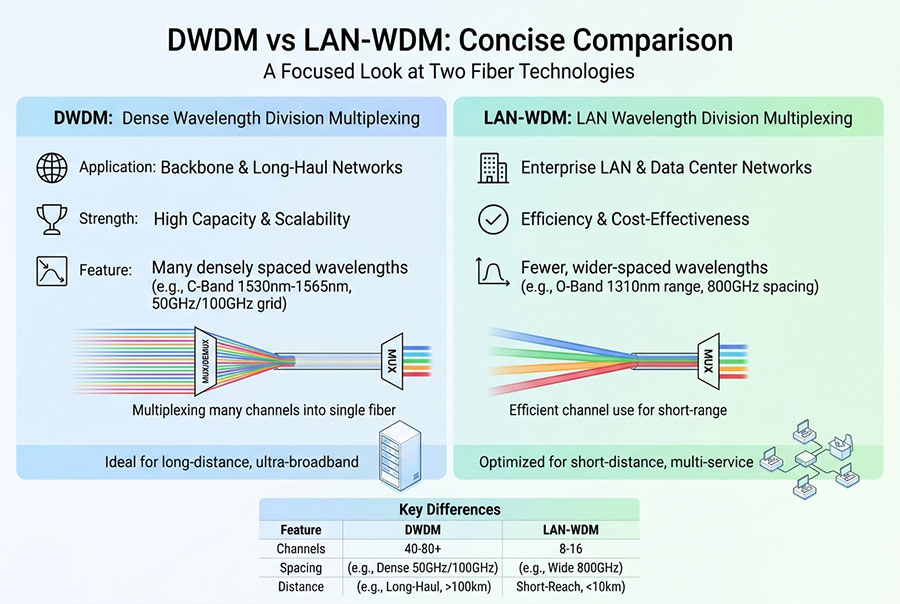
Distributed computing increases the importance of transport between radio sites, edge facilities, regional clouds, and centralized data centers. Optical fiber provides the physical medium for many of these connections, while Wavelength Division Multiplexing (WDM) allows multiple optical channels to share limited fiber resources.
| Optical Technology | Function | Relevance to Edge Computing |
|---|---|---|
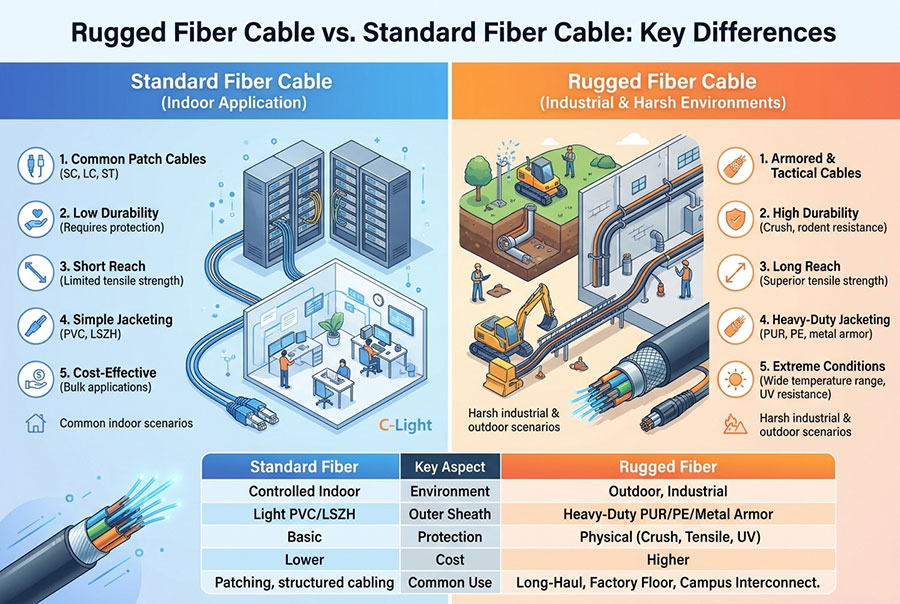
| Single-mode fiber | Provides optical transmission over access, metro, and longer-distance routes. | Connects radio sites, edge locations, aggregation nodes, and regional facilities according to the route design. |
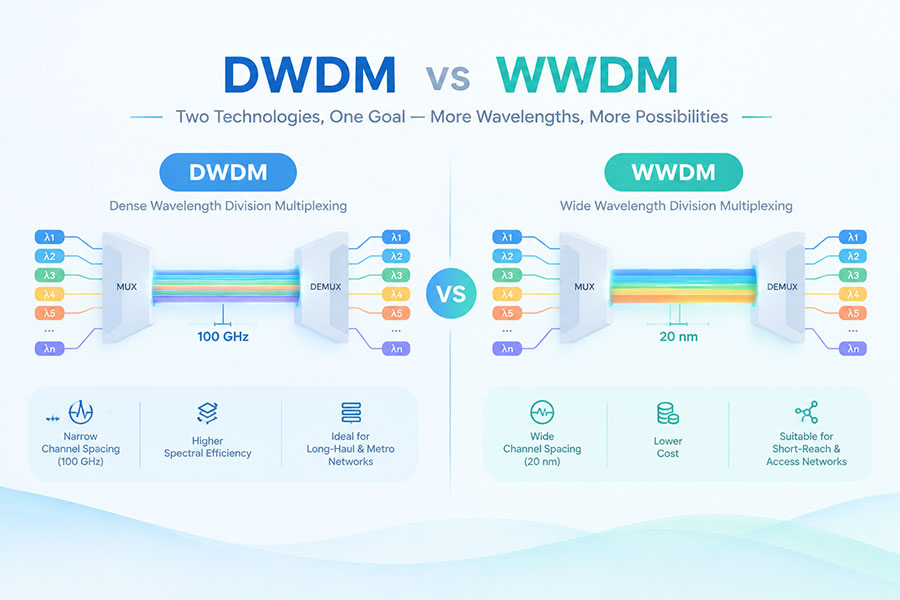
| CWDM | Combines channels using comparatively wide wavelength spacing. | Can suit access and selected fronthaul deployments where channel count and cost requirements are compatible. |
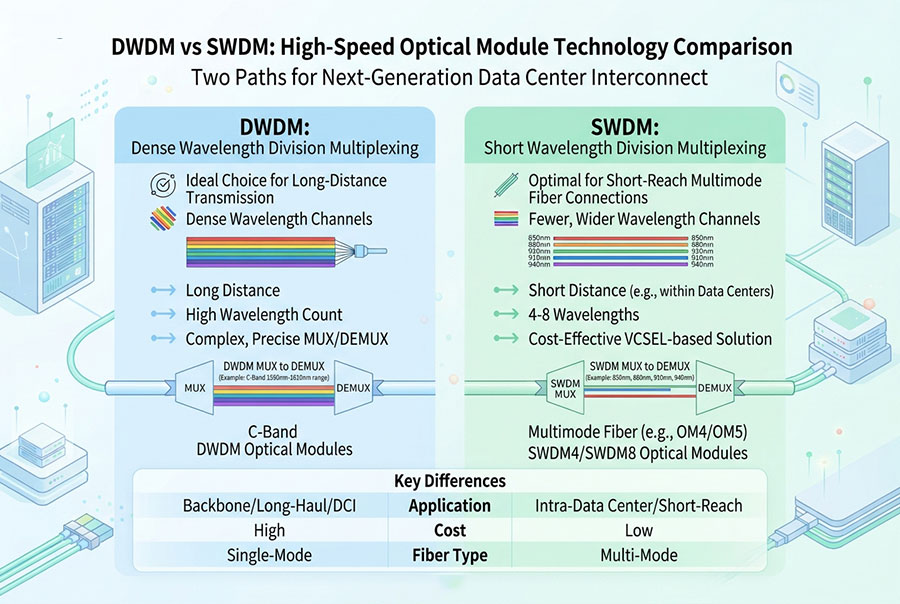
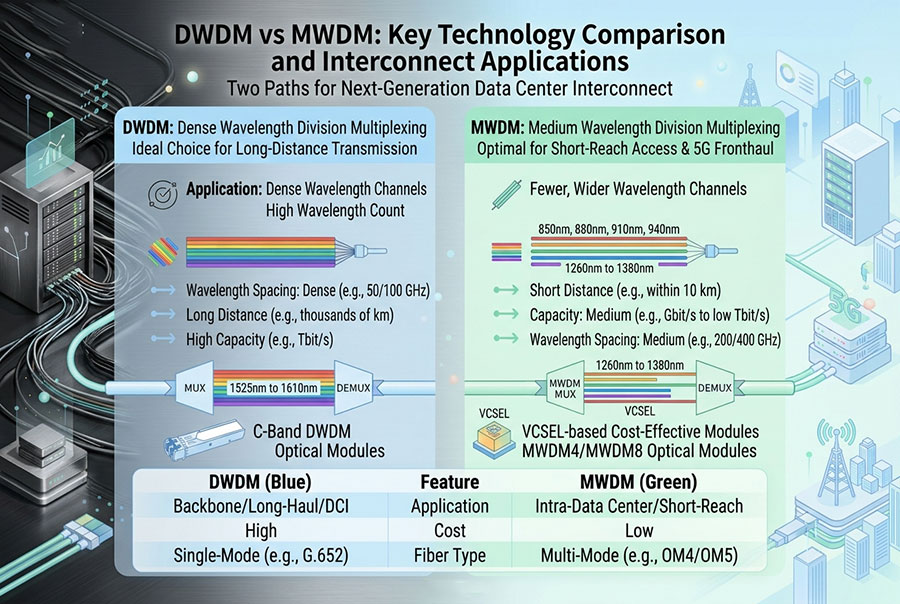
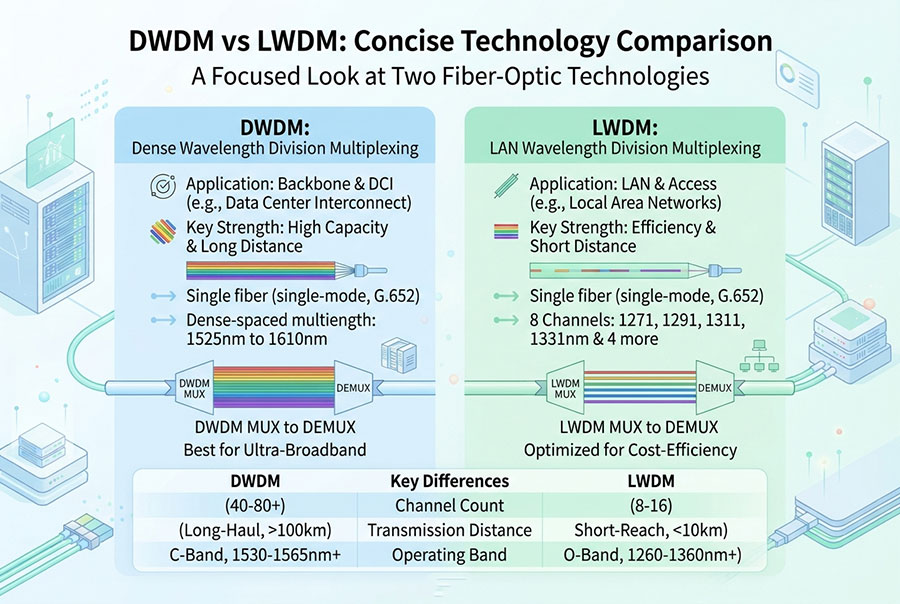
| DWDM | Supports denser wavelength plans for capacity expansion over shared fiber. | Can support high-capacity aggregation and interconnection between distributed edge facilities. |
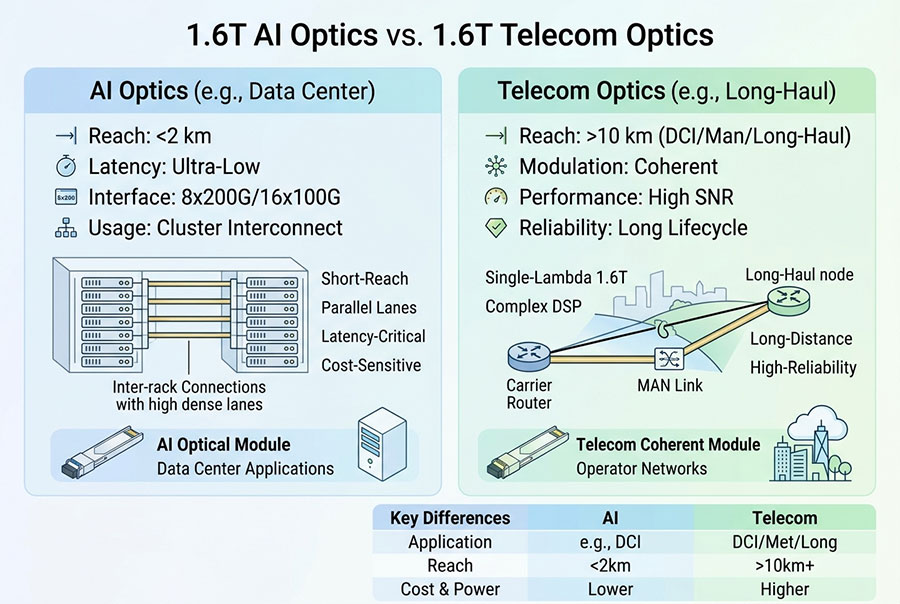
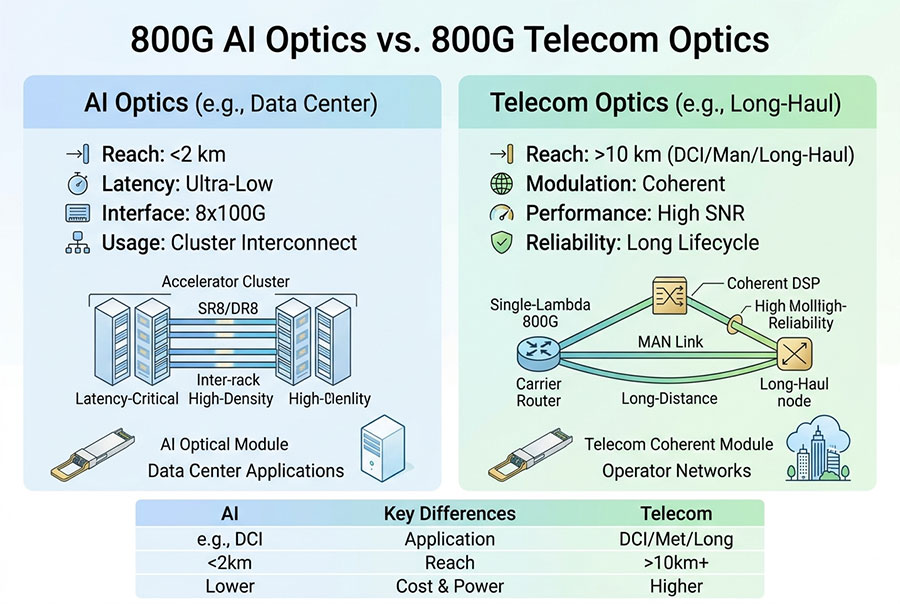
| High-speed optical transceivers | Convert electrical signals to optical signals and back at supported interface rates. | Provide capacity for server, switch, transport, and inter-facility connections. |
| Data center interconnect | Connects separate computing facilities across campus, metro, or regional distances. | Enables distributed applications, model distribution, data synchronization, and selected multi-site computing workloads. |
| Reconfigurable optical transport | Allows supported wavelengths or optical paths to be reconfigured by the transport system. | Can provide flexibility where edge traffic patterns change and the equipment supports dynamic provisioning. |
WDM is not exclusive to 6G. Existing 5G networks already use WDM to serve fiber-constrained links and aggregate traffic. Future deployments may require more flexible bandwidth allocation and higher-capacity interconnection in selected parts of the network, but the technology should be chosen according to channel count, optical loss, reach, and cost.
For current mobile transport designs, C-LIGHT provides 5G fronthaul WDM solutions and 100G, 40G, and 25G DWDM optical transceivers. Their suitability for a specific edge architecture depends on the required interface rate, wavelength plan, optical budget, and host equipment compatibility.
7. AI-Native Edge Computing and Workload Orchestration
AI is a major development direction for future mobile networks. Edge AI processes data near where it is collected, which can reduce the need to send every raw data stream to a centralized facility. However, local inference, model training, model updates, and centralized analytics have different computing and transport requirements.
| AI Workload | Potential Edge Role | Transport Consideration |
|---|---|---|
| Real-time inference | Run appropriate models close to devices or applications that require fast responses. | Prioritize predictable connectivity, suitable local processing capacity, and the required response budget. |
| Video and sensor analytics | Filter events or extract relevant features locally before sending selected results upstream. | Match the uplink capacity to the amount of raw data, processed output, and required event reporting. |
| Model distribution | Deploy updated models to selected edge locations. | Plan for bursts of distribution traffic, version control, and verification before a model is activated. |
| Federated or collaborative learning | Train or adapt models across multiple participating sites when the application and privacy model support it. | Account for synchronized exchanges, update volumes, and intermittent or heterogeneous edge connectivity. |
| Large-scale AI training | Use edge resources for selected local workloads while large accelerator clusters may remain centralized. | Require high-capacity, well-engineered data movement when training workloads span facilities. |
| Network optimization | Use available analytics and models to help assess traffic, faults, and resource allocation. | Requires reliable telemetry, data access controls, and integration with network management systems. |
AI-native edge computing does not mean that every edge node must host a large model or accelerator cluster. Smaller models can run locally, while computationally intensive training and model development may remain in centralized AI data centers. The workload should be placed where it meets its latency, compute, privacy, and energy requirements at acceptable cost.
Orchestration across edge and cloud resources also requires consistent identity, security policy, observability, software deployment, and service management. Moving a workload between sites is only useful if the destination has sufficient compute resources, compatible data access, and the network connectivity needed to maintain the service.
8. Power, Cooling, Security and Operational Constraints
Edge computing distributes compute resources across more locations. This can improve responsiveness, but it also increases the number of sites requiring power, cooling, physical protection, monitoring, and maintenance. A smaller edge facility may have tighter operational limits than a major cloud data center.
Power and cooling: Check rack capacity, available electrical supply, heat removal, and environmental conditions before adding servers or AI accelerators.
Physical security: Apply appropriate access control and equipment protection to remote cabinets, enterprise facilities, and edge data centers.
Data security: Enforce authentication, encryption, access control, and lifecycle management across distributed applications and data stores.
Service continuity: Plan recovery for edge-server failure, fiber cuts, power loss, and loss of connectivity to a central cloud.
Resource utilization: Avoid overprovisioning isolated edge sites when pooling workloads at a regional facility can meet performance requirements more efficiently.
Observability: Coordinate application metrics, server health, optical alarms, and network performance to improve fault diagnosis.
Local processing can help keep sensitive data near its source, but it does not automatically ensure privacy. The data flow, application permissions, storage policies, and security controls must be designed for the relevant environment.
Similarly, moving workloads closer to users may reduce transport delay while increasing local power and cooling costs. A reliable edge strategy balances response time against resource utilization, operational complexity, and the cost of operating many distributed sites.
9. Preparing 5G Edge Infrastructure for Future 6G Requirements
Preparing a 5G edge environment for future network requirements does not necessarily require replacing existing infrastructure. Operators can first determine whether the current sites, compute resources, optical routes, and management platforms provide enough capacity and flexibility for planned services.
| Assessment Area | What to Verify | Possible Upgrade Direction |
|---|---|---|
| Workload placement | Which applications need local execution, and which can run regionally or centrally. | Redistribute services according to latency, compute availability, and cost. |
| Compute capacity | CPU, accelerator, memory, storage, and container-platform utilization at each site. | Add resources at constrained locations or pool workloads more efficiently. |
| Optical transport | Fiber availability, route distance, insertion loss, spare capacity, and wavelength options. | Upgrade transceivers, expand WDM channels, add fiber strands, or revise routes where needed. |
| Latency and reliability | End-to-end delay, jitter, failure domains, recovery time, and service-level objectives. | Optimize traffic routing, add diverse paths, and improve monitoring or protection. |
| Orchestration | Compatibility across edge, regional cloud, and central cloud management systems. | Integrate deployment, telemetry, and resource-management processes where supported. |
| Power and cooling | Available site power, thermal capacity, redundancy, and maintenance resources. | Expand site infrastructure or select a more suitable location for compute-intensive workloads. |
| Standards and interoperability | Confirmed interface requirements, platform compatibility, and emerging 6G specifications. | Adopt new capabilities when supported by finalized interfaces and interoperable products. |
The ITU-T ION-2030 framework identifies edge computing, AI-enabled optical networking, flexible bandwidth, and closer coordination between computing and transport as important development directions toward 2030 and beyond. These directions support planning for more distributed services without implying that every 5G edge deployment needs a complete redesign.
As 6G work progresses, operators should distinguish established 5G MEC capabilities from future enhancements. This enables staged investments based on actual workload demand, transport bottlenecks, and verified standards rather than adopting unfinalized architectural assumptions.
10. Conclusion
5G edge computing brings applications and selected network functions closer to users through MEC platforms, local processing, and distributed cloud infrastructure. It reduces avoidable trips to centralized facilities when an application can run locally and when the network architecture supports local traffic delivery.
6G-oriented edge computing is expected to build on these foundations through closer coordination between communication, distributed AI, sensing-related services, and computing resources. More adaptive edge-to-cloud placement and intelligent orchestration may become increasingly important, but the exact capabilities and requirements will depend on the evolving IMT-2030 and related system specifications.
Optical fiber and WDM will remain important for connecting distributed edge sites, regional clouds, and central data centers. Effective deployment depends on workload placement, end-to-end latency, transport capacity, optical budgets, site power, security, and operational resilience—not simply the mobile generation being supported.
Planning optical connectivity for 5G edge or future distributed computing networks?
Discuss fronthaul WDM, DWDM transceivers, optical transport, and fiber connectivity requirements with C-LIGHT.
Contact C-LIGHT >

 >
 >
 >
 >
 >
 >
 >