TEL:+86 132 6656 7067




Backhaul is the transport network that connects the radio access network to the mobile core. It plays an important role in carrying user traffic, control traffic, synchronization information, and other services between access sites and core network infrastructure.
Both 4G LTE and 5G NR depend on high-capacity transport networks, but the requirements become more demanding as radio bandwidth, cell density, device connectivity, edge computing, and latency-sensitive applications increase.
4G backhaul has already moved strongly toward packet-based transport using technologies such as IP/MPLS and Carrier Ethernet. 5G builds on this foundation while introducing greater capacity, stricter timing requirements, network slicing, more distributed RAN architectures, and stronger integration with cloud and edge computing.
1. What Is 4G Backhaul?
4G backhaul connects LTE radio access network elements toward the evolved packet core. In a typical LTE deployment, traffic from eNodeBs is transported through an IP-based aggregation and transport network before reaching the core network.
The backhaul network can include access routers, aggregation switches, IP/MPLS networks, Carrier Ethernet systems, microwave links, and optical transport equipment.
The primary purpose is to provide reliable and sufficiently high-capacity connectivity between radio sites and the core while meeting latency, synchronization, availability, and service-quality requirements.
2. What Is 5G Backhaul?
5G backhaul connects the 5G radio access network toward the 5G Core. In the 3GPP architecture, the NG interface connects the NG-RAN with the 5G Core, while the Xn interface provides communication between NG-RAN nodes.
Because 5G RAN functions can be distributed between RU, DU, and CU, the complete transport architecture can contain fronthaul, midhaul, and backhaul segments.
Backhaul remains the transport layer between the RAN and core, but its requirements can be influenced by where the DU and CU are deployed and how services are distributed across edge and centralized computing locations.
3. 4G Backhaul vs 5G Backhaul at a Glance
| Factor | 4G Backhaul | 5G Backhaul |
|---|---|---|
| Radio System | LTE | 5G NR |
| Core Connection | EPC | 5G Core |
| Typical RAN Interface | S1 | NG |
| RAN-to-RAN Interface | X2 | Xn |
| Transport Technology | IP/MPLS, Carrier Ethernet, optical transport and microwave | IP/MPLS, Carrier Ethernet, optical transport and other packet-based infrastructure |
| Capacity Requirement | High | Higher and more variable |
| Synchronization | Important | More demanding in many deployments |
| Network Slicing | Limited compared with 5G | Native architectural requirement for 5G services |
| Edge Computing | Growing | More deeply integrated |
| Transport Flexibility | High packet-network adoption | Greater programmability and service differentiation |
4. LTE Backhaul Architecture
A simplified LTE transport path can be represented as:
UE → eNodeB → Backhaul Network → EPC
The eNodeB provides radio access, while the backhaul carries traffic from the cell site toward the Evolved Packet Core.
In larger deployments, multiple eNodeBs connect to aggregation nodes before entering a metro or core transport network. The architecture may use ring, mesh, or hierarchical aggregation depending on site density and transport infrastructure.
5. 5G Backhaul Architecture
A simplified 5G transport path can be represented as:
UE → gNB → Backhaul Network → 5GC
However, the 5G architecture can separate the gNB into different functional entities. The CU and DU may be located at different physical sites, creating additional transport segments.
This makes the overall 5G transport network more flexible than a simple radio-site-to-core connection and increases the importance of designing transport around the actual RAN functional architecture.
6. S1 vs NG Interfaces
One of the clearest protocol differences is the interface between the radio access network and the core.
| Interface | Generation | Connection |
|---|---|---|
| S1 | 4G LTE | eNodeB ↔ EPC |
| NG | 5G | NG-RAN ↔ 5G Core |
The NG interface is part of the 5G transport architecture and supports the separation of control-plane and user-plane functions required by the 5G system architecture.
This change reflects the evolution from the LTE EPC architecture toward the service-based 5G Core and more flexible RAN deployment models.
7. X2 vs Xn Connectivity
4G uses the X2 interface for communication between neighboring or interacting eNodeBs. 5G introduces the Xn interface for communication between NG-RAN nodes.
Both types of connectivity can create substantial East-West traffic inside the access network, but 5G increases the number of possible network functions and distributed processing relationships that the transport network may need to support.
This places greater emphasis on scalable packet transport and flexible routing.
8. Packet Transport in 4G and 5G Backhaul
It is incorrect to describe 4G backhaul as primarily circuit-switched infrastructure. Packet transport was already a major part of LTE backhaul deployment.
IP/MPLS and Carrier Ethernet were widely adopted because mobile operators needed scalable transport for rapidly increasing data services such as internet access, video, cloud applications, and enterprise services.
5G continues this packet-based foundation. The difference is that the transport network must now support additional requirements related to higher capacity, lower latency, more stringent synchronization, network slicing, service differentiation, and more distributed computing.
9. Why 5G Backhaul Requires Higher Capacity
5G can use wider radio bandwidth, higher-order MIMO, denser deployments, and additional spectrum to provide substantially higher access capacity than earlier mobile networks.
As traffic from individual cells increases, the aggregate traffic entering the backhaul network also increases.
| Capacity Driver | Impact on Backhaul |
|---|---|
| Wider Radio Bandwidth | Higher traffic generated per cell |
| Massive MIMO | Higher radio capacity and processing requirements |
| Higher Cell Density | More aggregation traffic |
| Enterprise Services | More differentiated transport requirements |
| Edge Applications | Additional traffic between distributed sites and computing resources |
Not every 5G site requires the same backhaul capacity. The actual requirement depends on spectrum, radio configuration, traffic load, cell density, and deployment strategy.
10. Latency in 4G vs 5G Backhaul
Latency is important in both generations, but 5G introduces a wider range of services with different latency requirements.
Applications such as ordinary mobile broadband may tolerate more transport latency than highly interactive industrial applications or tightly coordinated edge services.
As a result, 5G transport networks need to support differentiated latency and quality-of-service requirements rather than relying on one uniform transport profile.
Network topology also affects latency. Additional aggregation and transport hops increase propagation, processing, and queuing delay.
11. Synchronization Becomes More Critical in 5G
Mobile networks have always depended on accurate frequency and timing synchronization, but 5G places additional emphasis on synchronization because of advanced radio configurations and more distributed network architectures.
Depending on the network design, synchronization can involve technologies such as SyncE and Precision Time Protocol.
| Synchronization Requirement | 4G | 5G |
|---|---|---|
| Frequency Synchronization | Important | Important |
| Time Synchronization | Required for selected functions | More demanding in many deployments |
| Phase Synchronization | Deployment dependent | Increasingly important for advanced radio architectures |
| Packet Timing | Important | Critical in packet-based transport architectures |
Transport equipment therefore has to preserve synchronization performance across packet and optical paths.
12. Optical Fiber in 4G and 5G Backhaul
Fiber is a major transport medium for both 4G and 5G backhaul because it offers high capacity, low attenuation, electromagnetic immunity, and long reach.
5G increases the amount of fiber capacity required in many areas because of higher traffic aggregation and denser radio deployments.
Operators may also use existing fiber infrastructure more efficiently through WDM and higher-speed optical interfaces.
13. Optical Transceivers for Mobile Backhaul
Optical transceivers are used throughout mobile transport networks, from access aggregation to metro and core interconnection.
| Parameter | 4G Backhaul | 5G Backhaul |
|---|---|---|
| Interface Speed | Depends on site capacity and transport design | Generally trends toward higher-speed interfaces as traffic grows |
| Reach | Access, metro, and regional requirements | Access, metro, edge, and regional requirements |
| Fiber | Primarily single-mode for longer transport | Primarily single-mode for telecom transport |
| Wavelength | Fixed wavelength, CWDM/DWDM depending on network | Fixed wavelength, CWDM/DWDM, and coherent solutions depending on architecture |
| Form Factor | Equipment dependent | Equipment dependent, including higher-speed Ethernet-class interfaces |
The required optical module should be selected according to interface rate, fiber route, optical budget, wavelength plan, environmental conditions, and host equipment.
14. Role of WDM in 5G Backhaul
WDM becomes increasingly valuable when operators need to increase transport capacity without deploying an entirely new fiber path for every additional service.
CWDM can provide a relatively simple multi-wavelength architecture for selected access and aggregation deployments, while DWDM can support much higher wavelength density in metro and regional networks.
As 5G traffic continues to aggregate, WDM can help operators scale the optical transport layer while making more efficient use of installed fiber.
15. 4G vs 5G Backhaul and Network Slicing
Network slicing is one of the important architectural developments associated with 5G.
Different applications can require different combinations of bandwidth, latency, reliability, isolation, and quality of service. The transport network therefore needs mechanisms to map service requirements onto logical network resources.
| Requirement | 4G Backhaul | 5G Backhaul |
|---|---|---|
| Best-Effort Mobile Data | Supported | Supported |
| QoS Differentiation | Supported | More granular and service-oriented |
| Network Slicing | Limited compared with 5G | Designed into the 5G architecture |
| Resource Isolation | More traditional | More programmable and service aware |
The transport layer can therefore become a programmable component of the end-to-end service architecture rather than simply moving packets between fixed endpoints.
16. 5G Backhaul and Edge Computing
5G is closely associated with edge computing because some applications benefit from processing data closer to users and devices.
This can create new traffic relationships between radio sites, edge data centers, metro aggregation points, and centralized cloud infrastructure.
Instead of a simple path from cell site to a centralized core, traffic may move between multiple distributed computing locations.
This makes transport flexibility, routing, latency control, and optical interconnection increasingly important.
17. 4G vs 5G Backhaul Network Topology
4G backhaul networks can use a variety of topologies, including point-to-point, ring, and hierarchical aggregation.
5G networks can use similar physical structures, but higher traffic density and distributed RAN functions can require greater path diversity and more flexible aggregation.
| Topology | Application Consideration |
|---|---|
| Point-to-Point | Simple dedicated connectivity |
| Ring | Can provide transport redundancy for distributed sites |
| Mesh | Multiple paths and flexible routing |
| Hierarchical Aggregation | Efficient consolidation of many access sites |
5G can also benefit from software-controlled transport that dynamically allocates paths and bandwidth according to traffic and service requirements.
18. 5G Backhaul and Transport Network Automation
The operational scale of modern mobile networks makes manual provisioning increasingly inefficient.
Software-defined networking, telemetry, automated provisioning, and closed-loop control can improve the management of transport resources.
For 5G, automation can support functions such as service provisioning, path optimization, fault monitoring, bandwidth allocation, and network-slice management.
This creates a stronger relationship between the packet layer and optical transport layer.
19. 4G Backhaul vs 5G Backhaul: Key Differences
| Category | 4G Backhaul | 5G Backhaul |
|---|---|---|
| Radio | LTE | 5G NR |
| Core | EPC | 5G Core |
| RAN Interface | S1 | NG |
| RAN-to-RAN | X2 | Xn |
| Transport | IP/MPLS, Carrier Ethernet, optical and microwave | IP/MPLS, Carrier Ethernet, optical and microwave with greater capacity and flexibility |
| Capacity | High | Higher and more variable |
| Synchronization | Important | More demanding for advanced deployments |
| Network Slicing | Limited | Core 5G capability |
| Edge Computing | Developing | Strong architectural relevance |
| Automation | Increasing | More deeply integrated |
| Optical Scaling | Important | Increasingly important |
20. 4G Backhaul vs 5G Backhaul: What Changes?
The evolution from 4G to 5G backhaul is not a complete replacement of the underlying packet transport technology. Instead, 5G builds upon the IP/MPLS, Carrier Ethernet, fiber, WDM, and optical transport infrastructure already established during the 4G era.
The major changes are the scale and flexibility of the transport network.
4G backhaul: connects LTE radio sites to the EPC through high-capacity packet and optical transport networks.
5G backhaul: provides higher-capacity, more programmable transport between NG-RAN and the 5G Core while supporting more demanding synchronization, QoS, slicing, edge computing, and distributed RAN requirements.
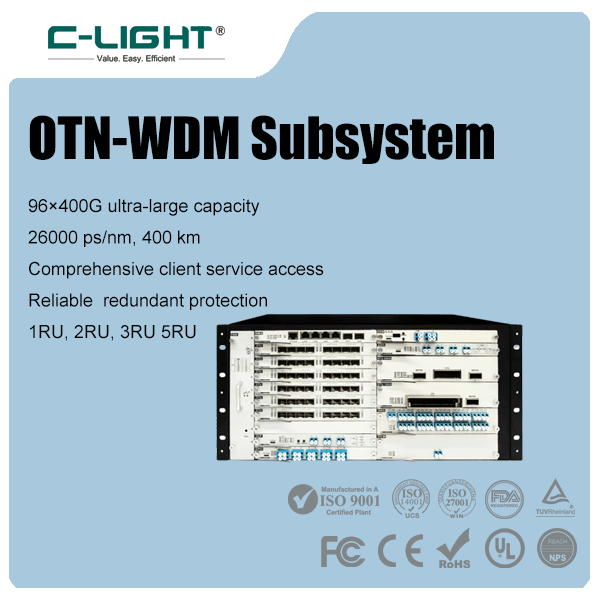
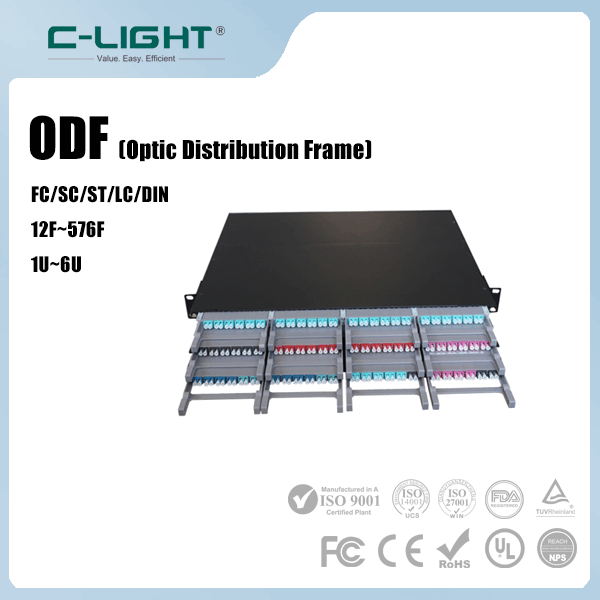
For optical network suppliers, this evolution increases demand for higher-speed Ethernet transceivers, CWDM and DWDM solutions, high-capacity optical transport, synchronization-aware equipment, and flexible fiber connectivity.
The long-term direction is toward a converged telecom and computing transport infrastructure in which mobile traffic, edge applications, cloud services, and high-capacity optical networking operate on increasingly integrated platforms.
 >
>

 >
>
 >
>
 >
>
 >
>
 >
>
 >
>
 >
>