C-LIGHT telephone TEL:+86 132 6656 7067    

Language
C-LIGHT search
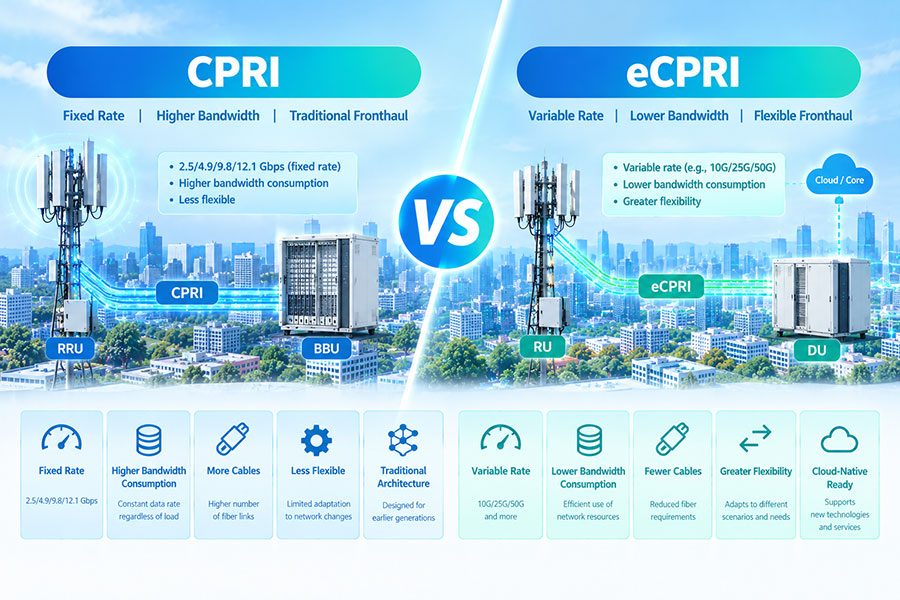
CPRI vs eCPRI>
By C-LIGHT Marketing 丨
CPRI and eCPRI use different approaches to transport radio data between distributed RAN components. Compare their bandwidth efficiency, protocol architecture, functional split, synchronization, scalability, and optical networking requirements.
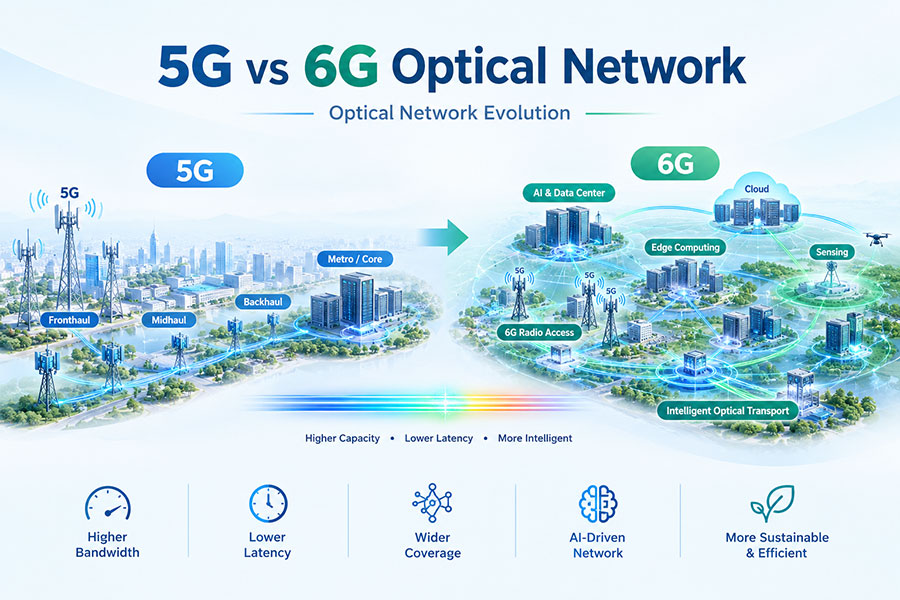
5G vs 6G Optical Network>
By C-LIGHT Marketing 丨
5G and 6G optical networks differ in transport scale, latency targets, architecture, AI integration, and optical resource management.
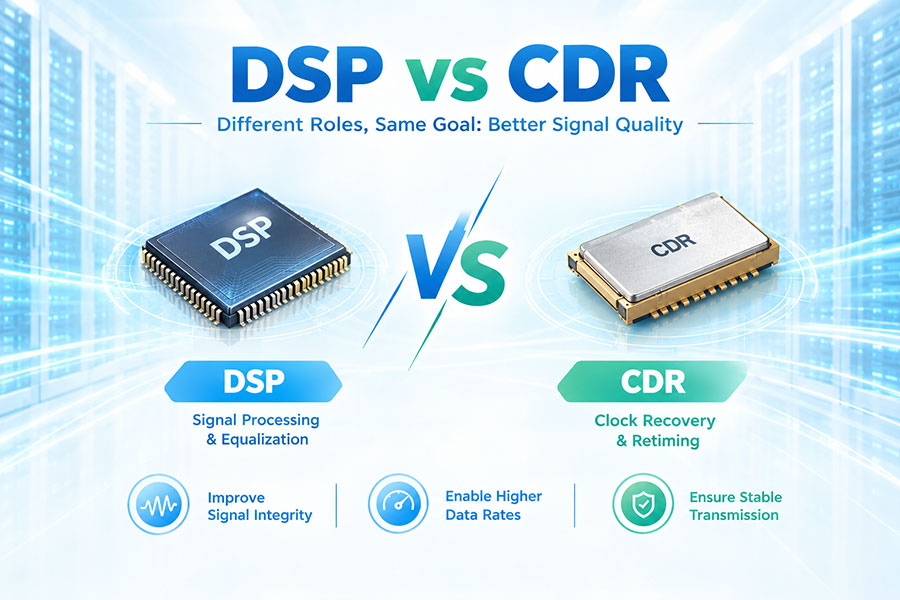
DSP vs CDR>
By C-LIGHT Marketing 丨
DSP and CDR are important signal-processing technologies in high-speed optical transceivers.he differences between DSP vs CDR, including functions, timing recovery, equalization, PAM4, FEC, latency, power, 400G, 800G and 1.6T applications.
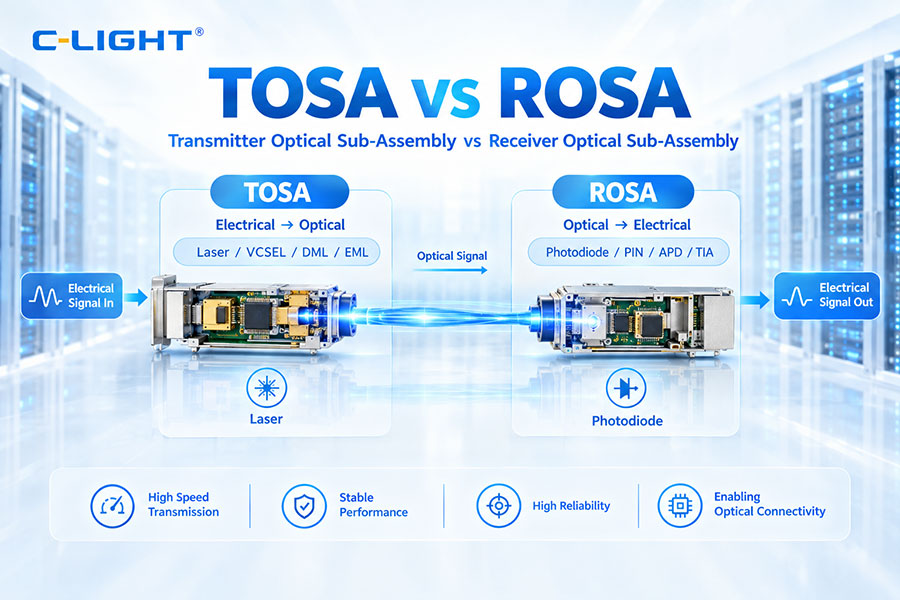
TOSA vs ROSA>
By C-LIGHT Marketing 丨
TOSA and ROSA are key optical subassemblies used for signal transmission and reception in fiber optic transceivers and optical communication systems.
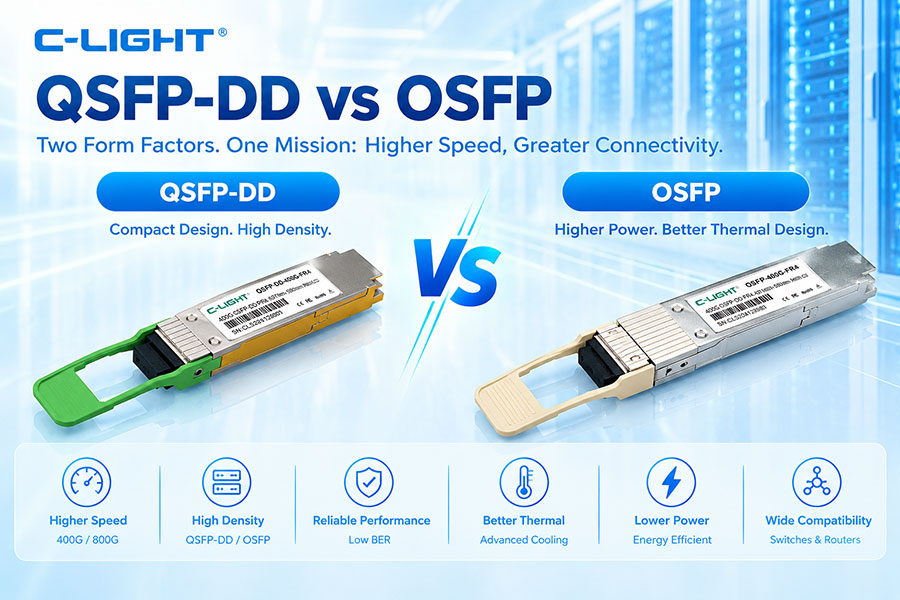
QSFP-DD vs OSFP>
By C-LIGHT Marketing 丨
QSFP-DD and OSFP are high-density pluggable form factors designed for 400G, 800G, and 1.6T networking applications.
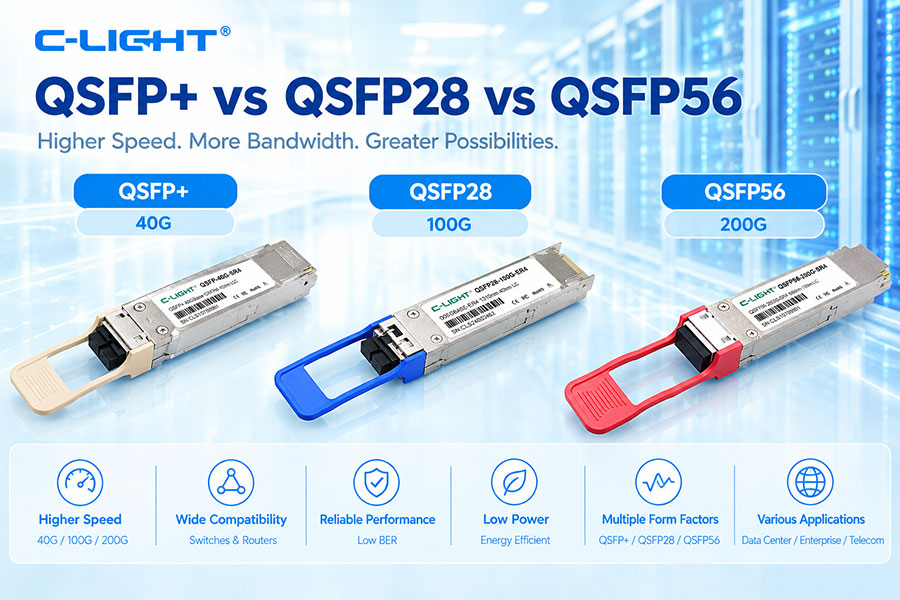
QSFP+ vs QSFP28 vs QSFP56>
By C-LIGHT Marketing 丨
QSFP+, QSFP28, and QSFP56 are four-lane pluggable transceivers for 40G, 100G, and 200G network connections.
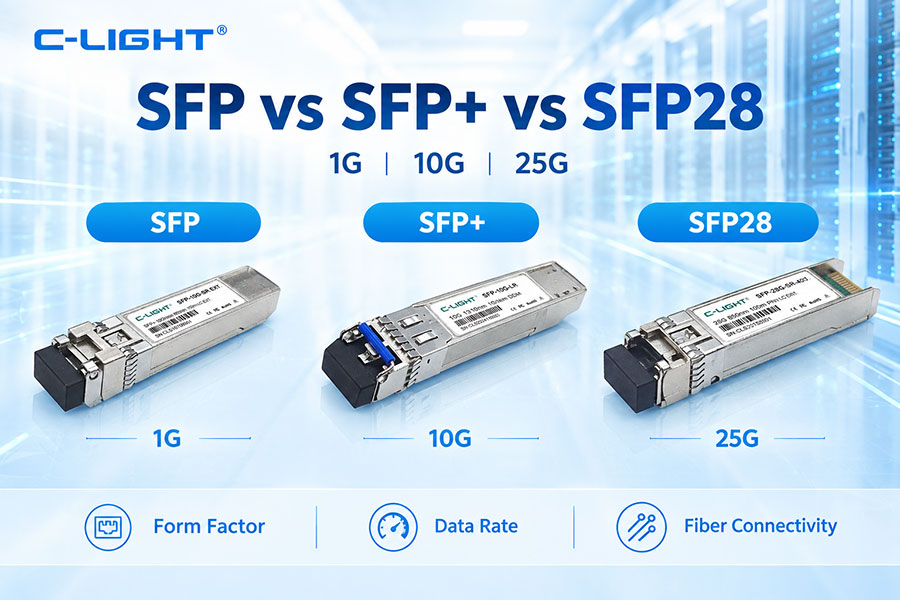
SFP vs SFP+ vs SFP28>
By C-LIGHT Marketing 丨
SFP, SFP+, and SFP28 are compact pluggable transceiver form factors used for 1G, 10G, and 25G network connections.
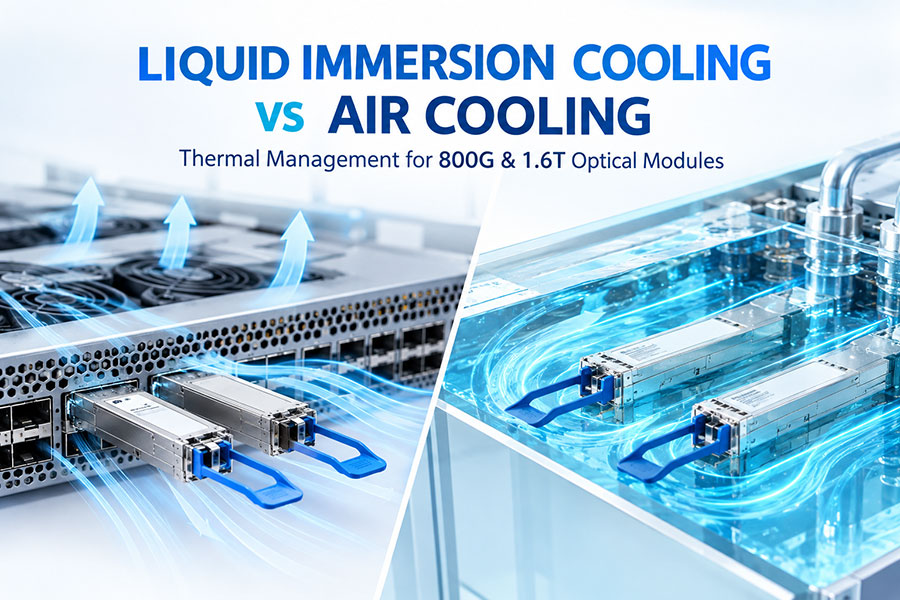
Liquid Immersion Cooling vs Air Cooling for Optical Modules>
By C-LIGHT Marketing 丨
Liquid immersion cooling and air cooling offer different approaches to managing optical module heat, with key differences in thermal performance, infrastructure, maintenance, and high-density deployment.

Call
Top