TEL:+86 132 6656 7067





The AI optical module market is entering a major expansion phase in 2026. Larger GPU clusters, increasing network bandwidth requirements and the deployment of next-generation AI infrastructure are accelerating demand for high-speed optical transceivers. At the same time, the transition toward 800G and 1.6T connectivity, silicon photonics and lower-power optical architectures is changing the market's product mix and technology priorities.
1. AI Optical Module Market Outlook for 2026
AI training and inference require high-bandwidth connections among accelerators, servers, switches and storage systems. As clusters scale, network traffic increases across both intra-rack and inter-rack links. Optical modules are essential to carrying this traffic over distances and through port densities where electrical interconnects become increasingly difficult to scale.
| Market factor | 2026 direction | Impact on optical connectivity |
|---|---|---|
| AI infrastructure investment | Continued expansion of GPU clusters and AI data centers | Increases demand for high-bandwidth network ports |
| 400G and 800G deployment | High-speed links remain central to scale-out networks | Supports volume demand for multimode and single-mode modules |
| 1.6T commercialization | Early deployments and production ramp-up | Creates opportunities for higher-speed modules and new host platforms |
| Power efficiency | Greater focus on watts per bit and thermal design | Accelerates interest in LPO, silicon photonics and CPO |
| Optical supply chain | Capacity expansion alongside component constraints | Makes manufacturing yield and delivery reliability increasingly important |
Market estimates vary according to whether they include only pluggable optical transceivers or also cover linear pluggable optics (LPO), co-packaged optics (CPO), coherent modules and other AI optical interconnect technologies. Comparisons between forecasts therefore require consistent market definitions, reporting periods and product boundaries.
2. Why AI Data Centers Are Driving Market Growth
2.1 Larger GPU Clusters and Higher Port Counts
AI infrastructure requires communication not only between compute nodes and storage but also among accelerators exchanging model parameters, gradients and intermediate data. Distributed training can generate substantial east-west traffic, making network bandwidth, congestion control and link availability important factors in cluster performance.
Every expansion of a network fabric can add optical ports at server, leaf-switch and spine-switch layers. Consequently, optical module demand depends on the number of deployed accelerators, network topology, oversubscription ratios, link reach and the bandwidth assigned to each connection—not simply on GPU shipment volume.
2.2 Scale-Out Networks and Scale-Up Architectures
Scale-out networks connect servers and racks through Ethernet or InfiniBand switching fabrics. These deployments are a direct source of demand for 400G and 800G transceivers, with 1.6T products entering the next upgrade cycle.
Scale-up networks connect accelerators more tightly within high-performance compute systems. Their requirements differ from conventional scale-out networking, and copper, optical and hybrid interconnects may coexist depending on distance, bandwidth density, power and platform design. As electrical reach becomes harder to maintain at higher data rates, optical connectivity has an opportunity to extend into additional parts of the system.
2.3 Hyperscale Expansion and Data Center Interconnect
AI computing capacity is often distributed across multiple halls, buildings or campuses. High-speed optical links connect these facilities and support traffic between separate data center sites. This creates demand for both short-reach data center transceivers and longer-reach optical technologies used in data center interconnect (DCI).
DCI requirements vary with distance, fiber availability, capacity and network architecture. Parallel single-mode links may suit some short-reach deployments, while coherent optics and DWDM systems can support higher-capacity transport across longer distances.
3. The Transition from 400G to 800G and 1.6T
Higher aggregate data rates allow network operators to carry more traffic per port and reduce the number of connections needed for a given bandwidth target. However, upgrading module speed also affects switch design, host electrical interfaces, fiber infrastructure, thermal management and link engineering.
| Module generation | Typical role | Common technology considerations |
|---|---|---|
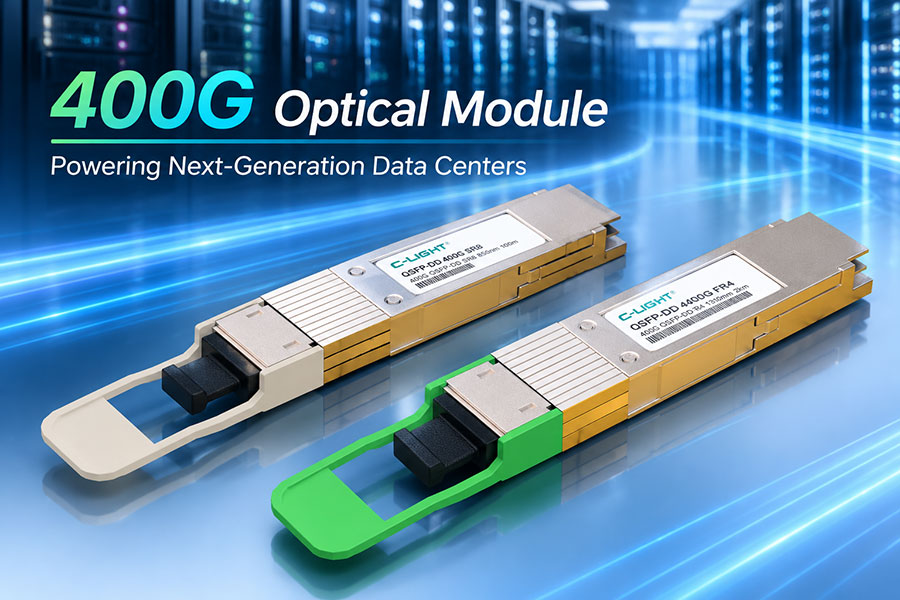
| 400G | Established high-speed data center connectivity | QSFP-DD or OSFP platforms; SR8, DR4, FR4 and other reach-specific designs |
| 800G | High-bandwidth AI scale-out networks | OSFP and QSFP-DD platforms; SR8, DR8, 2FR4 and other optical configurations |
| 1.6T | Next-generation high-density switching and AI fabrics | OSFP-based designs, higher-speed electrical lanes, advanced DSP and thermal design |
| Beyond 1.6T | Longer-term network evolution | 400G-per-lane development, optical integration and emerging system architectures |
3.1 Why 800G Remains Important
800G is an important step for AI data center networks because it doubles the aggregate line rate of 400G while building on established high-speed optical technologies. Product selection depends on the required reach, fiber type, connector arrangement, switch platform and power envelope.
SR8 modules are generally associated with short-reach multimode links, while DR8 and other single-mode variants address different reach and cabling requirements. FR4-based designs can support longer single-mode connections using wavelength multiplexing. These configurations are not interchangeable solely because they share the same aggregate data rate.
3.2 Why 1.6T Matters in 2026
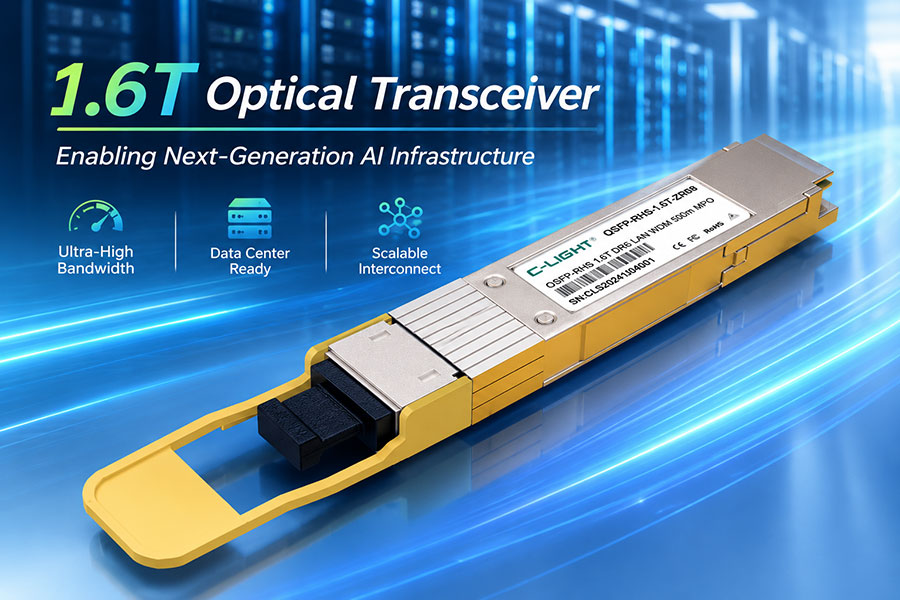
1.6T transceivers are moving from technology development toward commercial deployment and volume ramp-up. Their adoption depends on the availability of compatible switches, host electrical interfaces, thermal solutions, optical engines and production capacity.
Higher bandwidth per port can simplify network scaling, but it also raises challenges in signal integrity, power delivery, module cooling and manufacturing yield. The 2026–2027 qualification cycle is therefore important for suppliers seeking participation in next-generation AI infrastructure programs.
4. Silicon Photonics, LPO and CPO
The market's next phase is not defined by data rate alone. Optical integration and power efficiency are becoming increasingly important as switch bandwidth and AI cluster density rise.
4.1 Silicon Photonics as a Scaling Technology
Silicon photonics can integrate waveguides, modulators and other photonic functions on a silicon platform. In high-speed optical modules, it can support dense optical integration and provide a manufacturing path for increasingly complex transceivers.
Its commercial impact depends on the complete optical engine, including laser source, coupling efficiency, packaging, thermal control and test yield. Silicon photonics is a platform technology rather than a guarantee that every module will have lower cost or lower power than alternative designs.
4.2 LPO and the Trade-Off Between Power and Signal Processing
Traditional high-speed pluggable transceivers commonly use DSPs to compensate for signal impairments. LPO reduces signal processing inside the module, which can lower power consumption and latency in suitable systems. The trade-off is a tighter relationship between the host ASIC, electrical channel, module and optical link.
Successful LPO deployment requires careful channel design, transmitter and receiver characterization, and interoperability testing. It is therefore best evaluated as a system-level architecture rather than as a direct replacement for every DSP-based module.
4.3 CPO and the Evolution of Optical Switching
CPO integrates optical engines near the switching silicon, reducing the length of high-speed electrical connections between the ASIC and optical conversion stage. This approach can address bandwidth-density and power challenges in large switching systems.
However, CPO changes how optical components are packaged, tested, maintained and replaced. Pluggable transceivers remain valuable because they offer modular replacement and established service procedures. The two approaches are likely to serve different deployment requirements as CPO ecosystems mature.
5. Market Constraints: Components, Power and Manufacturing
Rapid demand growth does not automatically translate into unrestricted shipments. High-speed optical modules depend on specialized laser sources, photonic components, DSPs, precision assembly and extensive testing. Capacity limitations in any of these areas can constrain production.
Laser availability: EML and continuous-wave laser sources are important components in several high-speed optical architectures. Capacity allocation can affect lead times and production plans.
Precision packaging: Optical alignment, fiber coupling and assembly tolerances influence yield and manufacturing throughput.
Power and cooling: Higher module power increases thermal-management requirements at both the module and switch levels.
Qualification cycles: New modules must satisfy host compatibility, interoperability, optical performance and reliability requirements before large-scale deployment.
Price pressure: Higher shipment volumes can coexist with falling average selling prices, particularly in mature or standardized product categories.
These constraints make supply-chain execution a key competitive factor. Suppliers need not only a suitable optical design but also consistent component sourcing, repeatable production quality and the ability to meet customer qualification requirements.
6. Optical Module Demand by Application
| Application | Connectivity requirement | Relevant product categories |
|---|---|---|
| AI training clusters | High port density, predictable latency and high aggregate bandwidth | 400G, 800G and emerging 1.6T modules |
| AI inference infrastructure | Scalable server connectivity across different deployment sizes | 10G–800G products depending on architecture and capacity |
| Data center interconnect | Higher capacity between buildings or separate sites | 100G–800G coherent and DWDM solutions, subject to reach and system design |
| Enterprise and cloud networks | Migration from existing links to higher-speed Ethernet | 10G, 25G, 100G, 400G and 800G modules |
| Telecom and edge infrastructure | Access, aggregation and transport connectivity | Ethernet, CWDM, DWDM and coherent optical products |
AI data centers are the principal growth catalyst for the highest-speed datacom modules, but the wider optical transceiver market also serves telecom, enterprise, access and transport networks. These segments have different performance requirements and adoption cycles, so their market growth should be evaluated separately.
7. What Buyers Should Evaluate When Selecting AI Optical Modules
For network operators, system integrators and equipment suppliers, a higher data rate is only one part of the selection process. A module must meet the network's physical requirements and work reliably with the intended host equipment.
Data rate and protocol: Confirm Ethernet or InfiniBand requirements, supported lane rates and the host port's capabilities.
Reach and fiber: Match the module to link distance, single-mode or multimode fiber, connector type and optical budget.
Form factor: Verify QSFP-DD, OSFP or other host-interface requirements, including mechanical clearance and cooling design.
Power consumption: Check module power against switch limits and rack-level thermal capacity.
Compatibility: Confirm coding, firmware behavior, host support and interoperability with the specific switch or NIC platform.
Monitoring and reliability: Review digital diagnostics, operating-temperature range, test coverage and lifecycle support.
Supply continuity: Evaluate production capacity, lead times, qualification status and consistency across repeat orders.
For high-density AI deployments, interoperability testing should cover the actual host platform, fiber plant and intended operating conditions. A module's headline specifications alone cannot guarantee performance in every network configuration.
8. C-LIGHT Optical Connectivity Portfolio
As data center bandwidth requirements continue to increase, optical connectivity planning may involve multiple module generations and link types within the same network. C-LIGHT provides optical transceivers and related connectivity products for data center, Ethernet, telecom and fiber-optic applications.
High-speed optical transceivers for different data rates, reach requirements and host form factors.
800G and 400G optical connectivity for high-bandwidth switching and data center links.
DCO, DWDM and CWDM products for wavelength-based optical transport and DCI applications.
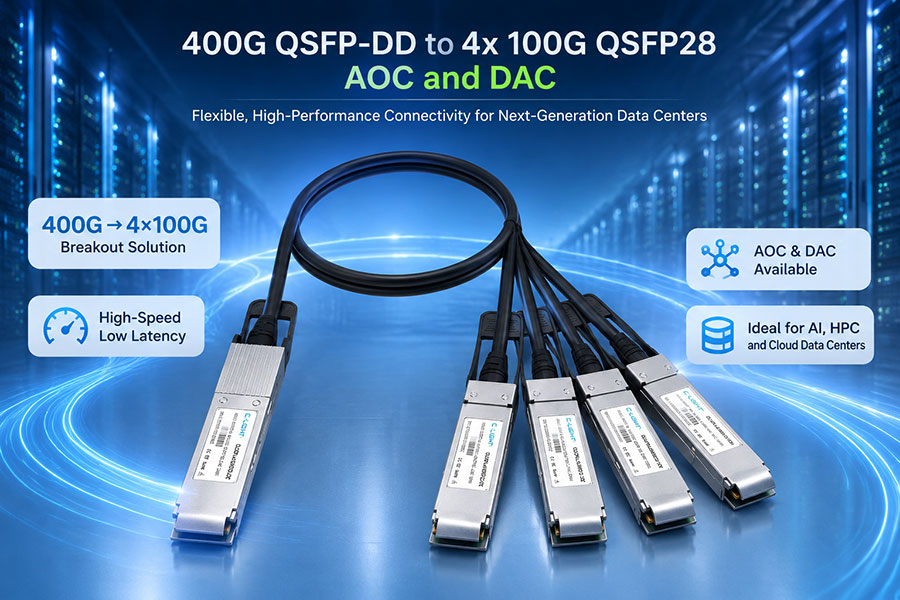
AOC, DAC and AEC connectivity for short-reach connections where cable-based solutions meet the system's reach, bandwidth and power requirements.
Product selection should be based on the exact data rate, protocol, reach, host equipment and operating environment. Availability, compatibility and detailed specifications should be confirmed for the intended deployment before purchase.
9. AI Optical Module Market Outlook Beyond 2026
The market's longer-term direction will depend on continued AI infrastructure investment, the rate of 800G and 1.6T adoption, and the economics of next-generation optical architectures. Demand may remain strong while individual product categories experience different qualification schedules, pricing trends and supply constraints.
Several developments deserve attention:
Wider 1.6T deployment: Increasing availability of compatible switches and optical modules may accelerate adoption in high-bandwidth fabrics.
Further optical integration: Silicon photonics, LPO and CPO will continue to be evaluated against power, cost, serviceability and performance requirements.
Growth in DCI: Distributed AI capacity can increase demand for high-capacity optical transport between facilities.
Supply-chain diversification: Manufacturers may expand sourcing and production capacity to reduce component and geographic concentration risks.
More demanding system qualification: Higher data rates make thermal performance, signal integrity, interoperability and production yield increasingly important.
Forecasts should be treated as scenarios rather than guaranteed outcomes. Actual results will depend on capital expenditure, AI system deployment schedules, customer qualification decisions, module pricing and the ability of suppliers to scale production.
10. Frequently Asked Questions
10.1 How fast is the AI optical module market growing in 2026?
TrendForce projected that the AI-focused optical transceiver market would rise from US$16.5 billion in 2025 to US$26 billion in 2026, an increase of more than 57% year over year. The estimate applies to the AI-focused segment, not necessarily the entire optical transceiver market.
10.2 Why are 800G optical modules important for AI data centers?
800G modules increase bandwidth per port for AI scale-out networks and high-speed switching fabrics. The appropriate module depends on link distance, fiber type, form factor, host compatibility and power requirements.
10.3 Will 1.6T modules replace 800G modules in 2026?
No. 1.6T adoption is progressing, but 800G remains relevant across many deployments. Both generations can coexist because network upgrades depend on switch platforms, application requirements, qualification schedules and total deployment cost.
10.4 What is the difference between LPO and CPO?
LPO reduces or removes conventional DSP processing within a pluggable optical module. CPO places optical engines close to switching silicon. Both target system-level efficiency, but they differ in packaging, signal-path design, serviceability and integration requirements.
10.5 What could limit AI optical module market growth?
Potential constraints include laser and DSP availability, precision packaging capacity, thermal limits, qualification delays, customer capital expenditure and pricing pressure. These factors can affect shipment timing and profitability even when underlying demand is strong.
11. Conclusion
AI optical module market growth in 2026 reflects a structural increase in data center bandwidth requirements rather than a single product upgrade. The expansion of GPU clusters supports demand for 400G and 800G connectivity, while 1.6T modules, silicon photonics, LPO and CPO are shaping the next stage of network development.
For buyers and suppliers, long-term opportunities will depend on matching optical performance with system compatibility, power efficiency, manufacturing quality and dependable supply. As AI infrastructure expands, these factors will be as important as raw transmission speed in determining which optical connectivity solutions succeed at scale.
Confirm the required data rate, reach, host platform and fiber configuration before selecting an optical solution.
Contact C-LIGHT >

 >
 >
 >
 >
 >
 >
 >