C-LIGHT telephone TEL:+86 132 6656 7067    

Language
C-LIGHT search
CPO vs On-Board Optics>
By C-LIGHT Marketing 丨
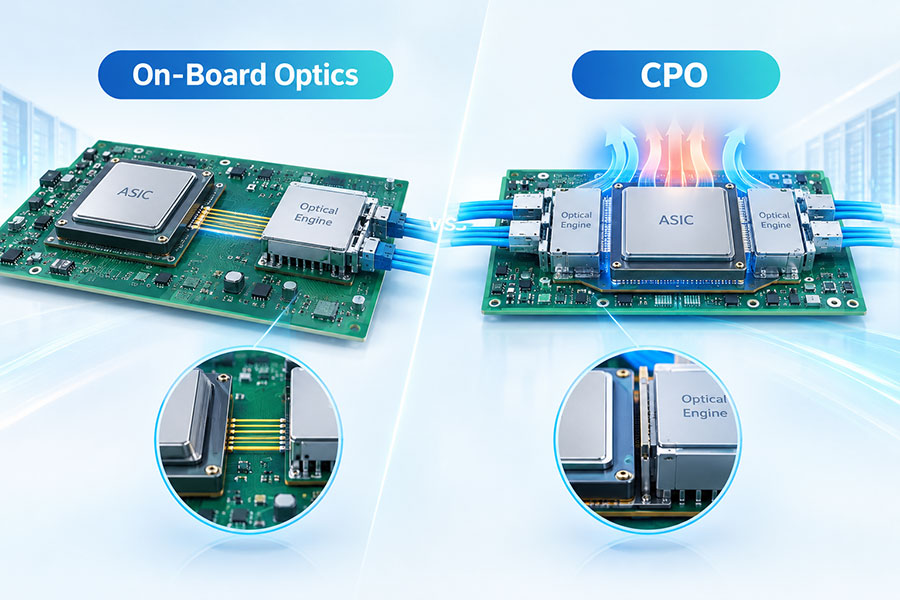
CPO and on-board optics move optical engines closer to the switch ASIC to improve high-speed interconnect efficiency. Compare their integration level, electrical distance, power, thermal design, bandwidth density, serviceability, manufacturing complexity, and AI data center applications.
AI Optical Transceiver vs Traditional Data Center Transceiver>
By C-LIGHT Marketing 丨
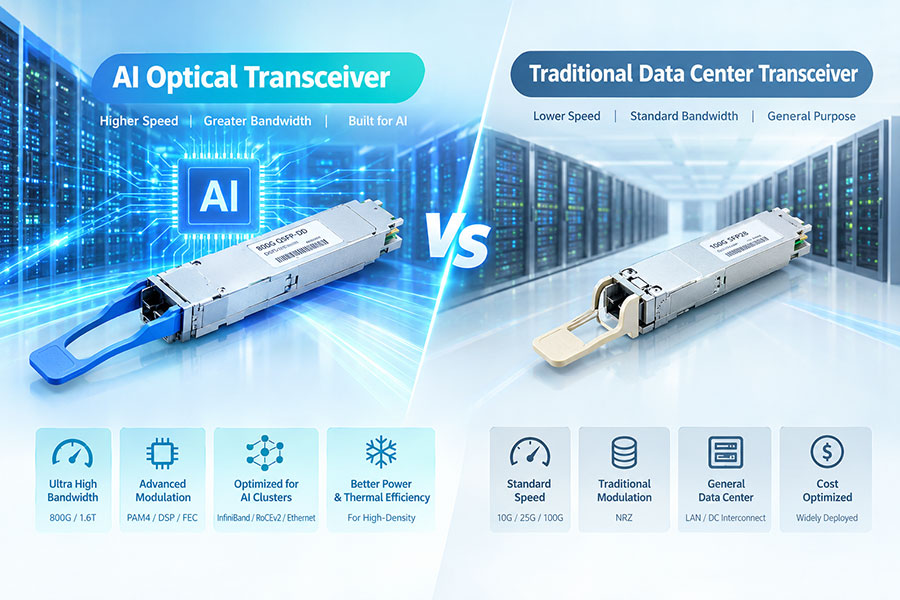
AI optical transceivers are optimized for the high bandwidth, density, power, and reliability demands of GPU clusters. Compare them with traditional data center transceivers across speed, signaling, reach, power, latency, protocols, thermal design, and deployment.
Industrial Fiber vs Commercial Fiber>
By C-LIGHT Marketing 丨
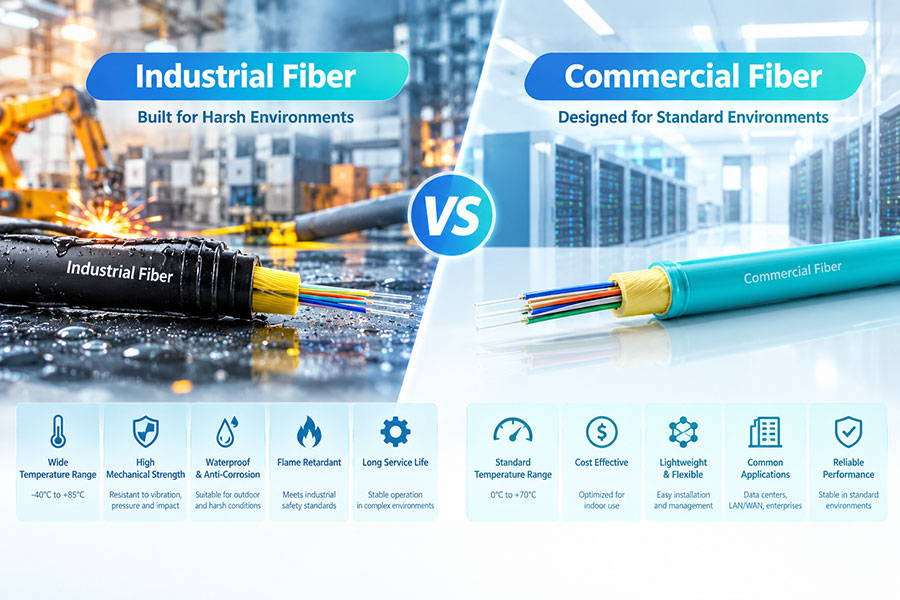
Industrial and commercial fiber optic networks use the same fundamental transmission principles but differ in cable construction, connectors, environmental protection, temperature range, mechanical strength, installation, and application requirements.
Leaf-Spine vs Three-Tier Architecture>
By C-LIGHT Marketing 丨
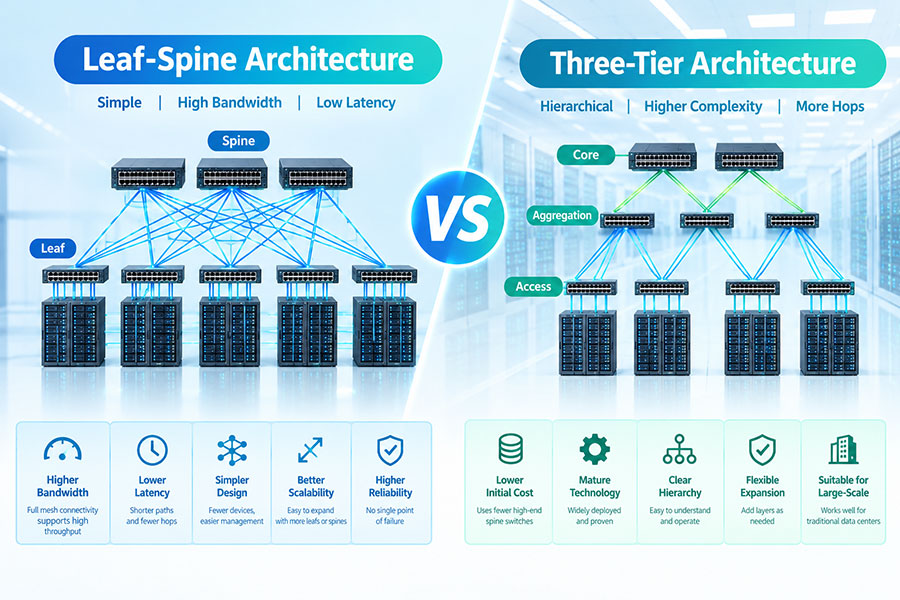
Leaf-spine and three-tier architectures use different approaches to scaling data center networks. Compare their topology, east-west traffic handling, latency, bandwidth, redundancy, scalability, optical connectivity, and suitability for AI and modern cloud environments.
850nm vs 1310nm>
By C-LIGHT Marketing 丨
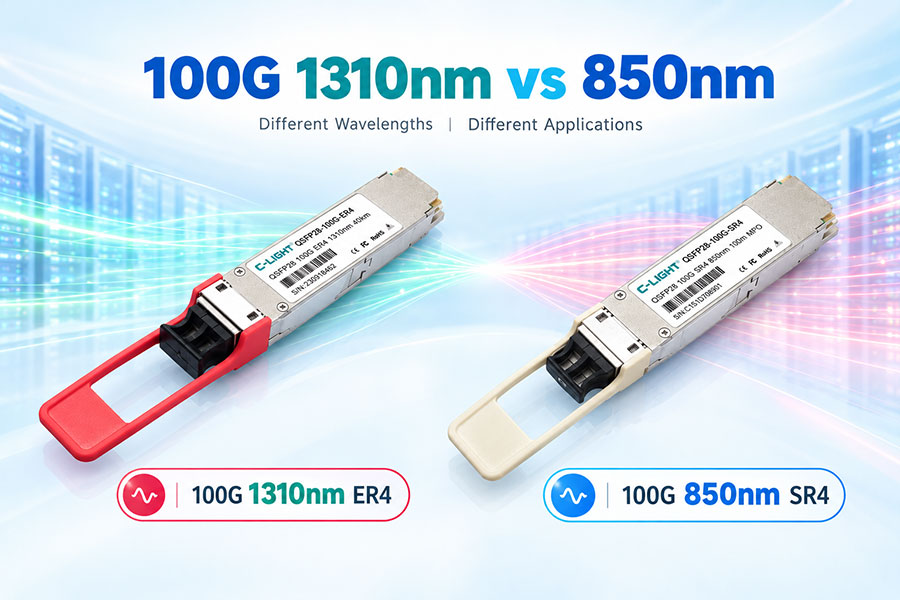
850nm and 1310nm are widely used optical communication wavelengths with different fiber, laser, reach, loss, dispersion, and transceiver characteristics. Compare their applications in data centers and high-speed optical networks.
5G Fronthaul vs 5G Midhaul>
By C-LIGHT Marketing 丨
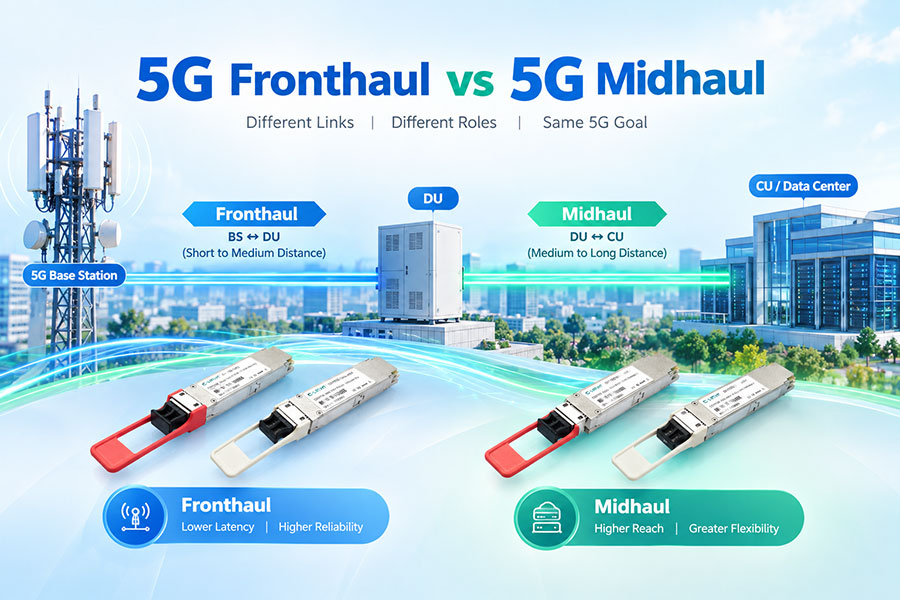
5G fronthaul and midhaul connect different RAN functions and have different transport requirements. Compare their functional split, interfaces, bandwidth, latency, synchronization, optical networks, and deployment architectures.
5G Fronthaul vs 5G Backhaul>
By C-LIGHT Marketing 丨
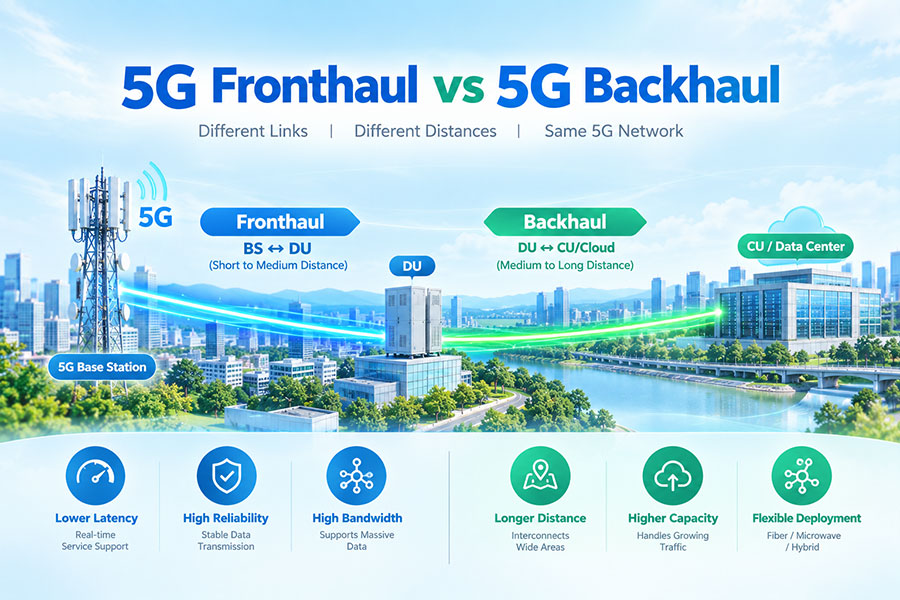
5G fronthaul and backhaul serve different parts of the mobile transport network. Compare their architecture, functional split, bandwidth, latency, synchronization, protocols, optical transceivers, and fiber requirements.
4G Fronthaul vs 5G Fronthaul>
By C-LIGHT Marketing 丨
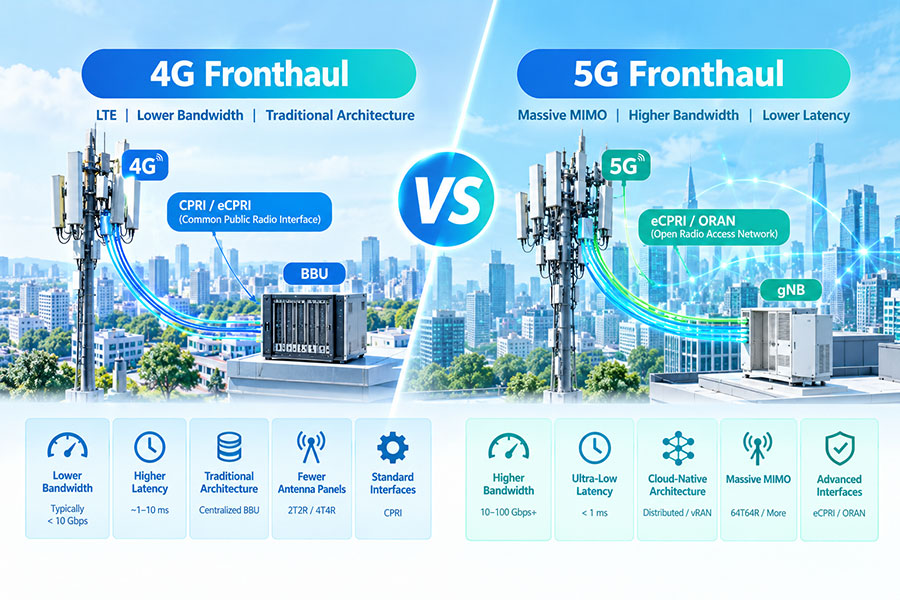
4G and 5G fronthaul differ in interface technology, bandwidth efficiency, functional split, synchronization, transport architecture, and optical networking requirements.

Call
Top