CWDM and DWDM fronthaul both multiplex multiple 5G radio links onto shared fiber, but differ in channel count, wavelength spacing, laser type, power budget, cost, and reach. Compare deployment scenarios for 5G transport.
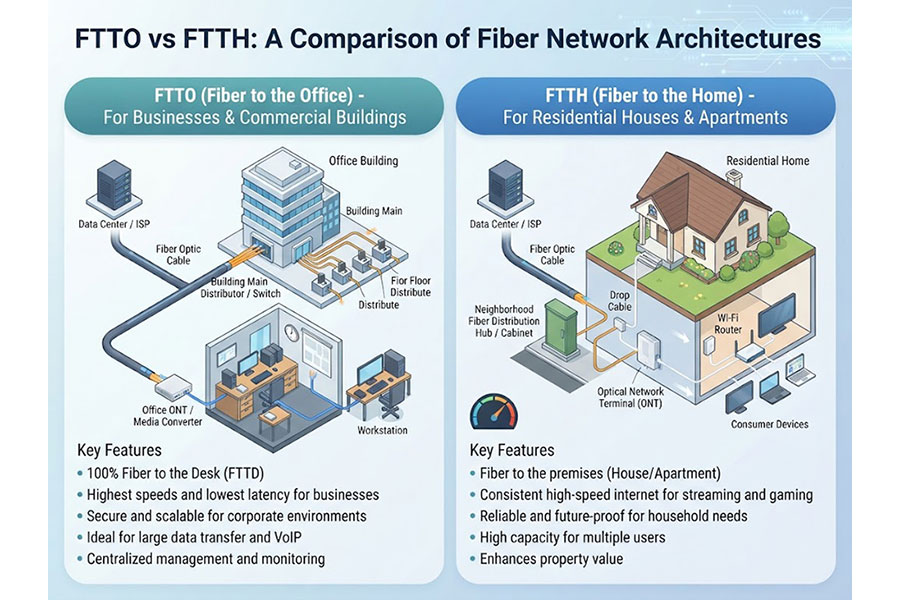
FTTH and FTTR both deliver fiber to the premises, but they differ in where optical conversion happens. Compare architecture, bandwidth, latency, coverage, deployment cost, and application scenarios for home and business networks.
FTTB and FTTC both use fiber in the access network but terminate it at different points. Compare copper loop length, achievable bandwidth, cabinet vs building deployment, power, cost, and upgrade paths to full FTTH.
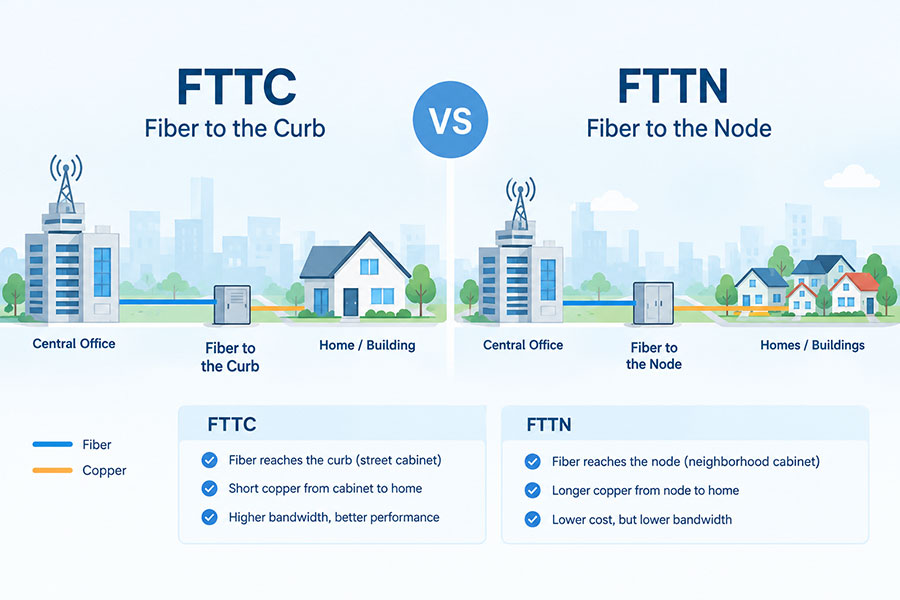
FTTC and FTTN both extend fiber into the access network but terminate it at different distances from the subscriber. Compare copper loop length, achievable bandwidth, cabinet vs node deployment, cost, and upgrade paths to FTTH.
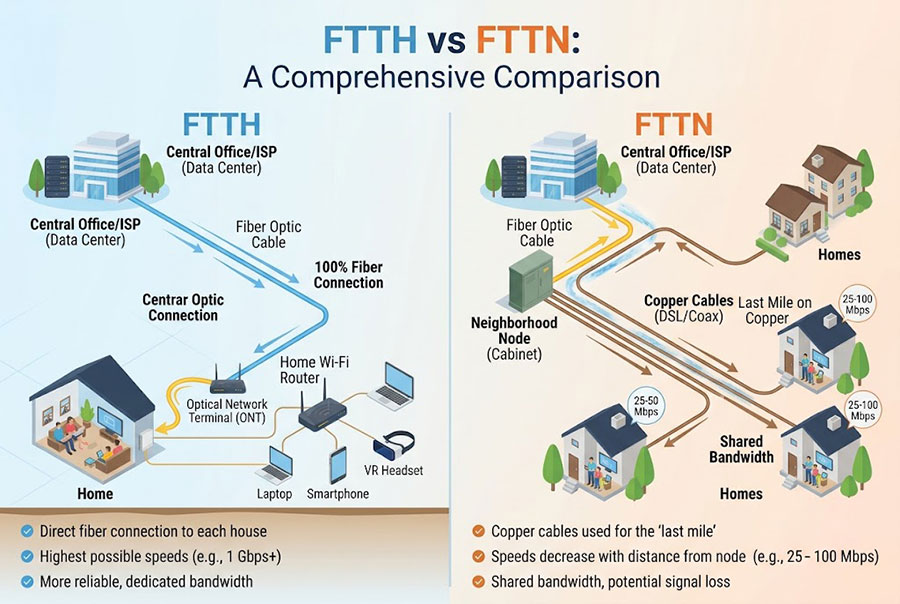
FTTH and FTTN represent opposite ends of the fiber access spectrum. Compare fiber-to-the-home and fiber-to-the-node architecture, copper loop length, achievable bandwidth, latency, deployment cost, and the migration path to full fiber.