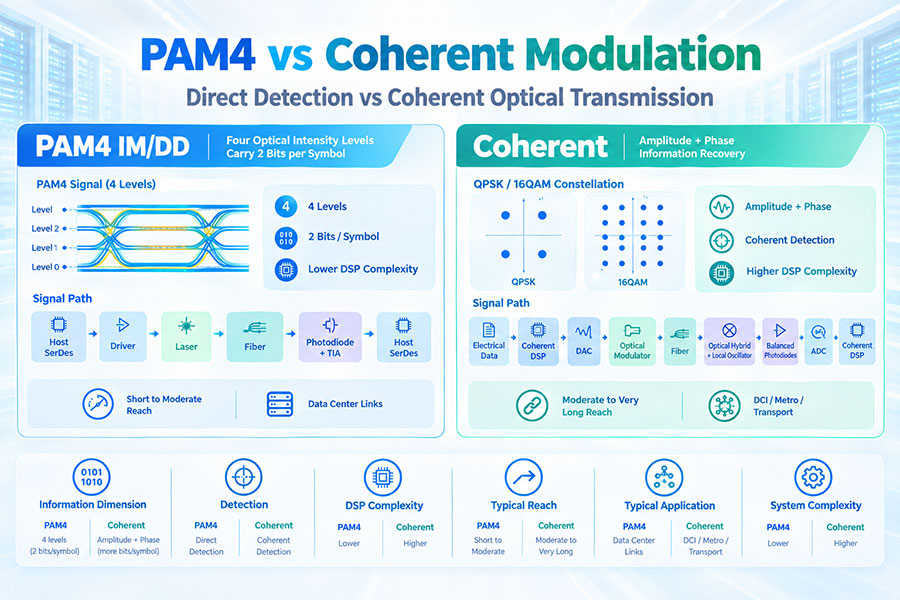
PAM4 and coherent optical modulation use different approaches to high-speed transmission. This article explains their signaling principles, optical components, reach, power, DSP requirements, BER, and data center applications.
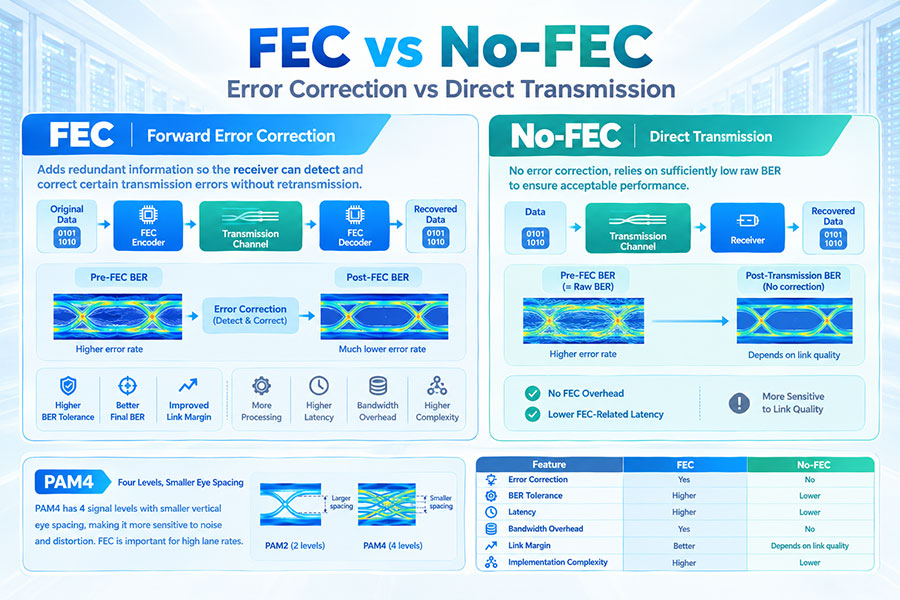
FEC improves transmission reliability by correcting errors before they affect the data. This article explains FEC vs No-FEC links, RS-FEC, BER, latency, power, PAM4, LPO, 400G, 800G and 1.6T optical applications.
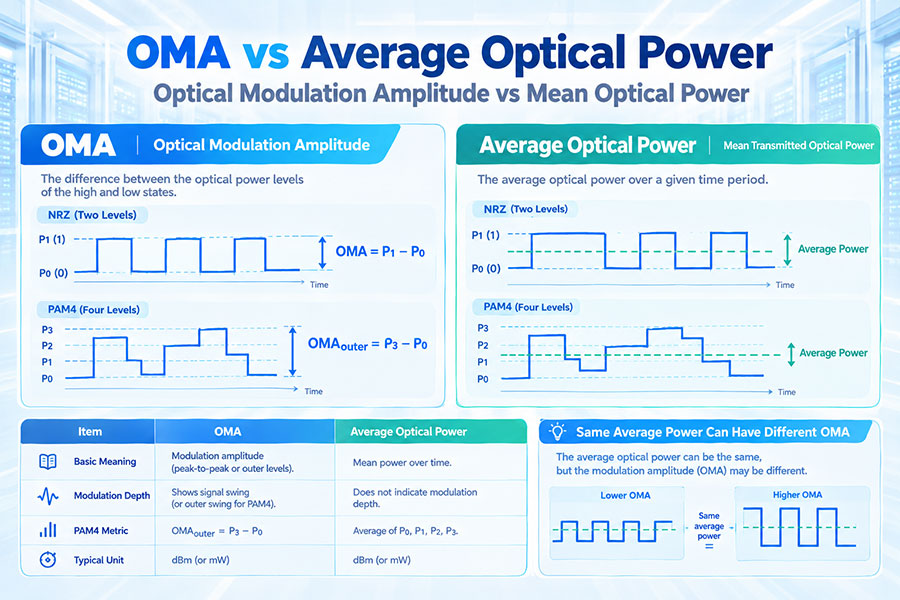
OMA and average optical power are different optical transmitter parameters. This article explains OMA, OMAouter, average optical power, extinction ratio, TDECQ, PAM4 measurements, link budget, and high-speed optical applications.
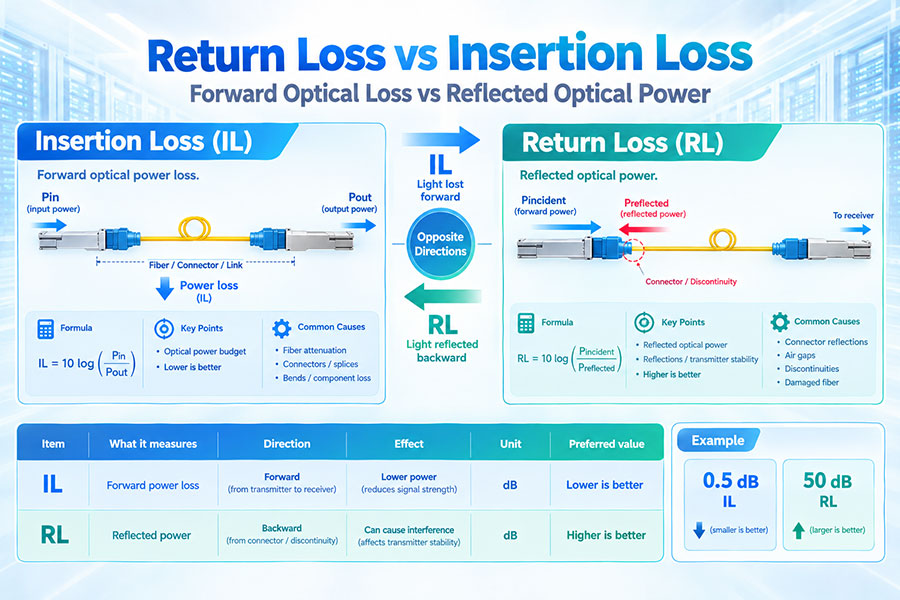
Return loss and insertion loss measure different aspects of optical link performance. This article explains their formulas, causes, testing methods, connector effects, link budgets, and applications in high-speed optical networks.
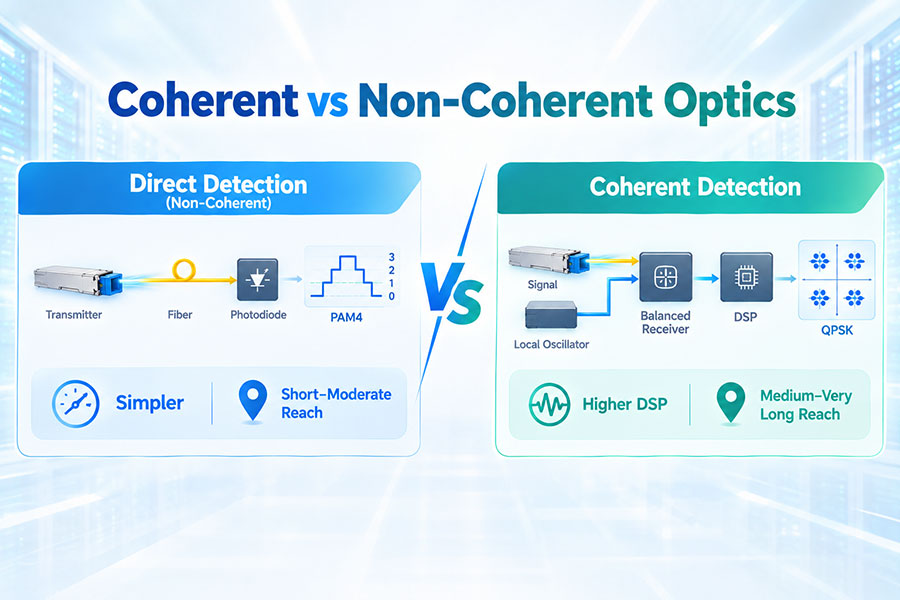
Coherent and non-coherent optical systems use different transmission and detection architectures. This article explains direct detection, coherent detection, PAM4, QPSK, 16QAM, DSP, optical reach, power, sensitivity, and applications.
In modern data centers and high-performance computing environments, optical transceivers serve as the critical bridge between electrical signals and optical transmission,
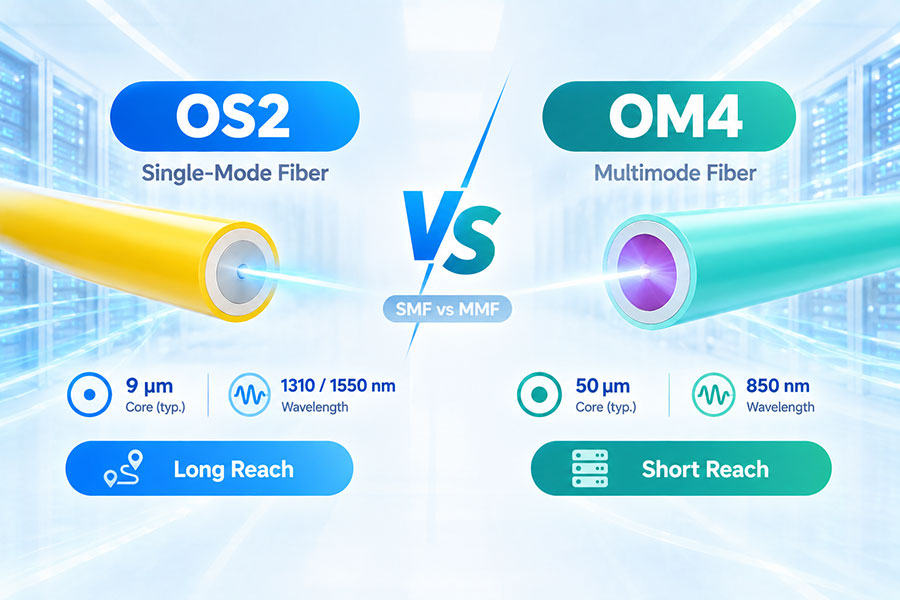
OS2 and OM4 are widely used fiber categories with different transmission characteristics. This article explains their fiber structure, wavelengths, bandwidth, reach, optical loss, connectors, transceiver compatibility, and data center applications.