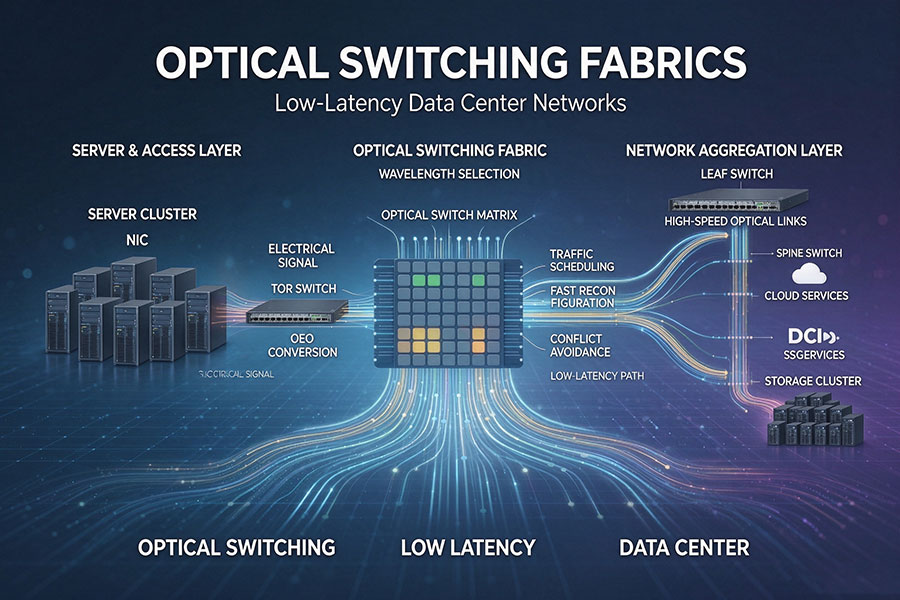
Optical switching fabrics support low-latency data center connectivity through direct optical paths, efficient topology design and coordinated traffic scheduling.
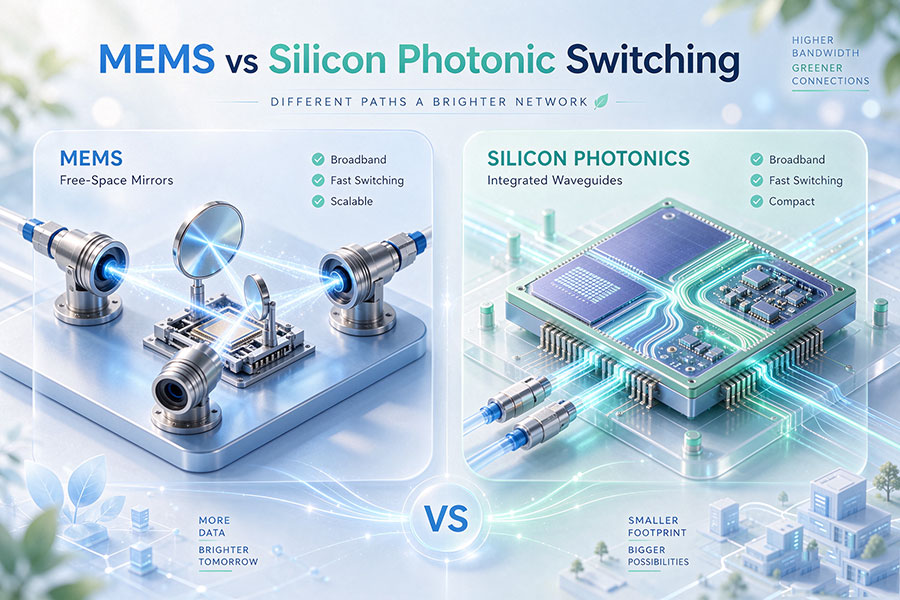
MEMS and silicon photonic switches use different optical control mechanisms, influencing port density, switching speed, scalability and network integration.
Wavelength-selective switching enables flexible optical paths in data center interconnects through wavelength routing, reconfiguration and spectrum management.
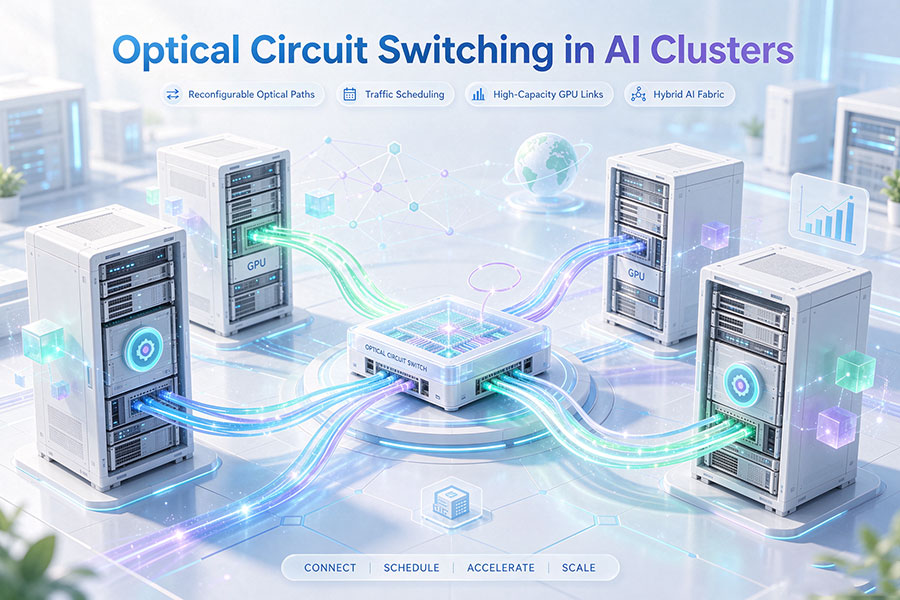
Optical circuit switching supports large AI clusters by coordinating high-capacity optical paths with traffic scheduling, topology management and workload demands.
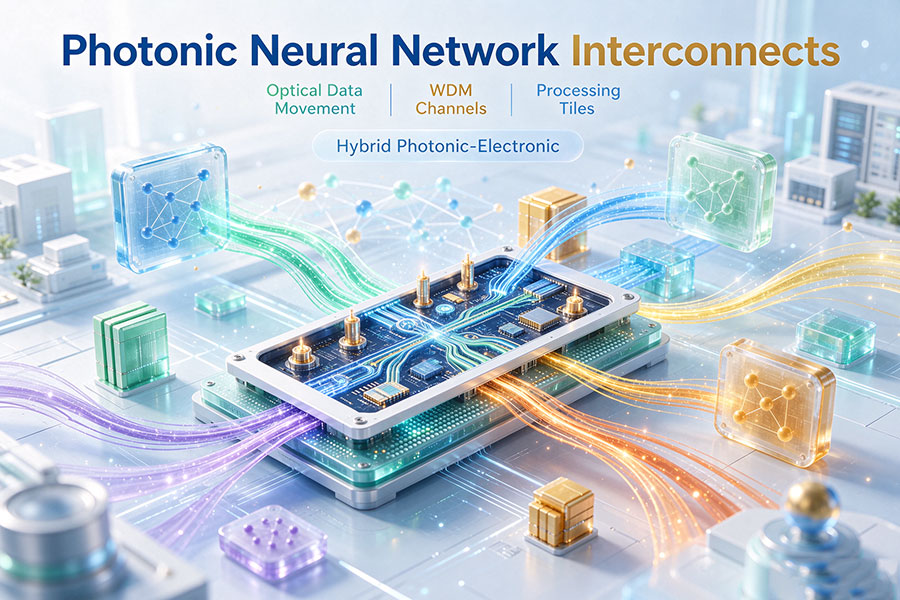
Photonic neural network interconnects use optical links and photonic circuits to move data between processing elements with high bandwidth and lower communication energy.
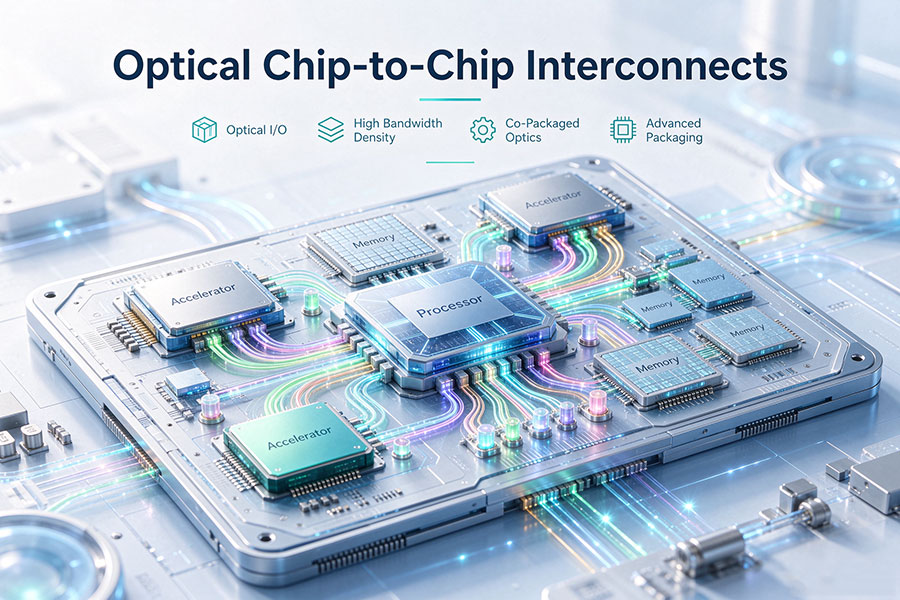
Chip-to-chip optical interconnects address bandwidth, power and signal-integrity limits in advanced compute systems through integrated photonics and optical I/O.
Laser safety and interlock design protect integrated photonics systems through access controls, emission monitoring, fault detection and safe operating procedures.