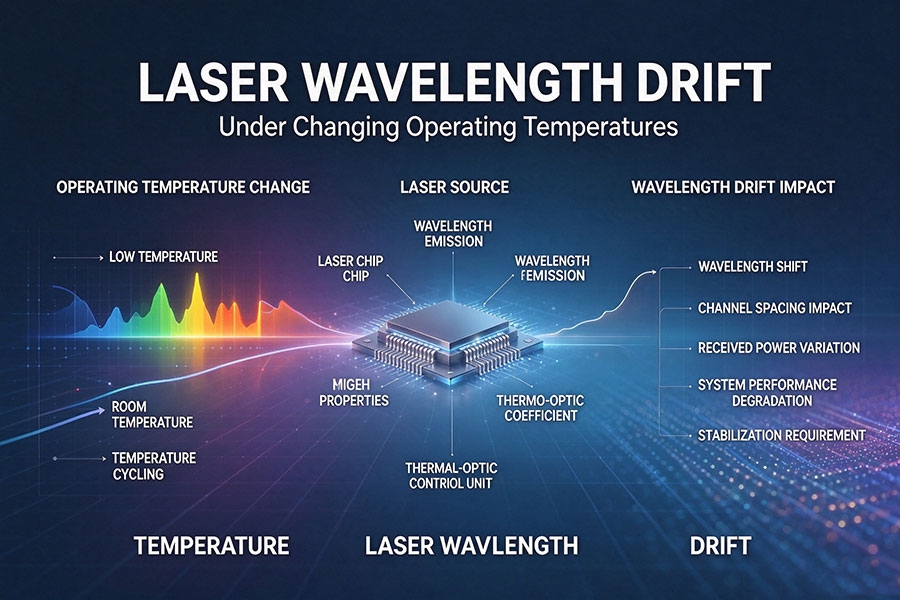
Temperature changes shift laser emission wavelengths through material and cavity effects, influencing optical power, channel alignment and transmission stability.
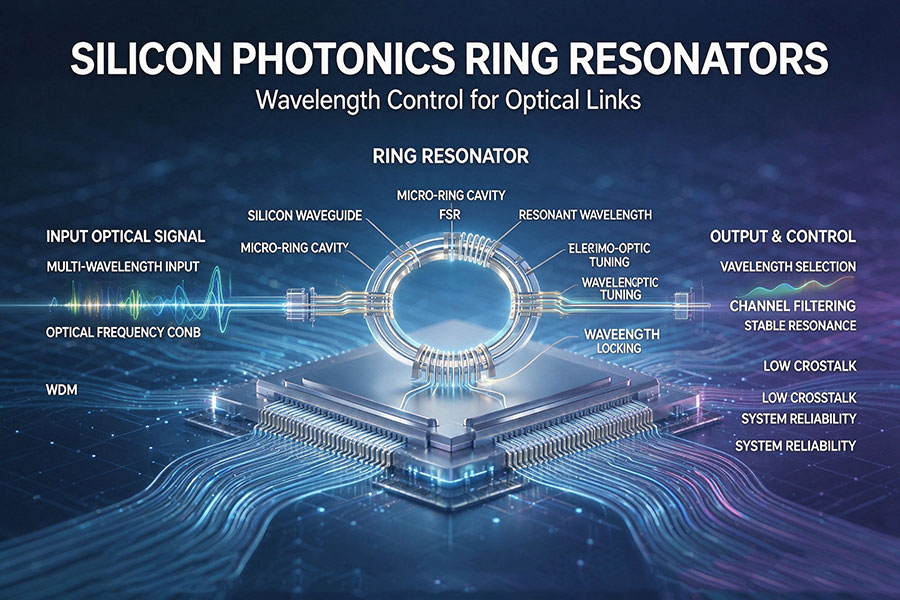
Silicon photonics ring resonators enable compact wavelength filtering and routing, with thermal tuning, resonance locking and control strategies for stable operation.
Mach-Zehnder and electro-absorption modulators offer different approaches to optical signal control, with distinct chirp, bandwidth, loss and integration characteristics.
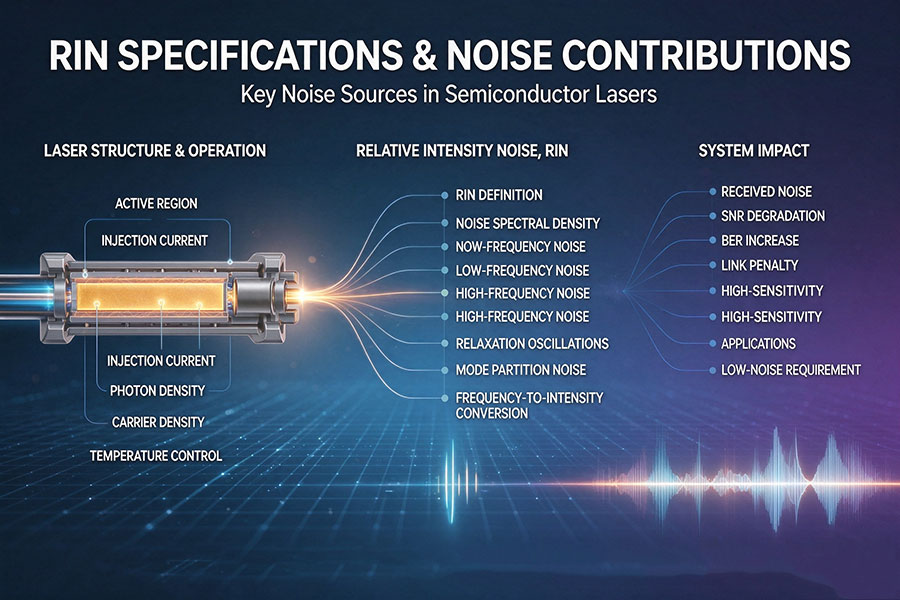
Relative intensity noise affects optical transmitter quality, receiver sensitivity and BER, making RIN specifications essential for laser characterization.
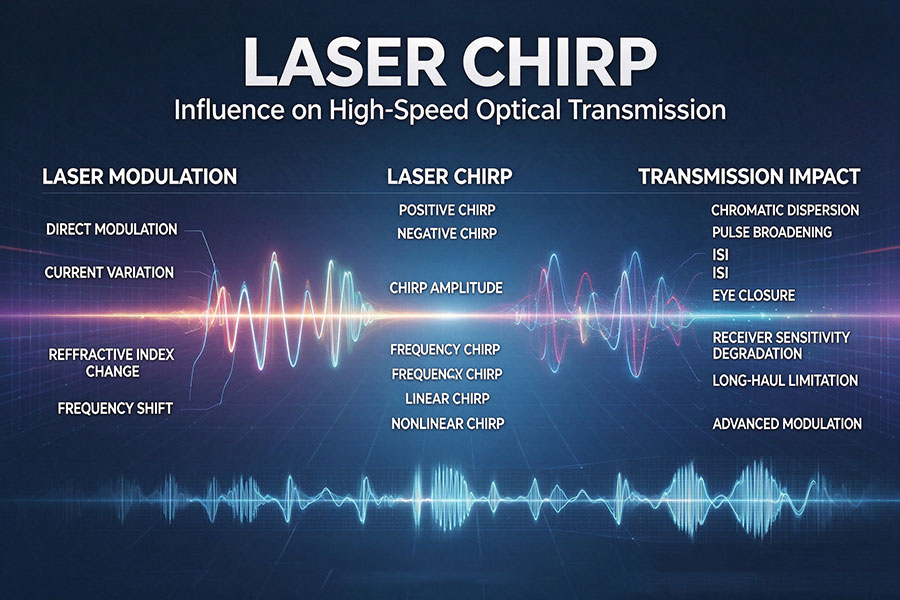
Laser chirp affects optical signal quality through frequency variation, fiber dispersion and pulse distortion, influencing reach and high-speed link performance.