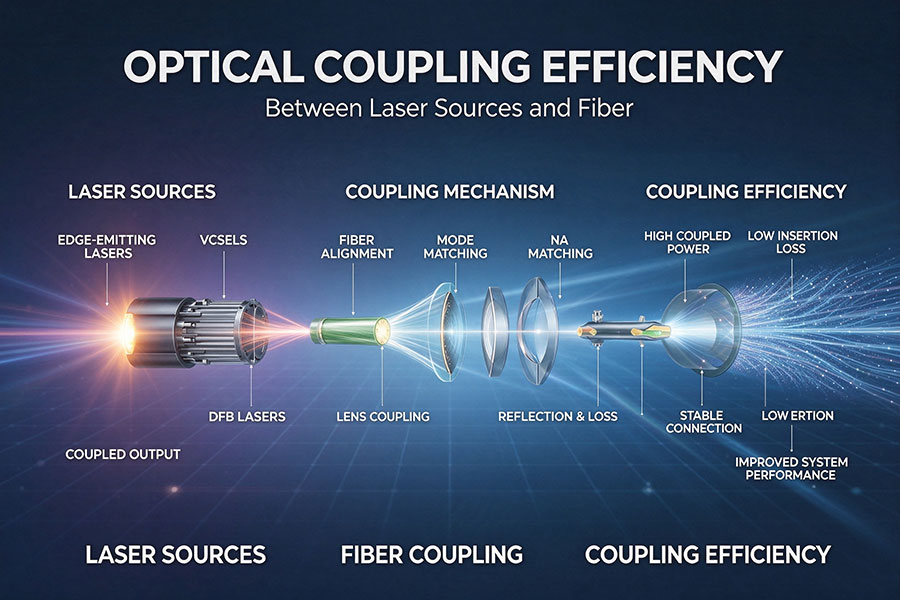
Optical coupling efficiency determines how much laser power enters a fiber, influencing link budgets, transmitter output and optical interconnect reliability.
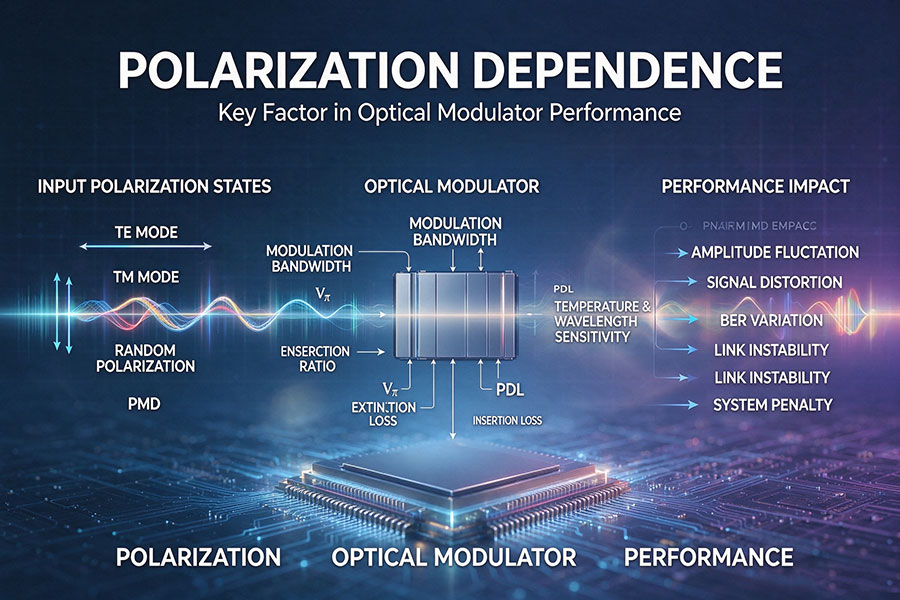
Polarization dependence affects modulation efficiency, insertion loss and signal quality, making polarization control essential in optical transmitter design.
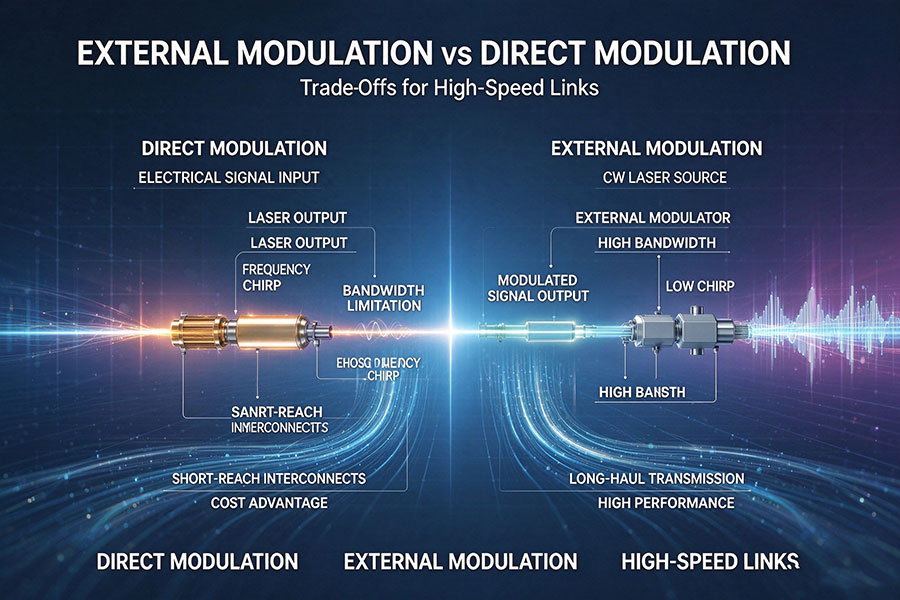
Laser modulation architecture affects bandwidth, chirp, signal quality and power consumption in high-speed optical links across data center and transport networks.
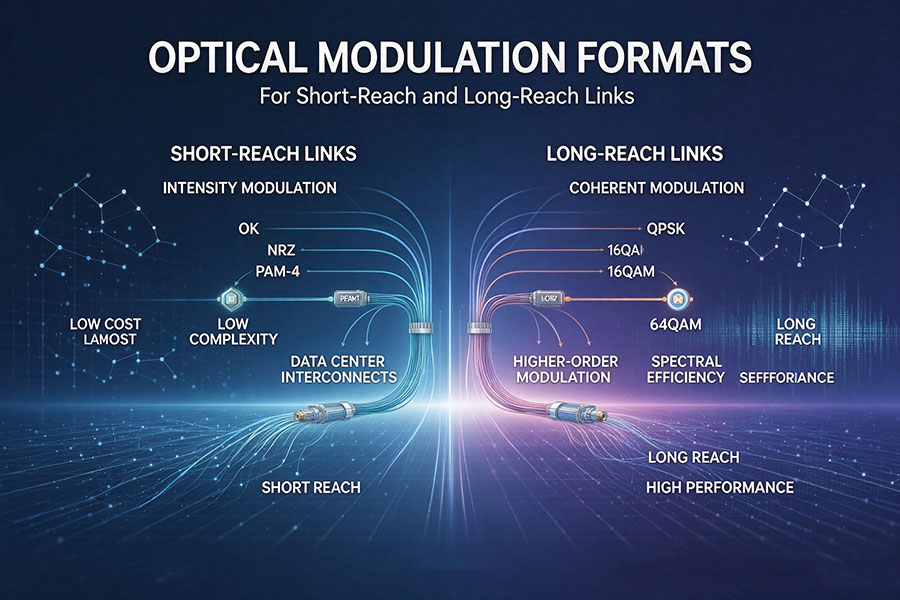
Optical modulation formats shape link capacity, reach and receiver complexity, with different signaling methods suited to data centers and transport networks.
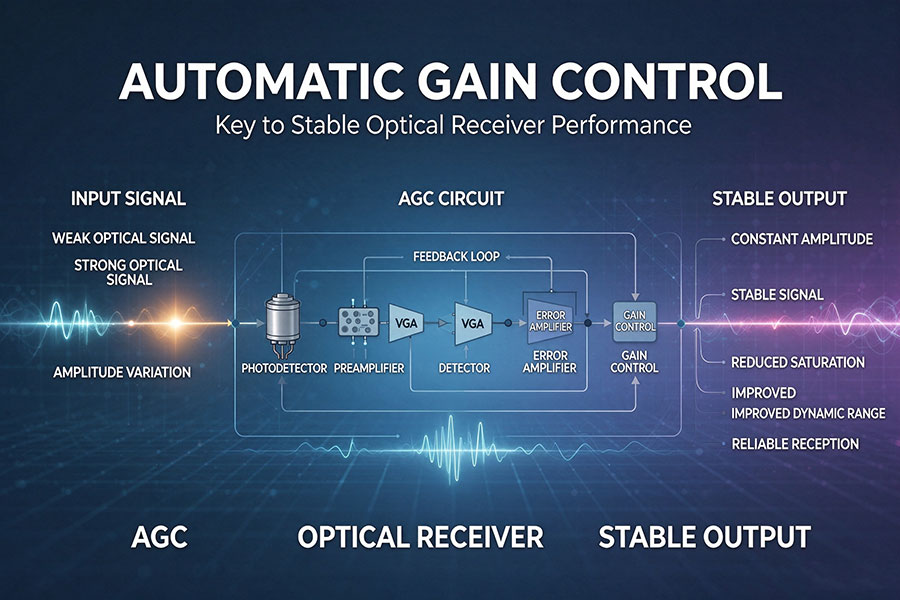
Automatic gain control stabilizes optical receiver signal levels across changing input power, supporting reliable amplification, detection and data recovery.