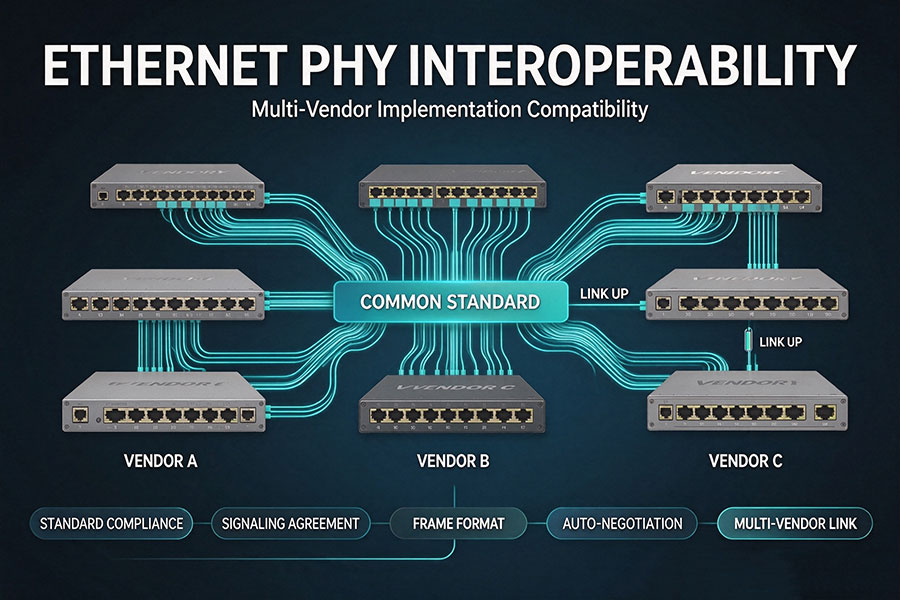
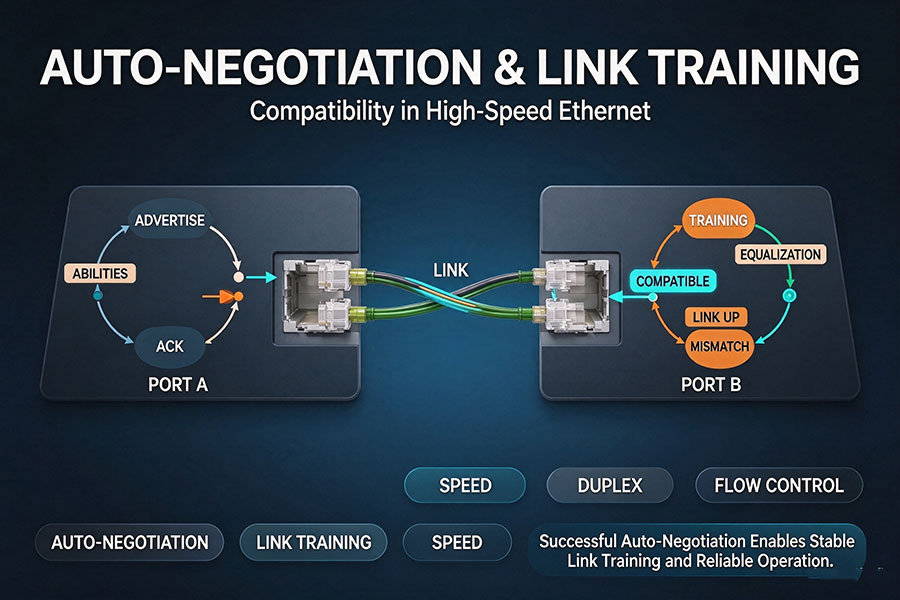
Ethernet PHY interoperability depends on standards compliance, electrical characteristics, link negotiation and implementation details across different vendors.
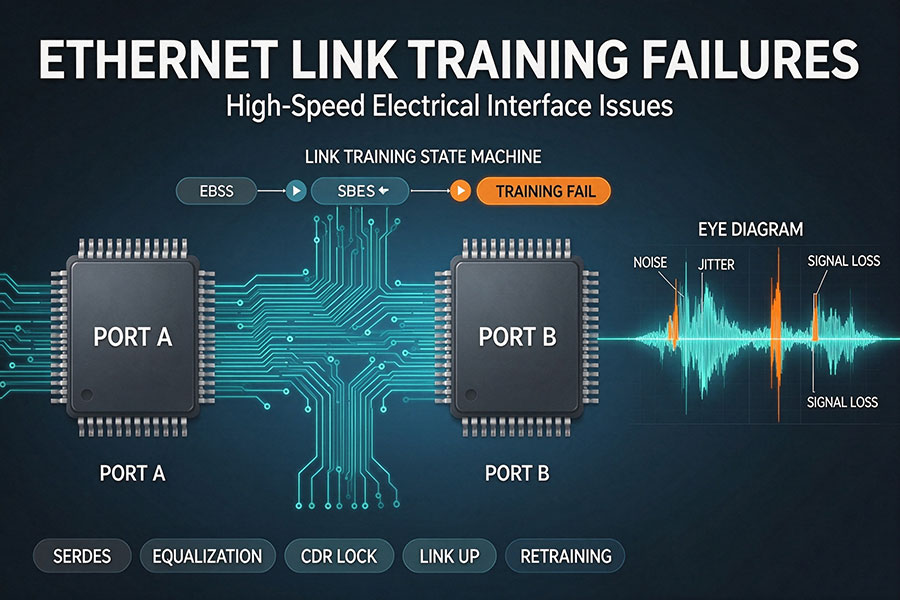
Ethernet link training failures can prevent high-speed electrical links from reaching stable operation, often due to signal integrity, lane configuration or negotiation issues.
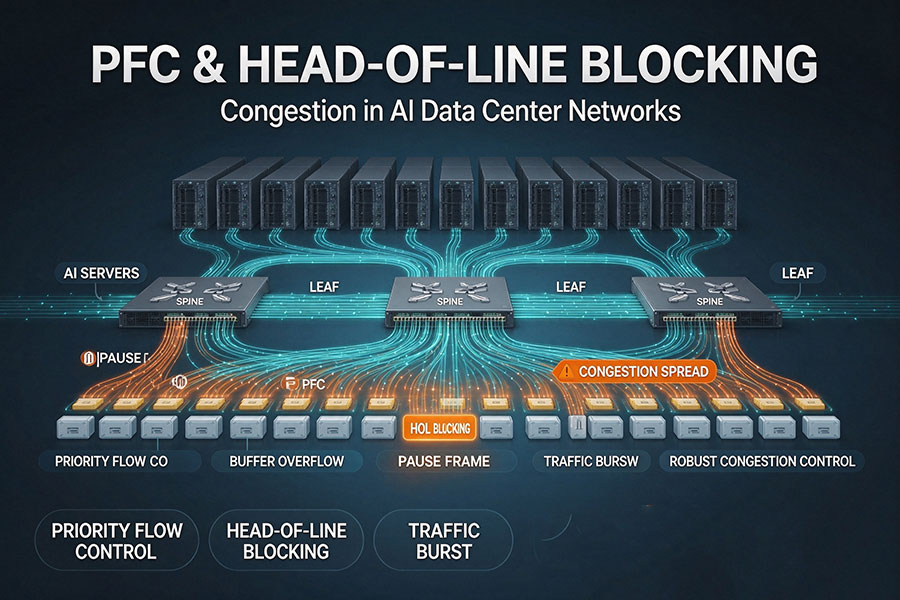
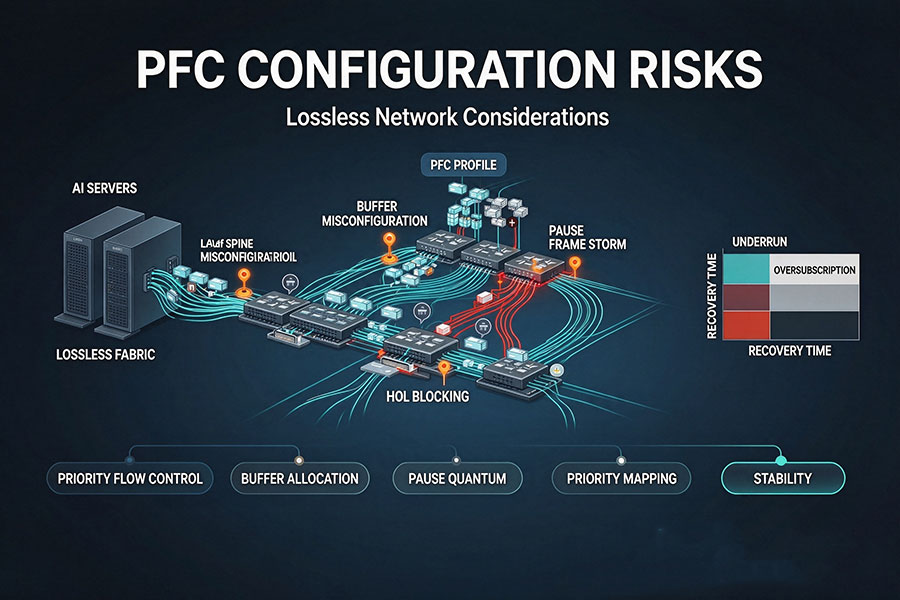
PFC head-of-line blocking can spread congestion across RDMA traffic flows, reducing throughput and increasing latency in AI data center Ethernet fabrics.
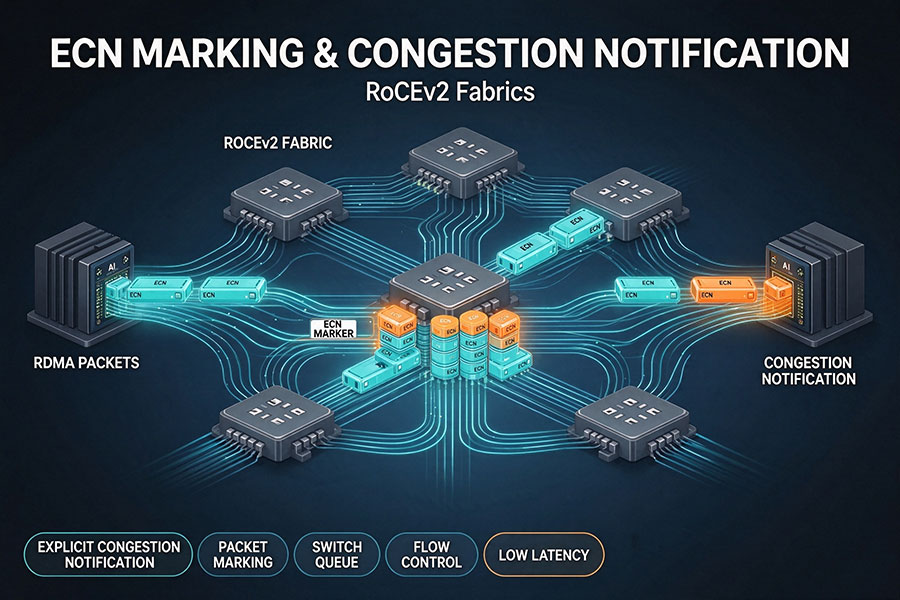
ECN marking and congestion notification help RoCEv2 fabrics control queue buildup, coordinate sender rate adjustments and maintain efficient data center traffic.
Priority Flow Control configuration affects congestion propagation, buffer utilization and deadlock risk in lossless Ethernet networks, especially RoCE deployments.
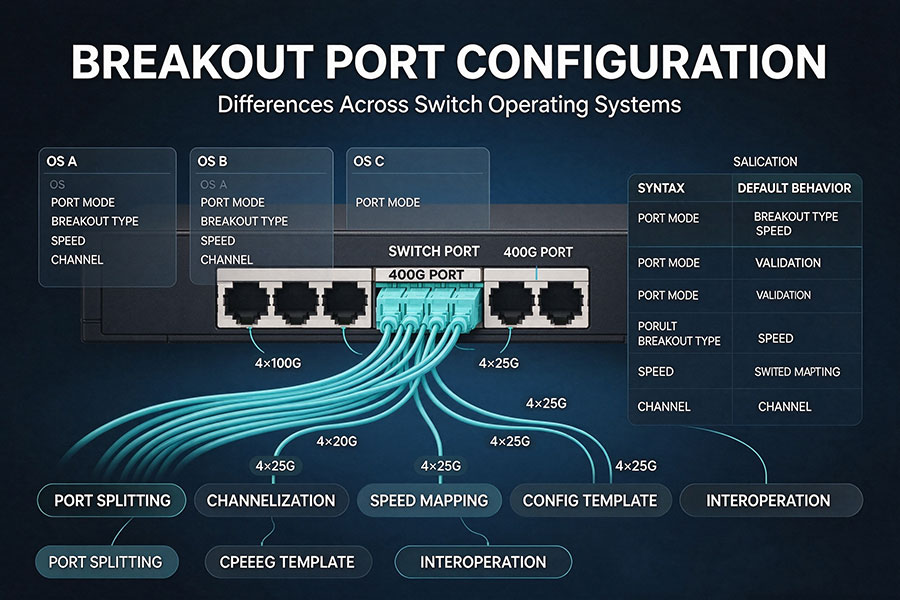
Switch operating systems handle breakout port configuration through different commands, interface models and lane mappings, affecting deployment and interoperability.